
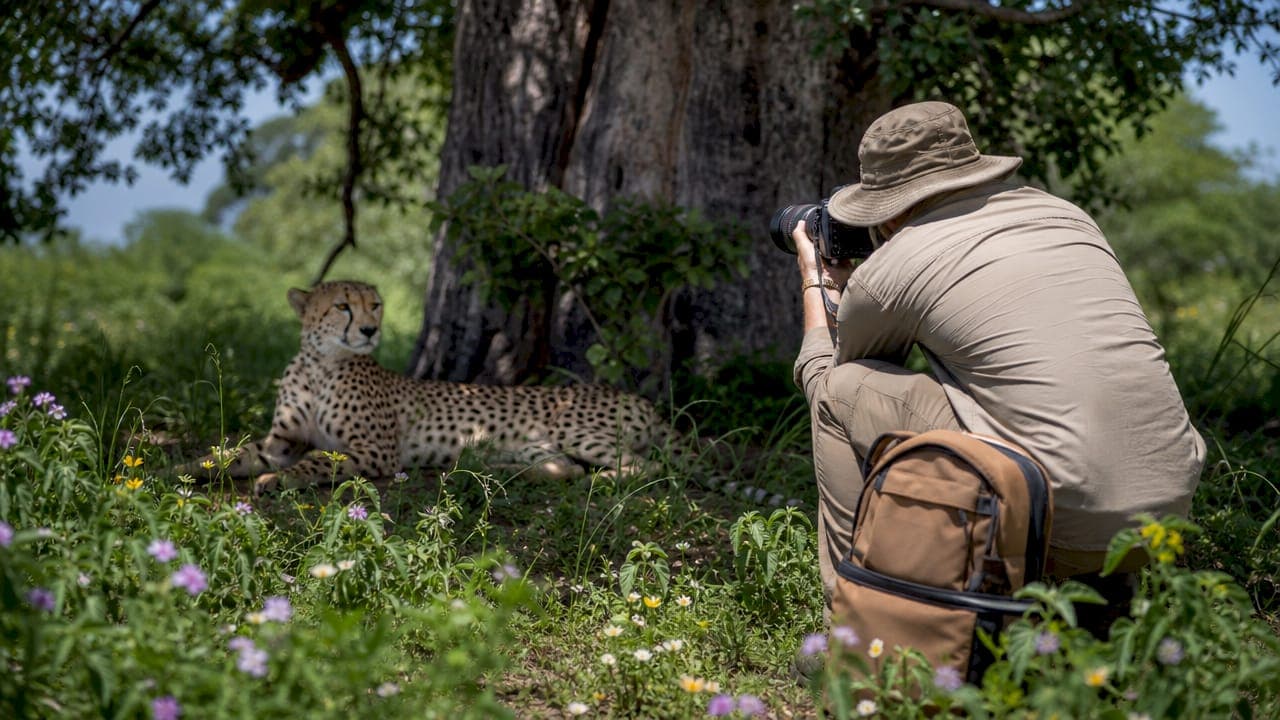
Africa's apex carnivores define the safari experience. The best examples of African predators on safari are the lion, leopard, and cheetah, collectively known as the Big Three predators, each representing a distinct hunting strategy, social structure, and ecological role. Beyond this iconic trio, spotted hyenas, African wild dogs, jackals, and crocodiles round out a predator community that keeps African ecosystems in balance. Predators regulate herbivore populations by removing weak or sick animals, which strengthens prey populations over time. Understanding who these animals are and how they behave makes every sighting richer and more meaningful.
1. Examples of African predators on safari: the Big Three
The lion, leopard, and cheetah are the three predators that safari-goers most actively seek. Each occupies a different niche. Lions dominate open grasslands in social groups. Leopards work dense bush alone and at night. Cheetahs sprint across open plains in daylight. Knowing the difference before you go shapes where you look, when you go out, and what you notice when you find them.
2. Why lions are the defining predator of any African safari
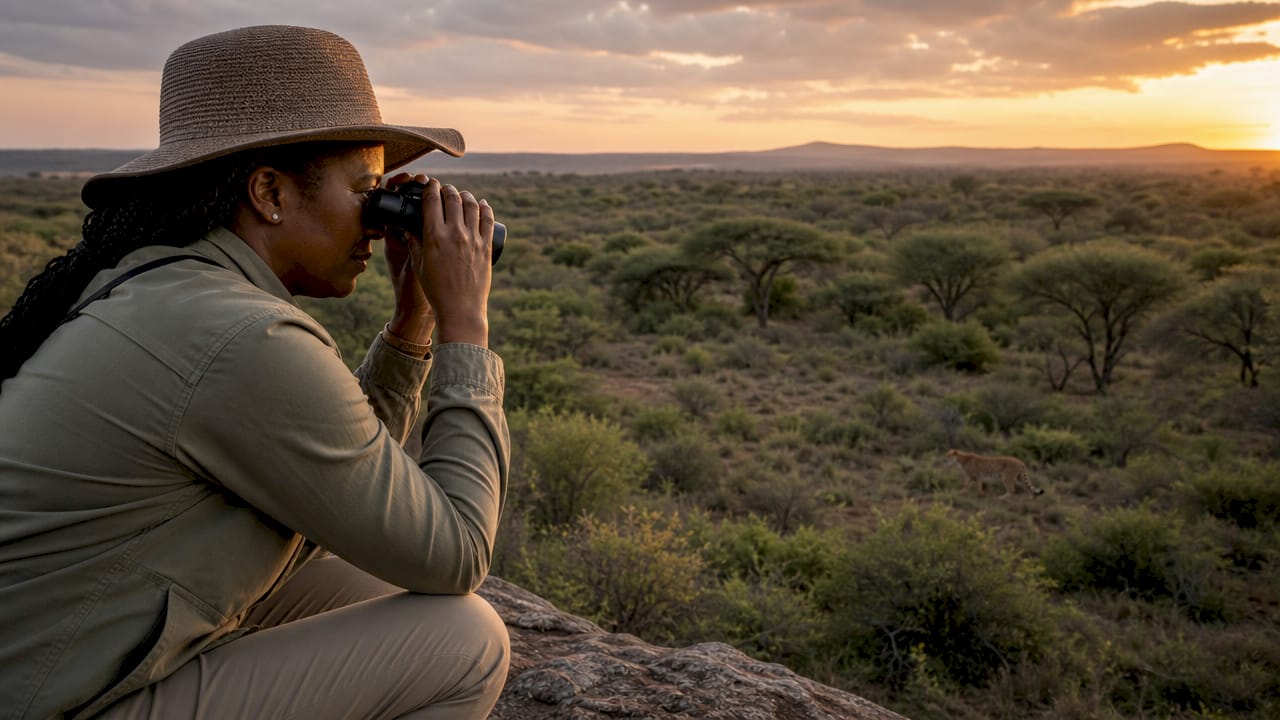
The lion is the most socially complex large predator on the continent. Lions form prides of up to 40 individuals, though most functional prides number between 10 and 15. That social structure is what makes lion hunting so different from every other African big cat.
Lions use coordinated ambush tactics, with females doing most of the active hunting. They target large prey like buffalo and zebra, selecting animals based on optimal size and risk rather than simply ease of capture. A pride can take down prey several times the size of a single lion, which is something no solitary cat can match.
Dominant males defend territory and protect cubs, but they also displace kills made by other predators. This dominance over other carnivores is a key reason lions are considered apex predators in the truest sense.
- Prides use terrain to funnel prey toward waiting lions
- Hunts typically happen at dawn, dusk, or through the night
- A successful hunt feeds the entire pride, including cubs and older animals
- Lions spend up to 20 hours a day resting, so patience is rewarded on safari
Pro Tip: If you spot lions resting in the morning, stay close. They often move to hunt as the light drops in the late afternoon, and you will already be in position.
3. What makes the leopard the most elusive predator on safari
The leopard is the hardest of the African big cats to find. It is solitary, nocturnal by preference, and masters of concealment in dense vegetation. Female leopards hold home ranges of 20–40 km², which they defend fiercely against other females. Males range much wider.
Leopards cache their kills in trees to protect them from lions and hyenas. This behavior is one of the most dramatic sights in African wildlife. A carcass wedged high in an acacia fork is often your first clue that a leopard is nearby. Scanning trees rather than the ground is the single most effective technique for finding them.
Their coat pattern breaks up their outline perfectly in dappled light. Even experienced guides sometimes drive past a resting leopard at close range without seeing it.
- Leopards favor riverine forest, rocky outcrops, and dense thicket
- Dawn drives offer the best chance of catching them returning from a night hunt
- A leopard with a fresh kill in a tree may stay in the area for two to three days
- Relaxed leopards in private reserves allow much closer vehicle approach than those in high-traffic parks
Pro Tip: Ask your guide to check the base of large trees for drag marks or blood. A leopard that has made a kill overnight will often be resting nearby, full and calm.
4. How the cheetah's speed defines its place among African predators
The cheetah is the fastest land animal on Earth, reaching speeds of 58–65 mph in short bursts. That speed is its entire survival strategy. Unlike lions and leopards, cheetahs hunt purely by sight in open daylight, using elevated ground to spot prey before launching a short, explosive chase.
Cheetahs select prey based on size and vulnerability. They avoid large or dangerous animals entirely, targeting smaller antelope like impala and springbok. This is not timidity. It is a calculated survival choice, because cheetahs face kleptoparasitism from lions and hyenas that steal their kills after the chase.
After a sprint, a cheetah is exhausted and vulnerable for up to 30 minutes. It must recover before it can eat or defend its kill. This post-hunt window is when larger predators move in. The energetic cost of hunting is enormous, which is why cheetahs need open terrain where they can see threats approaching.
- Cheetahs hunt between 7 a.m. and 10 a.m. to avoid peak lion and hyena activity
- They use termite mounds and fallen logs as lookout points before a chase
- A mother cheetah with cubs hunts more frequently to feed her family
- Cheetahs rarely climb trees, unlike leopards, so look for them on open ground
5. Which other notable predators might you encounter on safari
Spotted hyenas are the most misunderstood predators in Africa. The common image of a hyena as a scavenger is wrong. Spotted hyenas kill 60–70% of their own prey and have complex clan structures with female-dominated hierarchies. They are intelligent, coordinated hunters capable of taking down wildebeest and zebra. Lions actually scavenge from hyenas more often than the reverse.
African wild dogs are among the rarest large predators you can encounter. Wild dog populations are fragmented, with some areas holding fewer than 100 individuals. Their cooperative hunting success rate is the highest of any African predator, regularly exceeding 80%. A wild dog sighting is genuinely rare and considered a highlight by experienced safari-goers.
| Predator | Hunting style | Rarity on safari |
|---|---|---|
| Spotted hyena | Cooperative clan hunter | Common |
| African wild dog | Pack pursuit hunter | Very rare |
| Black-backed jackal | Opportunistic scavenger and small prey hunter | Common |
| Nile crocodile | Ambush predator at water sources | Moderate |
Jackals and crocodiles round out the predator community. Jackals are opportunistic and often seen near lion kills. Crocodiles are ambush specialists at river crossings, and a large Nile crocodile can take prey as large as a zebra. Both species play important roles in nutrient cycling and population control.
6. What factors influence predator sightings during a South African safari
Predator density varies dramatically by region and habitat type. Ngorongoro Crater holds the highest predator density per square kilometer in Africa, concentrating lions, hyenas, and leopards in a relatively small area. In South Africa, Hluhluwe-iMfolozi Park in KwaZulu-Natal offers consistent Big 5 sightings, including lions and leopards, within a park that has been managed for wildlife since 1895.
The type of safari vehicle and access rules matter enormously. Off-road driving in private reserves allows guides to follow predators into dense bush and position vehicles for natural, relaxed behavior. Roads-only national parks restrict this access, which means sightings are often briefer and more distant. Thoughtful safari management that minimizes vehicle pressure produces more relaxed predator encounters and better viewing quality for everyone.
Time of day is the single most controllable factor in your sighting success. Early morning and late afternoon drives consistently outperform midday game drives for predator activity. Most cats are resting in shade by 9 a.m. and do not move again until the heat drops.
Pro Tip: Book a full-day safari rather than a half-day drive. The midday hours are quiet, but being already in the field when predators become active in the late afternoon gives you a significant advantage over guests who only go out twice a day.
Key takeaways
African safari predators are best understood through their distinct hunting strategies, social structures, and habitat preferences, all of which directly shape your sighting opportunities.
| Point | Details |
|---|---|
| The Big Three anchor every safari | Lions, leopards, and cheetahs each require different search strategies and times of day. |
| Hyenas are active hunters | Spotted hyenas kill 60–70% of their own prey and are far more than scavengers. |
| Wild dogs are the rarest sighting | Fragmented populations make African wild dog encounters statistically unlikely and highly prized. |
| Off-road access improves sightings | Private reserves with off-road driving produce closer, more relaxed predator encounters than roads-only parks. |
| Time of day is decisive | Dawn and late afternoon drives consistently deliver the most predator activity across all species. |
What years of predator watching have taught me
The moment a predator looks through you, not at you
Most guests arrive expecting drama. A chase, a kill, a roar. Those moments happen, and they are extraordinary. But the encounters that stay with me longest are the quiet ones. A leopard resting in a marula tree, completely indifferent to the vehicle below. A cheetah scanning the horizon from a termite mound, calculating its next move with total focus. Those moments teach you something a documentary cannot.
Predators are not killers in the way people imagine. They are ecologists. Every hunting decision is a survival calculation. Predators select prey based on optimal size and risk, not just what is closest. Watching a lion pride assess a buffalo herd for 20 minutes before deciding not to hunt is one of the most instructive things you can witness in the wild.
The advice I give every guest is this: resist the urge to narrate what you are seeing. Sit quietly. Watch the animal's eyes, ears, and posture. You will read the situation far better than any commentary can describe. The bush rewards patience and silence above everything else.
— Larni
See South Africa's predators up close with Bushbabysafaris
KwaZulu-Natal is home to some of South Africa's most rewarding predator country. Hluhluwe-iMfolozi Park, one of Africa's oldest protected areas, holds lions, leopards, cheetahs, and spotted hyenas within a single reserve. The iSimangaliso Wetland Park, South Africa's first UNESCO World Heritage Site, adds crocodiles and a completely different predator ecosystem to the experience.

Bushbabysafaris runs open vehicle safaris from all accommodations in St Lucia and Hluhluwe directly into both parks, with expert guides who know the terrain like the back of their hands. Whether you choose a half-day Big 5 excursion or a full-day drive, you get undivided attention and the best possible chance of finding the predators you came to see. Browse the full range of explorer safari packages and find the experience that fits your time and interests.
FAQ
What are the top examples of African predators on safari?
The lion, leopard, and cheetah are the three most sought-after predatory species on any African safari. Spotted hyenas and African wild dogs are also significant predators, with wild dogs being among the rarest large carnivores you can encounter.
Which African predator is hardest to spot on safari?
The leopard is consistently the hardest of the African big cats to find, due to its solitary nature, nocturnal habits, and exceptional camouflage in dense bush. African wild dogs are rarer overall, but leopards require the most skill to locate.
What time of day is best for predator sightings on safari?
Dawn and late afternoon drives produce the most predator activity across all species. Most large cats rest in shade during midday heat and become active again as temperatures drop in the late afternoon.
Do hyenas hunt or just scavenge on African safaris?
Spotted hyenas are active hunters that kill 60–70% of their own prey. The scavenger reputation is largely a myth. Lions actually steal hyena kills more often than hyenas steal from lions.
How does off-road driving improve predator sightings?
Off-road access in private reserves allows guides to follow predators into dense bush and position vehicles for natural behavior. This produces closer, more relaxed encounters than strictly on-road national parks, where sightings are often brief and distant.