
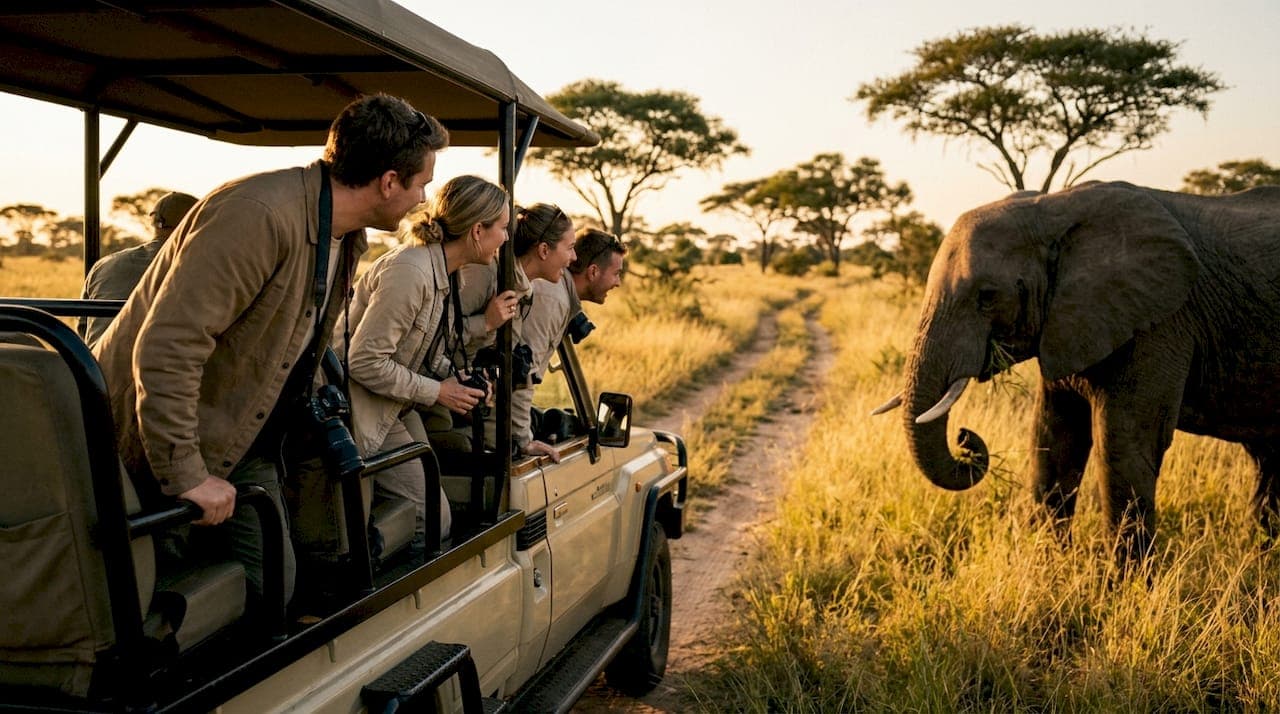
The Big 5 is defined as Africa's five most iconic and historically dangerous wild animals: lion, leopard, elephant, rhino, and buffalo. The term comes from big game hunting, where these five were classified as the most difficult and dangerous animals to track on foot. Today, examples of big 5 safari encounters draw wildlife enthusiasts from around the world to South African parks like Hluhluwe-iMfolozi and iSimangaliso Wetland Park. Each animal offers a completely different experience, and no two sightings are ever the same.
1. What makes Big 5 safari encounters truly exceptional?
The quality of any wildlife safari encounter depends on three things: timing, animal behavior, and guide expertise. Get all three right, and you witness something unforgettable.
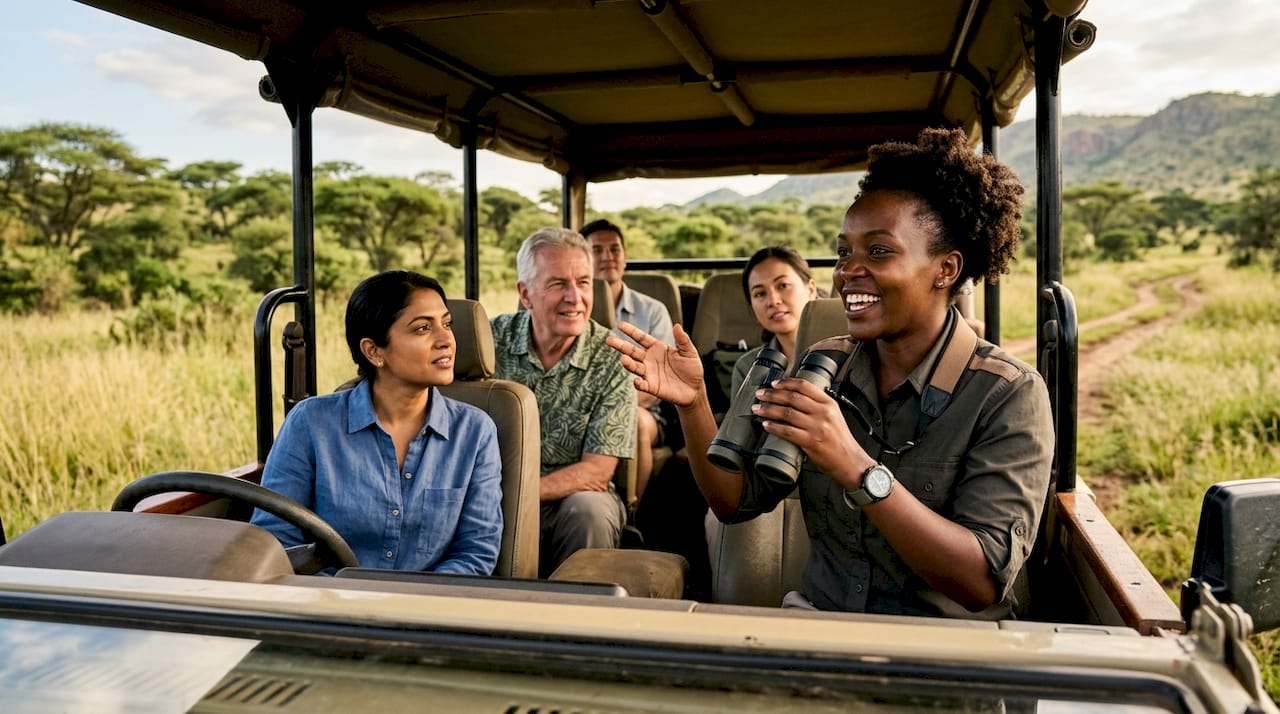
Game drives start at 5:30 am and again around 4:00 pm, aligning with the coolest parts of the day when animals are most active. Missing either window means missing the moments when predators hunt, elephants move, and buffalo graze in open ground. Sightings often happen within the first 30 minutes after departure.
What separates a good sighting from a great one is your guide's knowledge. Expert guides read tracks, listen for alarm calls from birds and smaller animals, and position the vehicle for the best view without disturbing the animals. They know the terrain like the back of their hands.
Key factors that define the best big 5 sightings:
- Animal behavior in context: A lion resting under a tree is interesting. A lion stalking prey at dawn is extraordinary.
- Vehicle positioning: Open safari vehicles allow 360-degree visibility and a closer, more natural connection to wildlife.
- Patience: The animals set the schedule. Waiting quietly near a waterhole often produces the most memorable safari moments.
- Guide tracking skills: Reading spoor, broken branches, and fresh dung narrows down where animals are before you even see them.
Pro Tip: Arrive at the vehicle five minutes early and ask your guide what was spotted on the previous drive. Fresh intel from the morning shift often leads directly to the best afternoon sightings.
2. Lion encounters: power, pride, and raw drama
Lions are the most anticipated of all safari animal encounters, and they rarely disappoint. A pride of lions in full daylight, spread across a rocky outcrop or gathered around a fresh kill, is one of the defining images of African wildlife.
Typical lion sightings on South African safaris include:
- A pride at rest: Lions sleep up to 20 hours a day. Seeing a pride of 10 or more lions stretched out in the shade, cubs tumbling over adults, is both peaceful and thrilling.
- Lions on a kill: This is raw nature. A pride feeding on a buffalo or wildebeest carcass, with vultures circling overhead, shows the full cycle of the bush in one scene.
- A lioness hunting at dusk: Watching a lioness crouch low and stalk through tall grass during the late afternoon drive is one of the most heart-stopping wildlife safari highlights you can witness.
- Lion cubs: Young cubs, still spotted and clumsy, are among the most endearing sights in the bush. Guides who know a pride's territory can often locate cubs with their mothers.
Lions in Hluhluwe-iMfolozi Park are well-habituated to open safari vehicles. They often walk within meters of the vehicle without concern, giving guests an unobstructed, close encounter that feels both intimate and humbling.
3. Leopard sightings: elusive and extraordinary moments
Leopards are the hardest of the Big 5 to find due to their stealth, solitary habits, and expert camouflage. Spotting one is a genuine achievement, and guides take real pride in delivering this sighting.
Leopards spend most of their time in dense bush or draped across tree branches, invisible to the untrained eye. A guide scanning a marula tree and spotting a tail hanging over a branch is the kind of skill that comes from years in the field. That moment, when you follow the guide's pointed finger and suddenly see the leopard materializing from the dappled light, is one of the most electric big 5 wildlife adventures you can have.
Memorable leopard encounter examples include:
- A leopard with a kill hoisted in a tree: Leopards drag prey into trees to protect it from lions and hyenas. Seeing a carcass wedged between branches with the leopard feeding above is a rare and dramatic sight.
- A female with cubs: Leopard cubs stay hidden for the first weeks of their lives. A guide who has tracked a female to her den site can sometimes position guests for a brief, respectful view of the cubs.
- A nighttime encounter: On evening drives, leopards become bolder. Catching one in the spotlight, eyes glowing amber as it crosses the road, is a sighting guests talk about for years.
Pro Tip: If your guide slows the vehicle and goes quiet, pay attention. Leopards often freeze when they sense movement. Staying still and silent for a few minutes can mean the difference between a fleeting glimpse and a full sighting.
Staying 3–4 nights in prime territory significantly increases your chances of a leopard encounter. Leopards can remain hidden for days, and patience is the only strategy that works.
4. Elephant and rhino encounters: gentle giants and mighty rhinos
Elephants and rhinos deliver two of the most emotionally powerful wildlife encounters on any South African safari. Both animals show behaviors that reveal their intelligence, social bonds, and sheer physical presence.
Elephants exhibit behaviors like dust bathing, protective herding, and tactile family bonding that make every sighting feel personal. Watching a matriarch lead her herd across a dry riverbed, with calves tucked safely between the adults, shows a level of family structure that resonates deeply with guests.
Here are the most common and memorable elephant and rhino encounter types:
- Elephant dust bath: A herd stops at a dry patch of earth and begins coating themselves in red dust. This behavior regulates body temperature and protects against insects. It is one of the most photogenic moments in the bush.
- Protective herding: When a vehicle approaches too closely, the matriarch turns to face it, ears spread wide. This is a clear warning, and guides respect it immediately. Witnessing this protective instinct is a reminder of how powerful these animals are.
- White rhino mother and calf: White rhinos are grazers and generally calmer than black rhinos. Seeing a mother and calf grazing side by side, the calf tucked close to its mother's flank, is one of the most tender sightings in the bush.
- Black rhino in dense bush: Black rhinos are browsers and far more solitary and unpredictable. A brief sighting of a black rhino disappearing into thick vegetation is exciting precisely because it is so rare and fast.
- Rhino at a waterhole: Both species visit waterholes in the late afternoon. Positioning the vehicle downwind and waiting quietly often produces extended, close sightings as rhinos drink and wallow.
5. Encountering Cape buffalo: unpredictable and powerful
Cape buffalo are unpredictable and defensive, especially when they sense a threat. This unpredictability is exactly what makes them one of the most compelling animals in the Big 5.
Buffalo move in large herds, sometimes numbering in the hundreds. Watching a herd cross a road in front of your vehicle, a slow, dusty procession of horns and hooves, is one of the most visually impressive safari animal encounters you will experience. The sound alone, hooves on dry ground and the low grunting of hundreds of animals, is something you feel as much as hear.
What makes buffalo encounters stand out:
- Herd dynamics: Buffalo herds have a clear social structure. Old bulls, called "dagga boys," often separate from the main herd and are considered the most dangerous individuals.
- Buffalo versus lion confrontations: Lions regularly target buffalo, and the reverse is also true. Buffalo have been documented chasing and killing lions that threaten their calves. Witnessing this predator-prey tension live is one of the most dramatic wildlife safari highlights possible.
- The stare-down: Buffalo have a reputation for watching vehicles with a fixed, calculating gaze. Guides describe this as the animal assessing whether you are a threat. It is unsettling and thrilling in equal measure.
Game drive vehicles and guide expertise are essential for safe, close buffalo viewing. Guides maintain a respectful distance and never approach a lone dagga boy from the front. The open vehicle design means guests experience the full sensory impact without any barrier between them and the animal.
Key takeaways
The most memorable Big 5 safari encounters combine the right timing, expert guide knowledge, and genuine patience to witness natural animal behavior rather than just checking off a species list.
| Point | Details |
|---|---|
| Timing drives success | Game drives at 5:30 am and 4:00 pm align with peak animal activity windows. |
| Leopards require patience | Staying 3–4 nights in prime territory is the most reliable way to secure a leopard sighting. |
| Behavior beats bare sightings | Watching elephants dust-bathe or lions stalk prey delivers far more than a distant glimpse. |
| Buffalo demand respect | Unpredictable and powerful, buffalo require guides to manage distance and approach carefully. |
| Open vehicles matter | Open safari vehicles remove barriers and create a direct, sensory connection to wildlife. |
What I've learned after years of watching guests encounter the Big 5
The guests who leave most satisfied are never the ones who ticked every box in the first hour. They are the ones who stayed quiet, watched carefully, and let the animal tell its own story.
I have watched guests dismiss a resting lion as "just sleeping" and then, twenty minutes later, see that same lion rise, stretch, and walk directly past the vehicle at arm's length. The guests who stayed patient got that moment. The ones who wanted to move on missed it.
Leopard sightings taught me the most about patience and guide expertise. There are drives where we track for two hours and find nothing. Then there are drives where a guide spots a tail in a tree from 200 meters away and delivers a sighting that reduces guests to tears. Neither outcome is a failure. Both are honest representations of wild Africa.
My honest advice: stop thinking about the Big 5 as a checklist and start thinking about each animal as a character. The matriarch elephant who turns to face your vehicle is telling you something. The buffalo bull who holds your gaze for thirty seconds is communicating. When you start reading those moments, every single drive becomes extraordinary, whether you see one animal or all five.
— Larni
Big 5 safaris with Bushbabysafaris in KwaZulu-Natal
Bushbabysafaris runs open vehicle safaris from St Lucia and Hluhluwe directly into Hluhluwe-iMfolozi Park, one of Africa's oldest and most productive Big 5 reserves. Every drive is guided by experts who know the park's terrain and animal patterns in detail.
Whether you want a focused half-day Big 5 excursion or a full day deep in the park, Bushbabysafaris tailors each experience to maximize your time with wildlife. Morning drives include optional breakfast packs to keep you energized through the best activity hours. Browse the full range of explorer safari packages and reserve your spot today.
FAQ
What are the Big 5 animals on a safari?
The Big 5 are lion, leopard, elephant, rhino, and buffalo. They were originally classified as the most dangerous and difficult animals to hunt on foot in Africa.
What time of day are Big 5 animals most active?
Animals are most active during the cool twilight hours. Standard game drives depart at around 5:30 am and 4:00 pm to catch peak activity windows.
How long do you need to see all Big 5?
Staying 3–4 nights in a prime reserve gives you the best probability of seeing all five species, especially elusive animals like leopard.
Which Big 5 animal is hardest to spot?
The leopard is the hardest to find due to its solitary nature, expert camouflage, and preference for dense cover. Professional guide tracking skills are the single most important factor in securing a sighting.
Is Hluhluwe-iMfolozi Park good for Big 5 sightings?
Hluhluwe-iMfolozi Park is one of South Africa's premier Big 5 destinations and is the oldest proclaimed nature reserve in Africa. It holds strong populations of all five species, including both black and white rhino.