
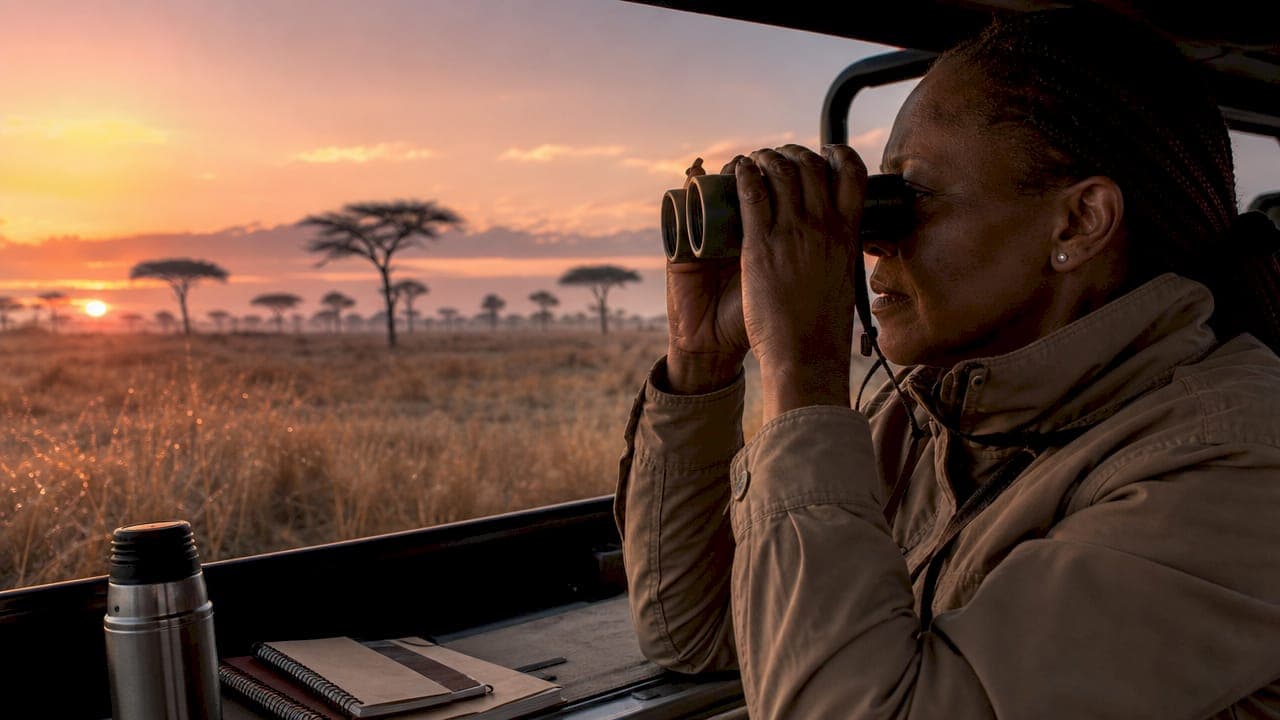
Wildlife sightings on an early morning safari are the most rewarding encounters you can plan for, because animals are most active at dawn when temperatures are cool and energy is high. The term "game drive" is the standard industry term for these guided vehicle excursions, and the early morning slot is universally recognized as the prime window. In Hluhluwe-iMfolozi Park and iSimangaliso Wetland Park, Bushbabysafaris runs open vehicle game drives that put you in the bush precisely when nature is at its most alive. This guide covers the science behind morning activity, how to prepare, what to do on the drive, and how to photograph what you find.
Why early morning is the best time for wildlife sightings
The single biggest reason to set your alarm early is animal behavior. Mammals regulate body temperature, and in the heat of a KwaZulu-Natal afternoon, most species rest in shade and become nearly invisible. At dawn, cooler temperatures drive peak activity, pushing predators, grazers, and birds into open areas where you can actually see them.
Predators are the headline act of any morning game drive. Lions, leopards, and cheetahs are most visible in the early morning, often finishing a hunt or patrolling territory as the sun rises. That window closes fast. By 9:00 AM, big cats typically retreat to cover and stay there until late afternoon.
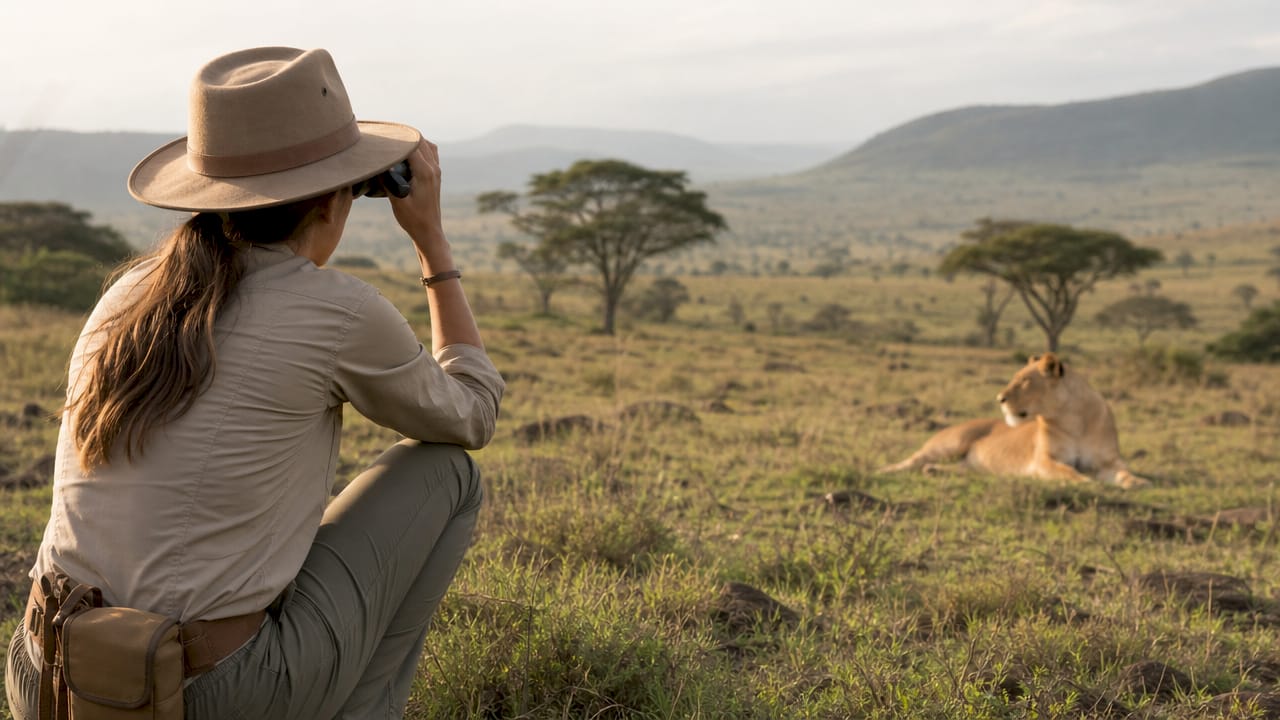
Vegetation plays a supporting role that most visitors underestimate. During the dry winter months from may through september, grasses thin out and shrubs lose leaves. Animals concentrate around shrinking waterholes, making sightings far more predictable. You are not searching a dense green wall. You are watching a stage where the animals come to you.
The light at dawn is also a genuine gift for anyone carrying a camera. Soft, directional golden light wraps around animals in a way that midday sun simply cannot replicate. Fewer vehicles are on the road at 6:00 AM, which means quieter conditions and less disturbance to the animals you are watching.
Key morning advantages at a glance:
- Animal activity: Predators hunt and patrol; grazers feed actively before heat builds
- Visibility: Dry season thins vegetation and draws animals to water sources
- Light quality: Golden hour provides ideal conditions for safari wildlife photography
- Crowd levels: Fewer vehicles mean calmer animals and better sightings
- Temperature: Cool air keeps both animals and guests comfortable and alert
How to prepare for an early morning safari
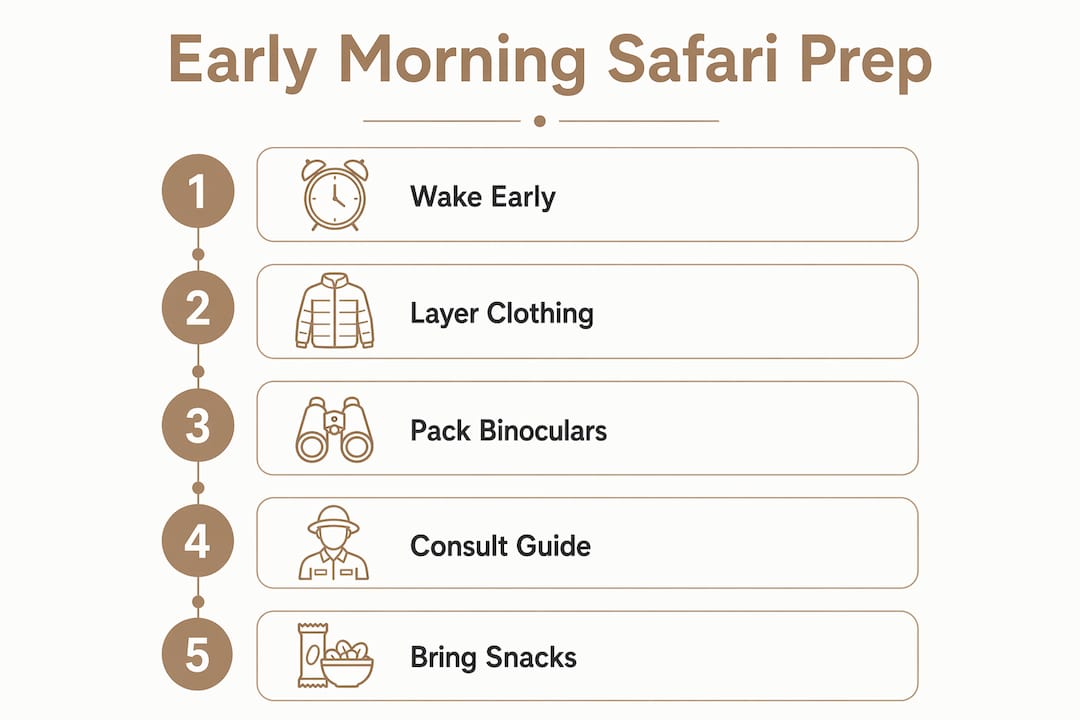
Preparation separates a great morning game drive from a miserable one. The schedule is non-negotiable. A typical morning safari starts with a 5:00 AM wake-up, a light breakfast at 5:30 AM, and departure by 6:00 AM. The drive itself lasts 3–4 hours, which balances peak wildlife activity with guest comfort. Missing that departure time means missing the best hour of the entire day.
Clothing and gear
Temperature is the most underestimated challenge on a morning game drive. Open vehicles create significant wind chill, and winter mornings can approach freezing even in KwaZulu-Natal. Pack for cold, not for the afternoon forecast.
| Item | Why it matters |
|---|---|
| Thermal base layer | Traps body heat against wind chill in open vehicles |
| Fleece or down jacket | Insulates during the coldest pre-dawn hour |
| Windproof outer layer | Blocks moving air on the drive |
| Warm hat and gloves | Extremities lose heat fastest in open vehicles |
| Neutral-colored clothing | Avoids alarming wildlife with bright colors |
| Binoculars | Extends your range for spotting distant animals |
Communicating with your guide
Your guide is your greatest asset. Consulting your guide about the previous night's sightings dramatically increases your chances of finding predators at dawn. Guides use radio networks and tracker teams to follow animal movements through the night. If a leopard was spotted near a drainage line at midnight, your guide knows exactly where to head at first light.
Pro Tip: Before you board the vehicle, ask your guide two questions: "What was seen last night?" and "Where are the waterholes most active right now?" Those two answers will shape the entire drive.
Step-by-step guide to a successful morning game drive
A structured approach to the morning drive produces consistently better results than simply riding and hoping. Follow this sequence to maximize your early morning animal encounters.
-
Wake up at 5:00 AM without negotiation. Set two alarms. The animals do not wait, and neither does the vehicle. Arriving at the meeting point groggy but on time is far better than missing departure.
-
Eat a light breakfast before you leave. A full stomach slows you down and creates discomfort in a moving vehicle on rough terrain. A hot drink and a small snack are enough. Bushbabysafaris offers breakfast packs for morning drives that are designed specifically for this purpose.
-
Brief your guide on your priorities. Tell them whether you want predators, birds, general game, or photography stops. A good guide adjusts the route based on your interests and the morning's intelligence from trackers.
-
Head to waterholes and recent predator territories first. These are the highest-probability areas in the first hour. Open plains and drainage lines are secondary targets once waterholes have been checked.
-
Stay quiet and still when animals are close. Sound and movement are the two fastest ways to push wildlife away. Keep your voice low, avoid sudden gestures, and resist the urge to stand up in the vehicle.
-
Let the guide position the vehicle. Experienced guides know the angle that gives you the best view without blocking the animal's escape route. Trust that positioning. It is not accidental.
-
Watch for behavioral cues, not just the animal itself. A lion staring intently in one direction is about to do something interesting. A herd of impala suddenly freezing means a predator is nearby. Reading behavior turns a sighting into a story.
Pro Tip: If you find a predator at rest, stay with it. Guides call this "sitting on a sighting." Animals that look inactive can move, hunt, or interact within minutes. Patience at a single sighting often delivers the best moments of the entire drive.
Common mistakes on morning safaris and how to avoid them
Even experienced travelers make avoidable errors on morning game drives. Knowing the pitfalls in advance puts you ahead of most guests on the road.
- Dressing for the afternoon, not the morning. The temperature difference between 6:00 AM and 10:00 AM can be dramatic. Guests who pack light regret it within the first 20 minutes on an open vehicle.
- Skipping the guide briefing. Guests who board without asking about overnight sightings miss the single most useful piece of intelligence available. That information is free and takes 60 seconds to gather.
- Rushing past non-predator sightings. Elephants, rhinos, hippos, and giraffes are extraordinary animals. Guests fixated only on lions often miss remarkable interactions happening right beside them.
- Choosing crowded popular spots without asking for alternatives. Ask your guide whether a quieter area with similar activity exists. In Hluhluwe-iMfolozi Park, the road network is extensive and less-traveled routes often yield better sightings.
- Ignoring bird activity as a predator signal. Vultures circling or descending almost always indicate a kill nearby. Oxpeckers landing on a specific bush often reveal a hidden animal. Birds are a free early warning system.
"The bush rewards patience and punishes impatience. The guests who see the most are rarely the ones who demand the most. They are the ones who watch carefully and wait." This is a truth every experienced guide will confirm.
Tips for safari wildlife photography at dawn
Dawn light is the best light for wildlife photography, but it requires specific technique. Zoom lenses are strongly recommended because they let you fill the frame without moving closer and disturbing the animal. A 100–400mm range covers most safari situations effectively.
- Set a high ISO (800–3200) in the first 30 minutes to compensate for low light without sacrificing shutter speed
- Use a shutter speed of at least 1/500s to freeze animal movement, especially for predators
- Shoot toward the light source in the first hour so the golden glow falls on the animal's face
- Burst mode captures behavioral moments that a single frame will miss, especially during movement or interaction
- Never use flash near wildlife. It startles animals and is considered unethical practice in most reserves
Pro Tip: The 20 minutes just after sunrise produce the warmest, most dramatic light of the entire day. Have your camera ready before the vehicle stops, not after.
Ethical practice matters as much as technique. Maintain the distances your guide sets. Never ask a guide to move closer for a better shot. The animal's comfort and safety take priority over any photograph.
Key Takeaways
The best wildlife sightings on an early morning safari come from combining the right timing, proper preparation, and active communication with your guide before and during the drive.
| Point | Details |
|---|---|
| Dawn is peak activity time | Animals feed, hunt, and move most actively in cool early morning hours. |
| Dry season maximizes sightings | May through september concentrates animals at waterholes for reliable encounters. |
| Guide briefing is non-negotiable | Ask about overnight sightings before departure to target predator locations. |
| Layering prevents cold discomfort | Wind chill on open vehicles makes warm clothing critical even in warm climates. |
| Patience outperforms movement | Staying with one sighting often produces better results than covering more ground. |
What I've learned from years of early mornings in the bush
People often ask me which sighting was the most memorable. My honest answer surprises them. It was not a lion kill or a leopard in a tree. It was a female elephant teaching her calf to drink from a muddy waterhole at 6:15 AM, with no other vehicle in sight. Observing behavioral nuances like cub rearing and social interaction transforms a safari from a checklist into something that stays with you for years.
The guests who leave most satisfied are rarely the ones who saw the most animals. They are the ones who watched carefully enough to understand what they were seeing. Unpredictability is part of the experience, not a flaw in the plan. Nature does what nature does, and the morning is when it does it most honestly.
My advice is simple. Go early, dress warm, talk to your guide, and then put your expectations aside. The bush will deliver something. It always does. Whether that is a Big 5 sighting or a ground hornbill walking slowly across an open road at sunrise, you will not regret being there.
— Larni
Morning safaris with Bushbabysafaris in KwaZulu-Natal
Bushbabysafaris runs open vehicle morning game drives into both Hluhluwe-iMfolozi Park and iSimangaliso Wetland Park, South Africa's first UNESCO World Heritage Site, from all accommodations in St Lucia and Hluhluwe. Every drive is expertly guided, giving you the best possible chance at meaningful wildlife encounters from the moment the sun rises.

Add a morning breakfast pack to your booking and you will have everything you need for a comfortable, well-fueled start. Browse the full range of safari packages to find the drive that fits your schedule and interests, and secure your spot before the best morning slots fill up.
FAQ
What is the best time for wildlife sightings on a safari?
Early morning, typically between 6:00 AM and 10:00 AM, is the best time for wildlife sightings. Animals are most active during cooler hours, and predators are especially visible at dawn.
How long does a morning game drive last?
Morning safari drives typically last 3–4 hours, which covers the peak activity window without exhausting guests. Most lodges schedule departure by 6:00 AM.
What should I wear on an early morning safari?
Layer up with a thermal base, a fleece or down jacket, and a windproof outer layer. Wind chill on open vehicles makes mornings significantly colder than the daily temperature forecast suggests.
Which animals are most visible during morning safari drives?
Lions, leopards, and cheetahs are most active and visible at dawn. Elephants, rhinos, and buffalo also move and feed actively in the morning before retreating to shade.
Does the dry season really improve wildlife sightings?
Yes. From may through september, vegetation thins and animals gather at waterholes, making sightings more concentrated and predictable than in the wet green season.