
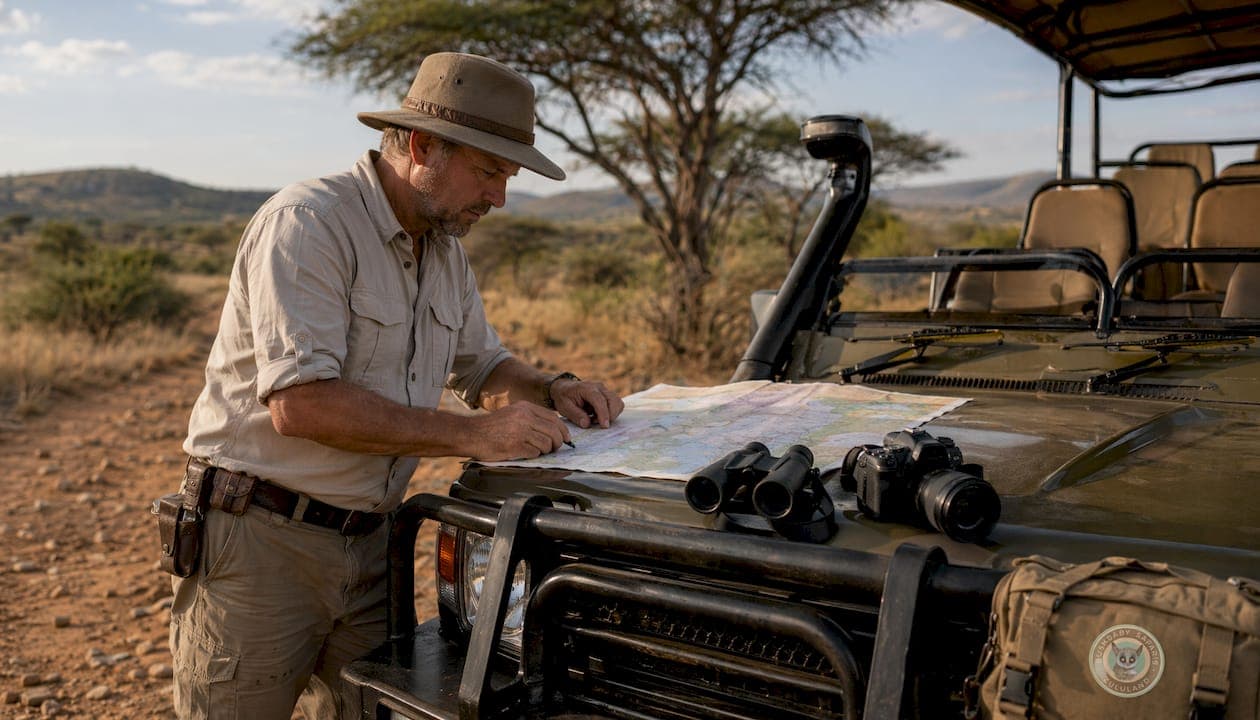
Safari vehicles in South Africa fall into two primary categories: open-sided 4x4s built for guided game drives and closed vehicles designed for self-drive tours. The types of safari vehicles South Africa offers directly shape your wildlife experience, from how close you get to a lion pride to whether you can follow a leopard off the main road. Understanding the difference between these categories before you book saves you from a frustrating mismatch between your expectations and the reality on the ground. Bushbaby Safaris Zululand operates open vehicle safaris into Hluhluwe-iMfolozi Park and iSimangaliso Wetland Park, South Africa's first UNESCO World Heritage Site, so we know exactly how much vehicle choice matters.
1. What are the main types of safari vehicles in South Africa?
Safari vehicles in South Africa split into two core categories: open safari vehicles used in guided, private reserve settings and closed vehicles used for self-drive national park tours. Each category serves a distinct purpose. Open vehicles maximize sensory engagement and wildlife proximity. Closed vehicles prioritize weather protection, comfort, and compliance with national park regulations.
The distinction matters because South African parks and reserves operate under different rules. Private reserves permit open vehicles and off-road driving. National parks like Kruger require tourists to stay in closed or semi-closed vehicles on designated roads. Your destination determines which vehicle type is even legal for your game drive.
2. Open 4x4 safari vehicles: design, features, and advantages
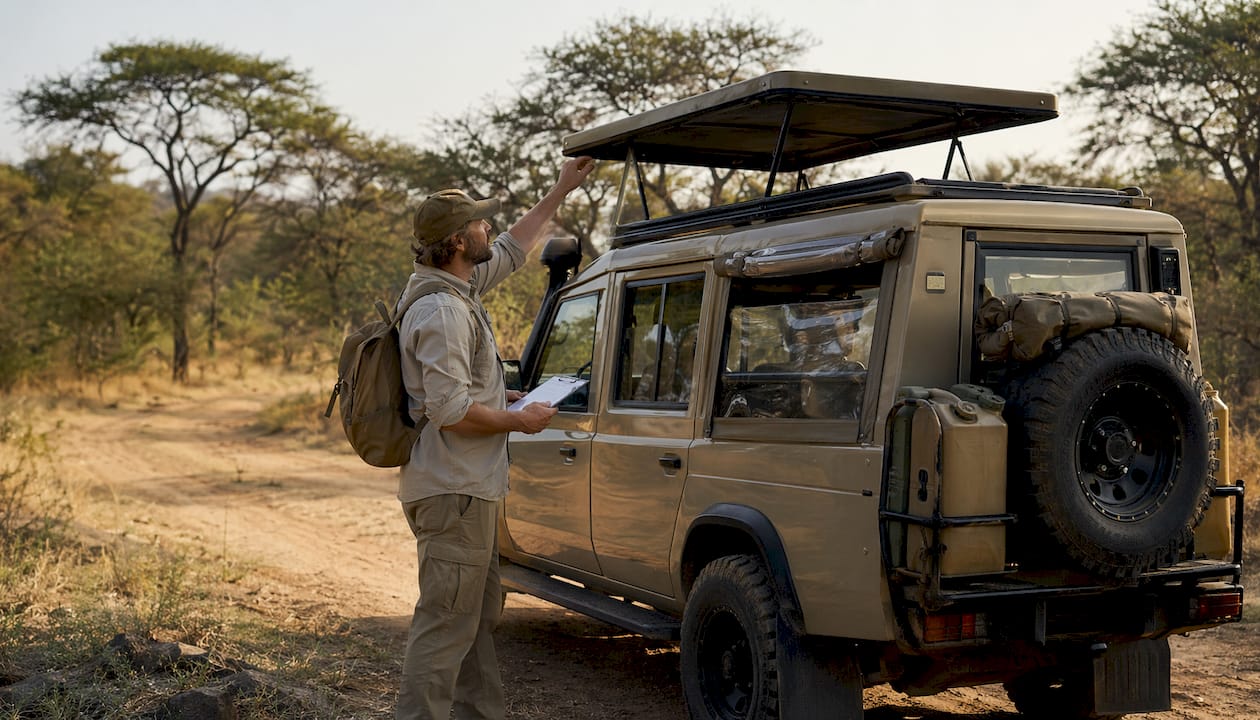
Open-sided vehicles in private reserves are purpose-built for immersive wildlife viewing. They feature reinforced suspensions, high ground clearance, and tiered elevated seating with no windows or roof. Every seat has an unobstructed sightline to the bush. You hear the birds, smell the air, and feel the terrain beneath you in a way no closed vehicle can replicate.
These vehicles typically seat up to 10–12 guests, which keeps groups intimate and allows the guide to manage the experience personally. The open design also means your camera never fights a window frame or tinted glass. Wildlife photographers consistently rate open vehicles as the superior platform for capturing natural behavior at close range.
The most significant advantage is off-road access. Guides in private game reserves legally drive open vehicles off established roads to track wildlife. That capability is what separates a guided private reserve safari from a self-drive national park experience. When a leopard disappears into the thicket, your guide can follow.
Key features of open safari vehicles:
- Tiered bench seating for unobstructed views from every row
- Reinforced suspension for rough, uneven terrain
- No roof or windows, maximizing sound and scent awareness
- Capacity of 10–12 guests for an intimate group experience
- Off-road capability in private reserves for active wildlife tracking
Pro Tip: Dress in layers on open vehicle game drives. Early morning temperatures in KwaZulu-Natal can drop sharply, and the wind chill at driving speed makes it feel significantly colder than the air temperature suggests.
3. Closed safari vehicles and self-drive options
Self-drive safaris in South African national parks require closed or semi-closed vehicles, and tourists must stay on designated roads at all times. This regulation exists to protect both wildlife and visitors. It also shapes the entire self-drive experience, making vehicle selection about comfort and visibility rather than off-road aggression.
Closed safari vehicles include enclosed 4WDs, SUVs, and modified minibuses. They offer air conditioning, roll-up windows, and in many cases pop-up roof hatches for standing game viewing. These features matter enormously on a full-day game drive when the midday sun is intense or an afternoon storm rolls in without warning.
Self-drive rental vehicles like the Toyota Hilux Double Cab are equipped with camping gear and carry approximately 125-liter fuel tanks, giving a range of around 1,150 km. That range makes extended touring across multiple parks practical without constant refueling stops. Rental costs vary based on equipment level and trip duration.
High seating position matters more than extreme off-road specs for most self-drive routes. Most national park roads are well-maintained gravel, so visibility over tall grass is the priority. A vehicle like the Toyota Quantum van delivers that height advantage without requiring a heavy-duty off-road platform.
Closed vehicle features at a glance:
- Air conditioning and roll-up windows for weather protection
- Pop-up roof hatches for flexible standing game viewing
- High seating position for visibility over grass and scrub
- Larger capacity for family groups and longer drives
- Compliance with national park road regulations
Pro Tip: If you are self-driving in Kruger, book a vehicle with a pop-up roof. It gives you the best of both worlds: protection when you need it and open-air viewing when conditions are perfect.
| Feature | Open safari vehicle | Closed safari vehicle |
|---|---|---|
| Roof and windows | None | Yes, with optional pop-up roof |
| Off-road access | Private reserves only | National park roads only |
| Weather protection | Minimal | Full |
| Group capacity | Up to 10–12 | Varies, often larger |
| Best for | Guided private reserve safaris | Self-drive national park tours |
4. Specialized configurations: 4x4, 6x6, minibuses, and hybrids
The Toyota Land Cruiser is the standard safari vehicle across southern and eastern Africa. Its 4x4 configuration handles the vast majority of safari terrain with reliability and proven durability. Most guided open vehicle safaris and many self-drive rentals use Land Cruiser-based platforms.
The 6x6 extended Land Cruiser is a niche configuration built for extreme conditions. It carries heavier loads and delivers better traction on muddy, rutted roads. The trade-off is a wider turning circle and greater overall weight, which limits maneuverability in dense bush. Standard 4x4 vehicles handle most dry-season routes without issue. The 6x6 is reserved for wet-season expeditions where terrain becomes genuinely challenging.
Safari minibuses occupy a different niche entirely. They carry larger groups, typically 8–12 passengers, and prioritize interior space and legroom over off-road performance. Family groups often prioritize interior space over rugged capability, especially on long game drive days on well-maintained park roads. Modified minibuses with pop-up roofs balance that comfort with adequate game viewing access.
| Vehicle type | Best terrain | Group size | Key advantage |
|---|---|---|---|
| 4x4 Land Cruiser (open) | Private reserve, rough tracks | Up to 10–12 | Off-road tracking, immersive viewing |
| 4x4 SUV (closed) | National park gravel roads | 4–7 | Comfort, weather protection |
| 6x6 Land Cruiser | Wet-season, heavy load routes | Up to 12 | Traction and load capacity |
| Safari minibus | Maintained park roads | 8–12 | Interior space, family comfort |
5. How to choose the right safari vehicle for your trip
The reserve type is the single most important factor in vehicle selection. Private reserves like those surrounding Hluhluwe-iMfolozi Park allow open vehicles and off-road driving, which delivers a fundamentally different experience from a national park self-drive. If your goal is close wildlife encounters and active tracking, a guided open vehicle in a private reserve is the right choice.
Terrain and season also influence the decision significantly. Dry-season routes across most South African parks suit standard 4x4 vehicles perfectly. Wet-season travel, particularly in areas with clay-heavy soils, may require higher clearance or the added traction of a 6x6 platform. Always check road conditions for your specific destination and travel dates before committing to a vehicle type.
Group size and comfort tolerance shape the practical choice. Solo travelers and couples thrive in open vehicles. Large family groups benefit from the legroom and climate control of a closed minibus or SUV, especially on drives lasting six hours or more. Read more about family-friendly vehicle considerations before you finalize your booking.
Practical checklist for choosing your safari vehicle:
- Private reserve or national park? Open vehicles are only permitted in private reserves.
- Dry season or wet season? Wet conditions may require heavier traction configurations.
- Group size? Larger groups need more interior space and capacity.
- Photography priority? Open vehicles give unobstructed angles from every seat.
- Budget? Guided open vehicle safaris include a professional guide; self-drive rentals require your own navigation and planning.
Pro Tip: First-time safari travelers often underestimate how cold open vehicles feel at dawn. Pack a fleece, a light windproof jacket, and a scarf regardless of the season. Your guide will thank you for not cutting the drive short.
Key takeaways
The vehicle you choose for your South African safari determines your level of wildlife access, comfort, and overall experience more than almost any other planning decision.
| Point | Details |
|---|---|
| Open vs. closed is the core choice | Open vehicles suit guided private reserve safaris; closed vehicles are required for national park self-drives. |
| Off-road access is a legal privilege | Only private reserves permit guides to drive open vehicles off designated roads for wildlife tracking. |
| 4x4 suffices for most routes | Standard 4x4 Land Cruisers handle the majority of South African safari terrain in dry conditions. |
| Visibility beats off-road specs for self-drive | High seating position matters more than extreme ground clearance on maintained national park roads. |
| Group comfort shapes the right vehicle | Families and large groups often gain more from interior space and climate control than from open-air exposure. |
What I have learned about safari vehicles after years in the bush
The debate between open and closed vehicles sounds simple on paper. In practice, it is more nuanced than most travel guides admit. I have watched first-time safari guests arrive in KwaZulu-Natal convinced they want the "authentic open vehicle experience," only to spend the first hour gripping the seat rail and wondering if the elephant 15 meters away is too close. Open vehicles are extraordinary. They are also genuinely wild, and that is not for everyone.
The misconception I encounter most often is that a closed vehicle means a lesser safari. That is not true. A well-positioned closed vehicle on a quiet Kruger road at sunrise, with a pop-up roof and a herd of elephant crossing 30 meters ahead, is a profound experience. The vehicle does not create the moment. The wildlife does.
What I do believe strongly is that guided open vehicle safaris in private reserves offer something self-drive simply cannot replicate: a trained guide who reads animal behavior, knows the terrain like the back of their hand, and positions the vehicle for the best possible sighting. That expertise is the real differentiator, not just the absence of a roof.
My honest advice: if you are visiting Hluhluwe-iMfolozi Park or iSimangaliso Wetland Park, choose a guided open vehicle safari with Bushbaby Safaris Zululand. The open vehicle guided experience in these parks is genuinely different from anything a self-drive closed vehicle delivers. Save the self-drive for Kruger, where the roads and infrastructure are built for it.
— Larni
Safari vehicle options with Bushbaby Safaris Zululand
Bushbaby Safaris Zululand runs open vehicle guided safaris from accommodations across St Lucia and Hluhluwe into two of South Africa's most remarkable wildlife destinations: Big 5 Hluhluwe-iMfolozi Park and iSimangaliso Wetland Park, a UNESCO World Heritage Site.
Every safari uses purpose-built open 4x4 vehicles with expert local guides who know these parks intimately. Whether you are traveling as a couple, a family, or a small group, the team tailors the experience to your pace and interests. Browse the full range of guided safari packages to find the right fit, from half-day Big 5 drives to full-day wetland expeditions. Booking is straightforward, and the team is always available to answer questions about vehicle comfort, group size, and what to expect on the day.
FAQ
What types of safari vehicles are used in South Africa?
South Africa's safari vehicles fall into two main types: open-sided 4x4s for guided private reserve safaris and closed 4x4s or SUVs for self-drive national park tours. The Toyota Land Cruiser platform is the most common base for both categories.
Can you do a self-drive safari in an open vehicle?
No. South African national parks require self-drive tourists to use closed or semi-closed vehicles and stay on designated roads. Open vehicles are only permitted in private reserves with a licensed guide.
What is the best safari vehicle for wildlife photography?
Open-sided vehicles are the best option for wildlife photography. They eliminate window glare and frame obstruction, and guides can position the vehicle off-road for optimal angles in private reserves.
How many people fit in a typical open safari vehicle?
Most open safari vehicles seat up to 10–12 guests in tiered rows. Smaller private vehicles carry 4–6 guests for a more exclusive experience.
Do I need a 4x4 for a self-drive safari in South Africa?
A high-clearance 4x4 or SUV is strongly recommended for self-drive safaris. Most national park roads are maintained gravel, so extreme off-road specs are less critical than a high seating position for visibility over tall grass.