
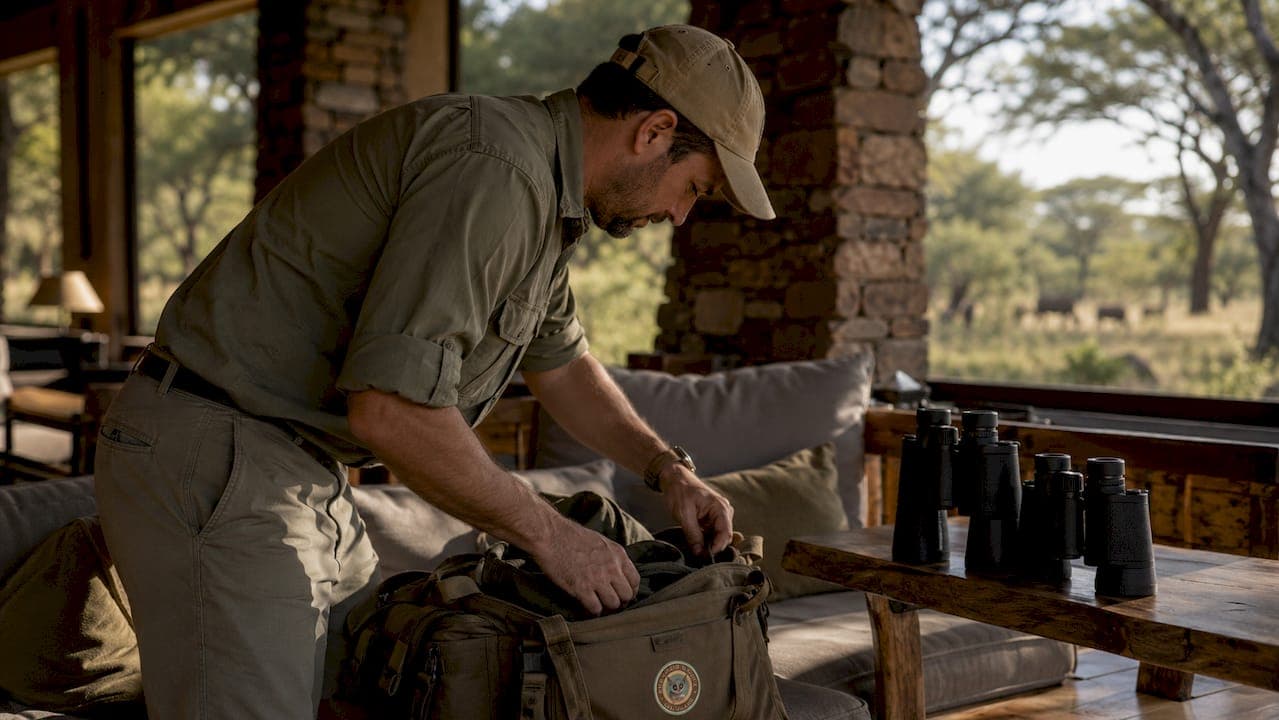
A safari lodge is a dedicated, all-inclusive accommodation situated within or near wildlife reserves, designed to blend wilderness immersion with hotel-style comfort. Unlike a standard hotel, a safari lodge places you inside the wild, where elephants may wander past your veranda and lions call through the night air. The all-inclusive model typically covers lodging, meals, beverages, and daily game drives in a single price. For travelers planning an immersive wildlife experience in Southern Africa, understanding what a safari lodge is shapes every decision, from which park you visit to how much time you actually spend watching wildlife.
What is a safari lodge, and what makes it different?
A safari lodge is defined as a permanent or semi-permanent tourist accommodation built within or on the boundary of a wildlife reserve, designed specifically around the safari experience. The industry term covers a wide range of structures, from brick-and-stone buildings with swimming pools and spas to canvas-walled tented camps that let you hear every rustle in the bush. What unites them is purpose: every design choice, from open-air dining areas to elevated walkways, exists to connect you with the surrounding wilderness.
Most top-tier lodges include daily safari activities, meals, and beverages in the base price. That all-inclusive structure removes the guesswork from budgeting and keeps your focus on the experience rather than the tab. Architecture typically uses natural materials like timber, thatch, and stone, with open-air lounges that pull the outside in while keeping you comfortable.
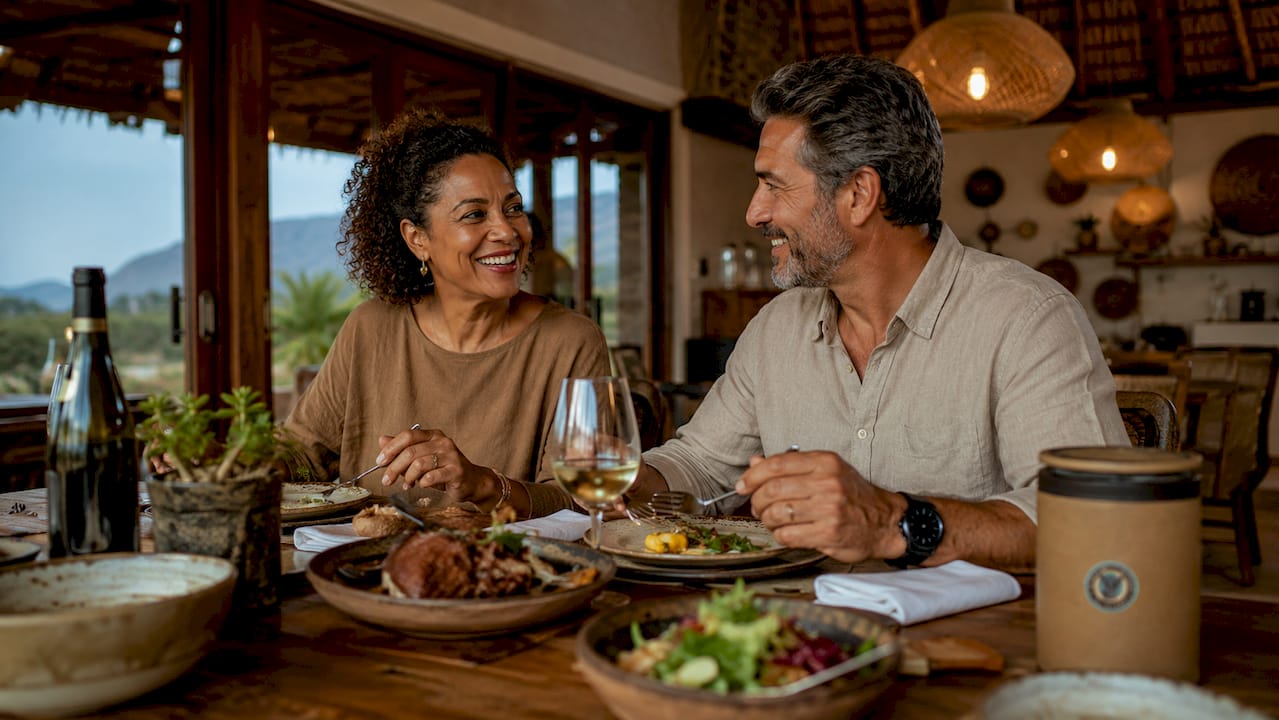
The safari lodge experience is fundamentally different from a city hotel stay. You are not simply sleeping near a park. You are living inside an ecosystem, and the lodge is built to honor that fact.
What are the types of safari lodges?
Safari lodges vary widely in structure, size, and style. Three main categories define the spectrum.
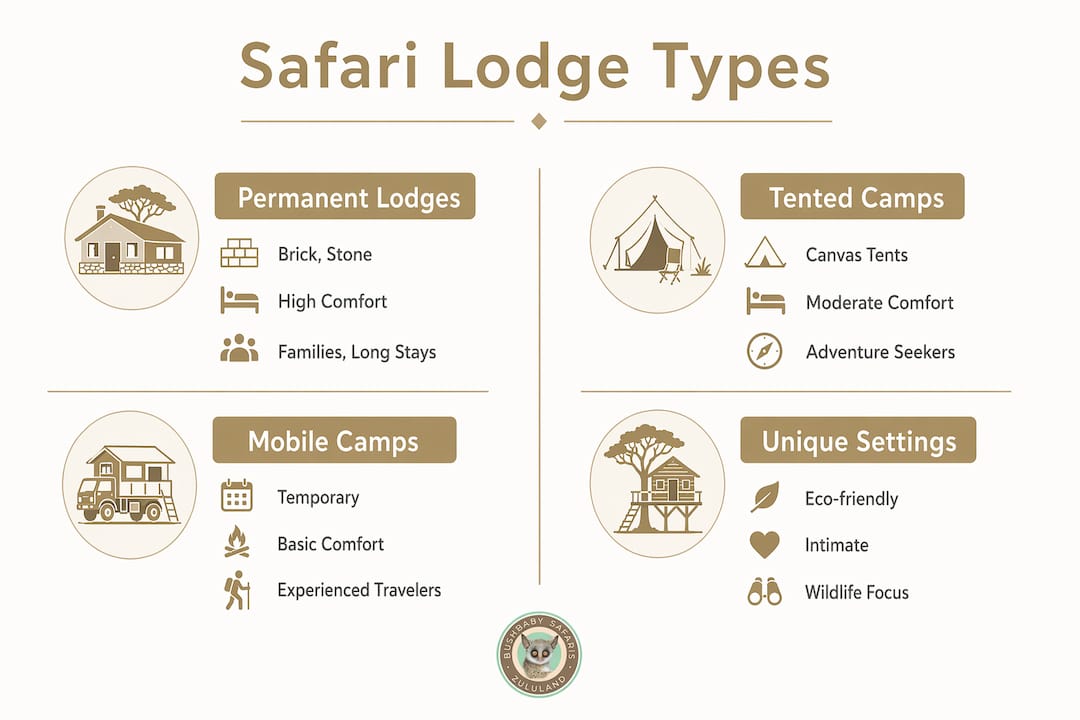
| Type | Structure | Comfort Level | Best For |
|---|---|---|---|
| Permanent lodge | Brick, stone, or timber | High: pools, spa, climate control | Families, first-timers, longer stays |
| Tented camp | Canvas walls, solid floors | Moderate: fans, en-suite bathrooms | Immersion seekers, bush purists |
| Mobile camp | Portable tents, minimal fixtures | Basic: shared facilities | Migration followers, adventurers |
Permanent lodges range from intimate boutique properties with 6–10 rooms to larger properties with 20–50 rooms, multiple dining areas, and conference facilities. Permanent structures provide sound insulation and climate control that canvas walls simply cannot match. That matters on a hot KwaZulu-Natal afternoon or a cold highveld morning.
Tented camps sit in the middle ground. They use canvas walls on solid platforms, giving you the sounds and scents of the bush without sacrificing a proper bed or en-suite bathroom. Mobile camps follow wildlife migrations and move with the herds, offering the most raw immersion but the least physical comfort.
- Permanent lodges suit travelers who want reliable amenities and a predictable comfort level.
- Tented camps suit those who want to feel the wilderness without giving up hot showers.
- Mobile camps suit experienced safari travelers chasing specific wildlife events like the wildebeest migration.
Pro Tip: If this is your first safari, choose a permanent lodge or a well-appointed tented camp. You will sleep better, recover faster between early morning drives, and enjoy the experience far more than if you push straight into a mobile camp.
How does location affect the safari lodge experience?
Location is the single most underrated factor in planning a safari. Lodges inside reserves offer immediate bush access, while those outside protected areas may require 30–60 minutes or more of travel time each way. That travel time adds up fast across a multi-day stay.
Lodges far from parks can cut your actual game viewing time in half due to transit. On a three-night stay with two drives per day, losing an hour each way means you spend up to 12 hours in a transfer vehicle instead of watching wildlife. That is a significant trade-off, especially for first-time visitors.
Location also affects safety and wildlife interaction. Unfenced lodges inside reserves allow animals to move freely through the property. That creates extraordinary moments, but it also means strict safety protocols apply. Guests at unfenced properties are escorted after dark, and free roaming at night is not permitted.
Key location factors to weigh before booking:
- Distance from the reserve gate: closer means more time in the bush.
- Fencing status: unfenced properties offer wilder encounters but require safety awareness.
- Terrain and road quality: some reserves have rough tracks that extend transfer times significantly.
- Reserve type: Big 5 reserves like Hluhluwe-iMfolozi Park in KwaZulu-Natal offer different encounters than wetland parks like iSimangaliso Wetland Park, South Africa's first UNESCO World Heritage Site.
Bushbaby Safaris operates open vehicle safaris from accommodations in St Lucia and Hluhluwe directly into both parks, which means your Big 5 game drives begin close to where you sleep.
What amenities and inclusions define the safari lodge experience?
The all-inclusive model simplifies safari travel by bundling accommodation, meals, beverages, and game drive activities into one price. You arrive, you unpack once, and everything else is taken care of. That simplicity is part of what makes safari lodges so appealing for travelers who want to focus entirely on wildlife.
A typical day at a permanent lodge follows a structured rhythm built around animal behavior:
- Pre-dawn wake-up (around 5:00–5:30 AM): Coffee and a light snack before heading out.
- Morning game drive (5:30–9:00 AM): The most productive viewing window of the day. Early morning drives before 9 AM are critical for seeing active wildlife, as predators and large herbivores are most mobile in cool hours.
- Midday break (9:00 AM–3:00 PM): Lunch, rest, pool time, or spa treatments. Animals rest in shade during peak heat, so this downtime is intentional, not wasted.
- Afternoon drive (3:00–6:30 PM): Animals become active again as temperatures drop. Sundowner drinks in the bush are a signature lodge ritual.
- Evening meal and social time: Communal dining under the stars, often around a fire.
Common lodge amenities include swimming pools, spa treatments, Wi-Fi (sometimes limited by location), curated dining menus, and guided bush walks. Many premium lodges are unfenced, meaning wildlife moves freely through the property. Guests are escorted between areas after dark for safety. This is not a restriction. It is part of the experience.
Pro Tip: Never skip the morning drive, especially on your first safari. Missing that window is the single most common regret among first-time lodge guests. Set the alarm, drink the coffee, and get on the vehicle.
How does a safari lodge compare to other accommodation options?
Understanding the differences between accommodation types helps you match your choice to your expectations. The table below summarizes the key distinctions.
| Feature | Permanent lodge | Tented camp | Mobile camp |
|---|---|---|---|
| Structure | Brick, stone, timber | Canvas on solid base | Portable tents |
| Comfort | High | Moderate | Basic |
| Wildlife immersion | Moderate to high | High | Very high |
| Sound insulation | Good | Low | Minimal |
| Typical stay length | 3–7 nights | 2–5 nights | 3–10 nights |
| Best guest profile | Families, first-timers | Couples, enthusiasts | Experienced travelers |
Safari lodges suit families and those seeking comfort and extended stays, while tented camps appeal to travelers who want deeper immersion. Mobile camps are for those tracking specific wildlife events and willing to sacrifice amenities for access.
The choice is not about which option is better. It is about which option fits your priorities. A traveler who sleeps poorly in heat and noise will not enjoy a mobile camp, no matter how spectacular the wildlife. A traveler craving raw bush sounds will feel disconnected in a fully air-conditioned lodge room.
Luxury lodges typically charge from $600 per person per night outside peak season, rising to $950 or more during peak periods. Those prices reflect game park fees, remote locations, and high-quality hospitality. Tented camps and mobile camps often cost less but offer fewer amenities.
Key Takeaways
A safari lodge is the most complete way to experience African wildlife, combining structured game drives, expert guiding, and genuine comfort inside the bush.
| Point | Details |
|---|---|
| Safari lodge definition | A permanent or semi-permanent all-inclusive accommodation built within or near a wildlife reserve. |
| Three main types | Permanent lodges, tented camps, and mobile camps each suit different comfort and immersion preferences. |
| Location matters most | Lodges inside reserves maximize game viewing time; those outside can lose 30–60 minutes per drive to transit. |
| Morning drives are non-negotiable | Drives before 9 AM deliver the best wildlife sightings and should never be skipped. |
| All-inclusive model | Most top-tier lodges bundle accommodation, meals, beverages, and game drives into one price. |
What I've learned about choosing the right safari lodge
By Larni
After years of guiding guests through KwaZulu-Natal, the most common mistake I see is travelers choosing a lodge based on photos of the pool rather than the location on a map. A stunning infinity pool means nothing if you spend two hours a day in a transfer vehicle instead of watching rhino at Hluhluwe-iMfolozi Park.
The second mistake is underestimating the rhythm of a lodge stay. Guests sometimes resist the early wake-up on day one. By day two, they are up before the guide knocks. The structure of a lodge day is not a schedule imposed on you. It is calibrated to animal behavior, and once you feel that alignment, everything clicks.
My honest advice: match the lodge type to your travel style, not to a wish list of amenities. If you are a light sleeper, choose a permanent lodge with solid walls. If you want to hear lions at 2 AM, choose a tented camp and accept that you will hear everything. Neither choice is wrong. The wrong choice is picking one and expecting the other.
For Southern Africa specifically, proximity to the reserve gate is the variable I weight most heavily when helping guests plan. The iSimangaliso Wetland Park, whose name means "Place of Miracle or Wonder," rewards guests who arrive early and stay patient. That patience is only possible when you are not exhausted from a long transfer.
— Larni
Safari packages with Bushbaby Safaris
Bushbaby Safaris runs expertly guided open vehicle safaris from accommodations across St Lucia and Hluhluwe directly into Hluhluwe-iMfolozi Park and iSimangaliso Wetland Park. You stay where you are comfortable, and the safari comes to you.
The explorer safari packages are built for travelers who want maximum time in the bush with local guides who know these parks like the back of their hands. Whether you are after the Big 5 or the extraordinary birdlife of iSimangaliso, there is a package suited to your pace and interests. You can also browse the full range of safari options or go straight to bookings to secure your dates. Nature does what nature does out here, and the best way to meet it is with an expert beside you.
FAQ
What is the safari lodge definition in simple terms?
A safari lodge is a tourist accommodation built within or near a wildlife reserve, designed to offer guided game drives, meals, and lodging in one package. The experience centers on wildlife viewing rather than resort-style leisure.
How do safari lodge amenities compare to a regular hotel?
Safari lodges typically include game drives, bush meals, and guided walks that hotels do not offer. Comfort levels range from basic tented camps to luxury permanent lodges with pools and spas.
What types of safari lodges exist?
The three main types are permanent lodges, tented camps, and mobile camps. Each offers a different balance of comfort and wildlife immersion to suit different traveler preferences.
How much does a safari lodge cost per night?
Luxury safari lodges typically start at $600 per person per night outside peak season and rise to $950 or more during peak periods, with prices reflecting park fees, remote locations, and full hospitality.
Is it safe to stay at an unfenced safari lodge?
Yes, with proper protocols in place. Unfenced lodges require nighttime escorts between areas, and guests are briefed on safety procedures at check-in. Wildlife encounters on the property are part of the experience, not a hazard.