
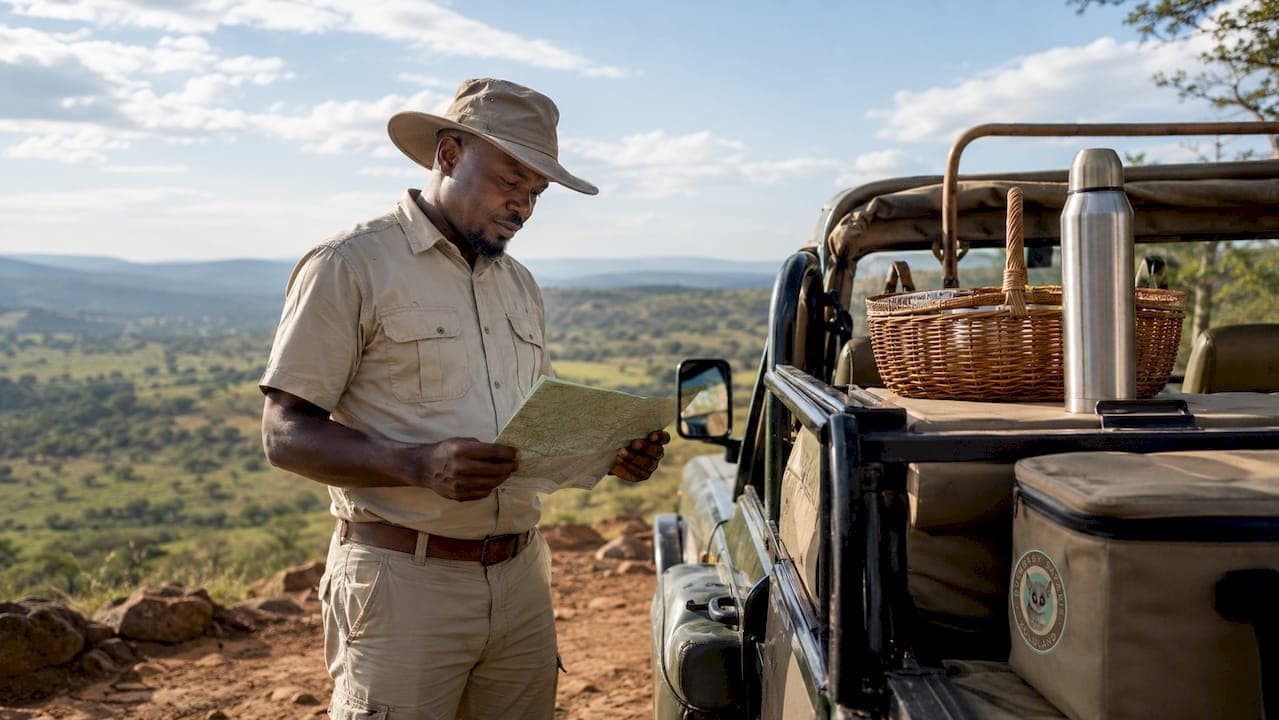
A full day safari is defined as a guided wildlife excursion lasting roughly 8–10 hours, covering two game drives, door-to-door transport, and a midday break inside the park. Understanding what does a full day safari include before you book saves you from budget surprises and sets realistic expectations. In KwaZulu-Natal, Bushbaby Safaris Zululand runs open vehicle safaris from all accommodations in St Lucia and Hluhluwe into Hluhluwe-iMfolozi Park and iSimangaliso Wetland Park, South Africa's first UNESCO World Heritage Site. This guide covers every standard inclusion, what you pay separately, and how to get the most out of every hour in the bush.
What does a full day safari itinerary look like in St Lucia and Hluhluwe?
A full day safari runs approximately 8–10 hours from the moment your guide collects you at your accommodation. That total time includes transport to and from the park, two game drives, and a midday rest. The structure is not random. It follows wildlife behavior patterns that experienced guides know well.
The day unfolds in a clear sequence:
- Pre-sunrise pickup. Your guide collects you before first light. Arriving at park gates ahead of other vehicles is the single most consequential timing decision of the day. Animals are most active in the cool hours, and the roads are quieter.
- Morning game drive. This is the longest and most productive drive, typically lasting 3–4 hours. Predators are still moving, and the light is ideal for photography.
- Midday break. Most full day itineraries include a rest stop between 12:00 PM and 1:00 PM at a designated picnic site inside the park. Guests eat, stretch, and take in the surroundings without the vehicle moving.
- Afternoon game drive. As temperatures drop, animals become active again. This drive often produces different sightings from the morning.
- Return transfer. Your guide drops you back at your accommodation before the park gates close.
Gate opening and closing times vary by season in both Hluhluwe-iMfolozi Park and iSimangaliso Wetland Park. Your guide tracks these times precisely because arriving late at the gate or staying past closing carries real consequences. The guide's expertise shapes the itinerary at every step, from choosing which roads to take to knowing when to stop and wait.
Pro Tip: Set your alarm 15 minutes earlier than your guide requests. Being ready at the door when the vehicle arrives means you lose no time at the gate.
What is included in a full day safari package and what is usually extra?
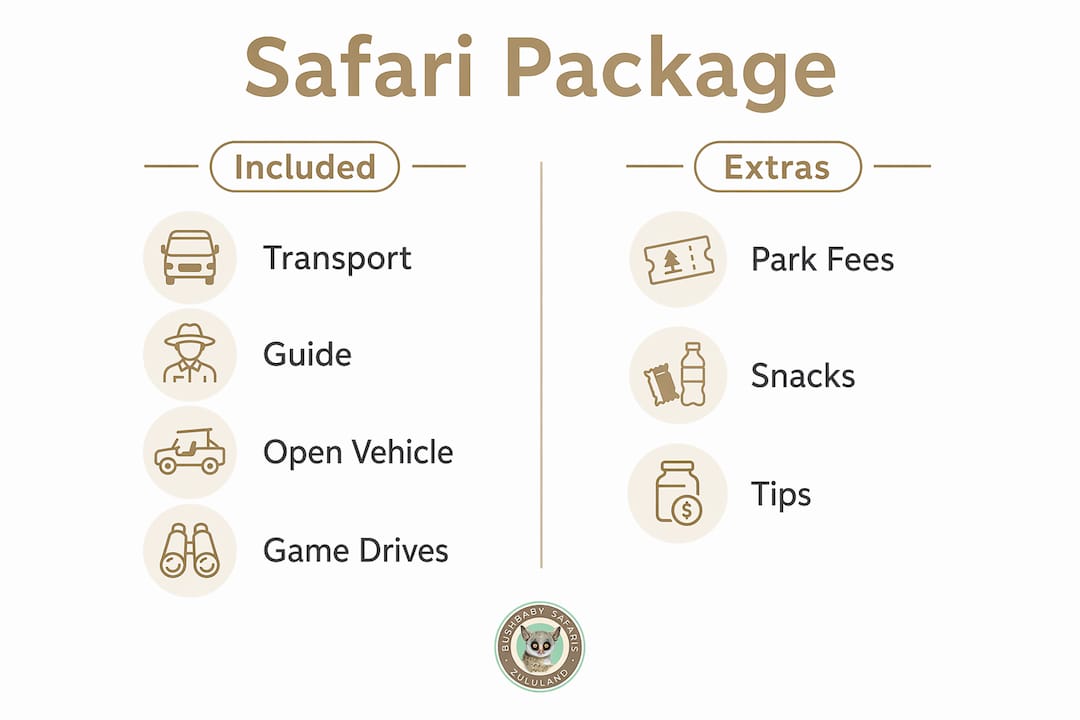
A standard full day safari includes door-to-door transport, a licensed professional guide, and use of an open safari vehicle. Those three elements are the non-negotiable core of any reputable package. Everything else depends on the operator.
Standard inclusions
- Door-to-door pickup and drop-off from your accommodation in St Lucia or Hluhluwe
- Open safari vehicle with unobstructed sightlines
- Licensed, experienced guide for the full duration
- Two guided game drives (morning and afternoon)
- Midday picnic break at a designated rest site inside the park
Common exclusions
- Park entry and conservation fees. International adult conservation fees for South African national parks are currently R602 for the November 2025 to October 2026 period. This fee is charged at the gate and is separate from your safari package price.
- Meals beyond the picnic break. A light picnic lunch is often included, but hot meals and restaurant stops are not standard.
- Alcoholic beverages. Cold water and soft drinks may be included, but alcohol is typically a separate cost.
- Guide gratuities. Tipping your guide is customary and expected, but it is not built into the package price.
Some operators do not include bottled water or snacks as standard. Always confirm this before your departure date. Bushbaby Safaris Zululand offers extra refreshments as an add-on, so you can plan your day without guessing.
| Item | Typically Included | Typically Extra |
|---|---|---|
| Open vehicle and guide | Yes | No |
| Door-to-door transport | Yes | No |
| Picnic lunch | Often yes | Confirm in advance |
| Park entry/conservation fees | No | Yes, paid at gate |
| Bottled water | Varies by operator | Confirm in advance |
| Alcoholic beverages | No | Yes |
| Guide tip | No | Yes, customary |
Pro Tip: Budget an additional R700–R900 per adult to cover park fees, a tip for your guide, and any snacks or drinks not included in your package.
How to prepare for a full day safari to maximize your experience
Preparation directly affects the quality of your sightings. An open safari vehicle means you are exposed to the elements for the full day. Variable weather is the norm: early mornings in Hluhluwe can be cold enough for a jacket, while midday temperatures climb sharply.
What to pack
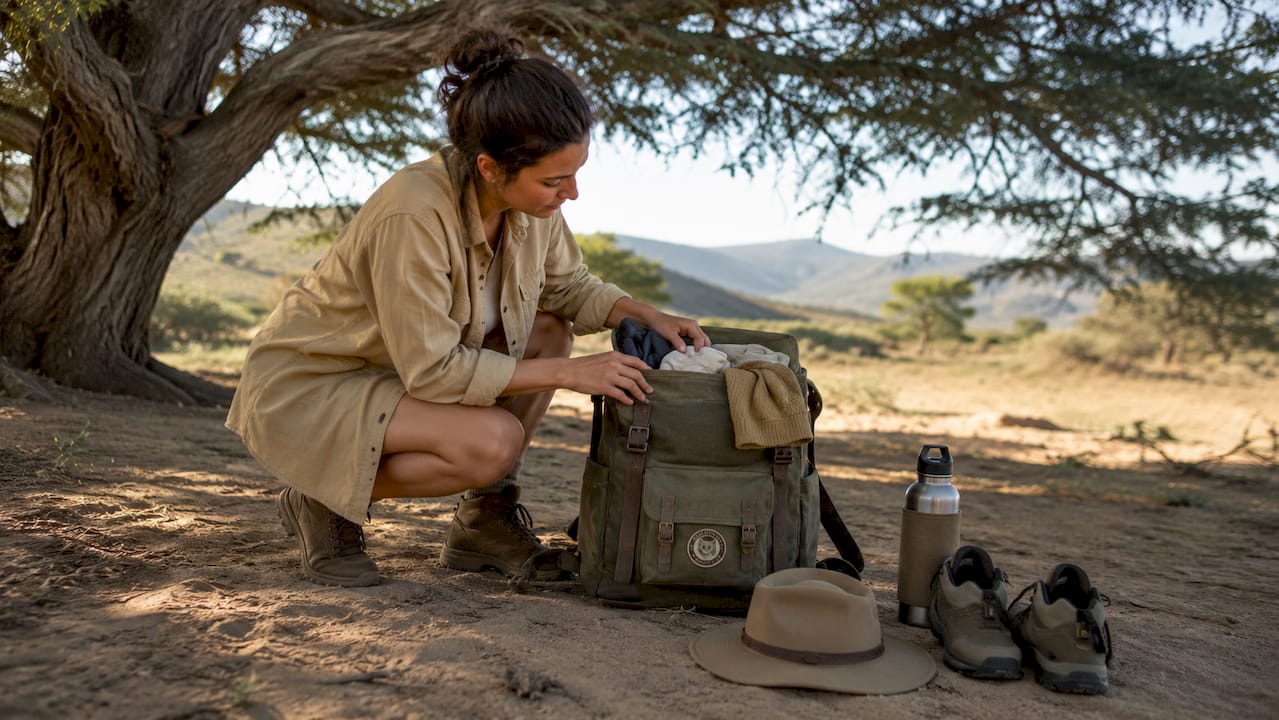
- Clothing layers. Bring a warm fleece or light jacket for the morning drive and a short-sleeved shirt for the afternoon. Neutral colors like khaki, olive, and gray blend into the environment. Avoid white and bright colors.
- Sun protection. A wide-brimmed hat, sunscreen, and UV-protective sunglasses are non-negotiable for the open vehicle.
- Binoculars. A pair rated 8x42 or 10x42 dramatically improves distant sightings. Your guide spots the animal; binoculars bring it close.
- Camera with fully charged batteries. Safari vehicles have no charging points, so charge all batteries the night before. Bring a spare battery if you shoot frequently.
- Refillable water bottle. Even if water is provided, having your own supply keeps you hydrated between stops.
Seasonal preparation matters too. The KwaZulu-Natal summer (october through march) brings heat, humidity, and afternoon thunderstorms. Winter (may through august) delivers clear skies and cold mornings. Both seasons offer excellent wildlife viewing, but your packing list shifts accordingly.
Pro Tip: Wear your warmest layer for the pickup and store it under your seat once the sun rises. You will be glad you brought it at 5:30 AM and equally glad you can stow it by 9:00 AM.
What wildlife and natural experiences can you expect on a full day safari?
The wildlife you encounter depends heavily on which park you visit and the time of year. Hluhluwe-iMfolozi Park is one of Africa's oldest protected areas and the only state-owned park in KwaZulu-Natal where you can see all of the Big 5: lion, leopard, elephant, rhino, and buffalo. iSimangaliso Wetland Park, whose name translates to "Place of Miracle or Wonder," offers a completely different experience: hippos, crocodiles, flamingos, and a coastal ecosystem unlike any game reserve in South Africa.
Common sightings across both parks include:
- White and black rhino (Hluhluwe-iMfolozi is the birthplace of Operation Rhino, the conservation program that saved the white rhino from extinction)
- Elephant herds moving through dense bush
- Giraffe, zebra, wildebeest, and impala in open grassland
- Hippos at rest in the St Lucia Estuary
- Nile crocodiles along waterways in iSimangaliso
- Over 500 bird species across both parks
Expert guides read the bush in ways that most travelers cannot. Guides sometimes stop at seemingly empty spots because of subtle signs: a broken branch, fresh tracks, or the alarm call of a bird. Those pauses often lead to the most memorable sightings. For a closer look at what those encounters feel like, the Big 5 safari encounters blog from Bushbaby Safaris Zululand captures real moments from the field.
"The best safari memories often arise from unexpectedly quiet, patient observations rather than rushing to see all notable animals quickly. Slow down, trust your guide, and let the bush come to you."
Seasonal changes shift the experience meaningfully. Winter thins the vegetation, making animals easier to spot. Summer brings newborn animals, dramatic skies, and lush green landscapes that feel almost cinematic from an open vehicle.
Key Takeaways
A full day safari in KwaZulu-Natal includes transport, a licensed guide, an open vehicle, two game drives, and a midday break, while park fees and tips are always paid separately.
| Point | Details |
|---|---|
| Core inclusions | Transport, open vehicle, licensed guide, and two game drives are standard in every reputable package. |
| Park fees are separate | International conservation fees are R602 per adult for 2025–2026 and are paid at the gate. |
| Confirm water and snacks | Not all operators include refreshments; always ask before your departure date. |
| Charge all batteries | Safari vehicles have no charging points, so prepare all camera gear the night before. |
| Early start is critical | Arriving at the park gate before opening puts you ahead of crowds and into prime wildlife territory. |
What I have learned from guiding full day safaris in KwaZulu-Natal
The question I hear most often after a full day safari is: "Why didn't we see a leopard?" My honest answer is that a leopard sighting is a gift, not a guarantee. Travelers who arrive expecting a checklist of animals often miss the extraordinary things happening right in front of them: a dung beetle rolling its ball across the road, a lilac-breasted roller perched on a dead tree, a herd of nyala moving silently through the undergrowth.
The biggest misconception about full day safari packages is that more time automatically means more sightings. Time matters, but patience and silence matter more. Animals tolerate vehicles but not noise or sudden movement. The guests who put their phones down, stay quiet, and follow their guide's cues consistently have better experiences than those who spend the drive scrolling or talking loudly.
My other observation: travelers consistently underestimate how cold an open vehicle feels at 5:00 AM in july. Pack the jacket. You can always take it off. You cannot borrow warmth from the bush.
Choose your safari package based on what you genuinely want from the day. A 9-hour safari drive gives you the full rhythm of the bush, from predawn stillness to the golden afternoon light. A shorter drive suits travelers with limited mobility or young children. Neither is wrong. The best safari is the one that fits your pace.
— Larni
Plan your full day safari with Bushbaby Safaris Zululand
Bushbaby Safaris Zululand runs open vehicle safaris from every accommodation in St Lucia and Hluhluwe directly into Hluhluwe-iMfolozi Park and iSimangaliso Wetland Park. Every package includes door-to-door transport, a licensed guide, and the full day structure described in this article.
The Explorer Safari Packages page lists full day options with clear details on what is included, current pricing, and available add-ons like refreshments and park braai (BBQ) options. You can also check the early morning wildlife sightings blog to get a feel for what the first hours in the bush actually look like. Ready to book? Visit Bushbaby Safaris Zululand and secure your spot directly online.
FAQ
What does a full day safari include as standard?
A full day safari includes door-to-door transport, a licensed guide, an open safari vehicle, and two guided game drives with a midday picnic break. Park entry fees, alcoholic beverages, and guide tips are paid separately.
How long does a full day safari last?
Full day safaris last approximately 8–10 hours, including transport to and from the park and two game drives. The total time in the park is typically 6–7 hours.
Are park fees included in a full day safari package?
Park fees are not included in most safari packages. In South Africa, international adult conservation fees are currently R602 per person for the 2025–2026 period and are paid at the gate.
What should I bring on a full day safari?
Bring layered clothing in neutral colors, a wide-brimmed hat, sunscreen, binoculars, and a camera with fully charged batteries. Confirm with your operator whether water and snacks are provided before your departure day.
What is the best time to arrive at the park on a full day safari?
Being at the park gate just before opening is the most effective timing strategy. It puts you ahead of other vehicles and into prime wildlife territory during the most active hours of the day.
Recommended
- Beach/Park Braai (BBQ) (Full Day Safaris Only) Archives - Bushbaby Safaris Zululand
- Bookings - Bushbaby Safaris Zululand
- iSimangaliso Wetland Park Shore Excursions - Full Day Safari & Surf Excursion (about 8-9 hours) - Bushbaby Safaris Zululand
- Breakfast Packs (Morning Safaris Only) Archives - Bushbaby Safaris Zululand