

A safari itinerary is a structured travel plan that details your daily activities, accommodations, transfers, meal arrangements, and wildlife viewing schedule for every day of your trip. Think of it as the backbone of your entire safari experience. Without one, you risk wasted travel days, missed game drives, and the frustrating feeling of having rushed through something that deserved more time. Bushbaby Safaris Zululand builds every trip around a clear, well-structured safari plan so you spend more time watching elephants and less time figuring out logistics.
What is a safari itinerary and what does it include?
A safari itinerary is a documented, step-by-step travel plan covering dates, times, destinations, activities, breaks, and an overall trip summary. It creates a clear narrative for each day, from the moment you arrive to the moment you depart. The goal is to remove guesswork so every hour in the bush counts.
A complete safari travel plan covers these core elements:
- Daily game drive schedule: Morning and evening drive times, duration, and which park or reserve you are visiting
- Accommodation details: Lodge name, location, check-in and check-out times, and meal plan (bed and breakfast, half board, or full board)
- Transfer logistics: Road or air transfers between destinations, distances, and estimated travel times
- Park fees and permits: Entry costs per person per day, conservation levies, and any special activity permits
- Included activities: Guided bush walks, boat safaris, night drives, or cultural visits
- Emergency and contact information: Guide contacts, lodge numbers, and nearest medical facilities
Most balanced itineraries allocate 2–3 nights per destination to give wildlife enough time to reveal itself naturally. Rushing through a reserve in a single night almost always means you leave before the best sightings happen.
How long should a safari itinerary be for an optimal wildlife experience?
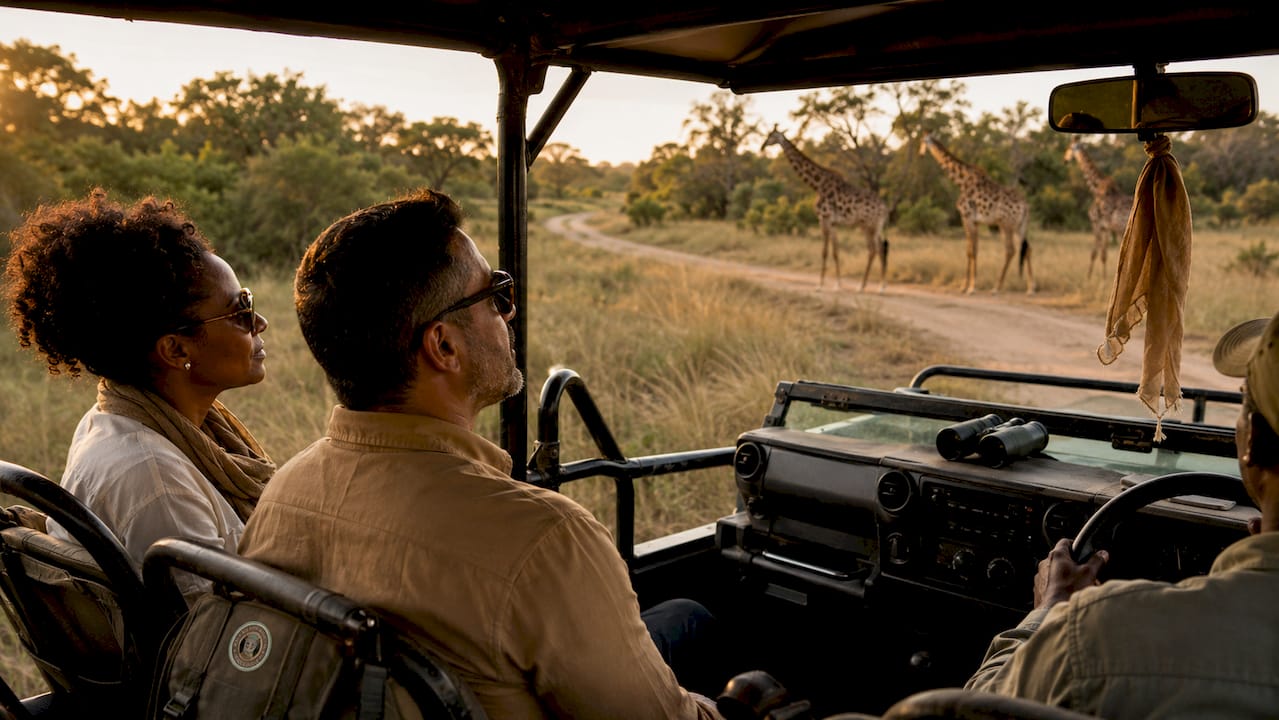
A first-time safari itinerary runs best at 7–10 days. That window gives you enough time to visit multiple reserves without feeling like you are constantly packing and unpacking. A 7-day trip is the recognized minimum for visiting more than one reserve without the experience feeling excessively rushed.
Wildlife sightings build day by day. Staying 3–4 nights in one reserve dramatically increases your chances of witnessing elusive Big 5 behavior, like a leopard dragging prey into a tree or a lion pride on a hunt. A one-night stopover rarely delivers that depth.
Shorter trips of 3–5 days work well when you focus on a single reserve or pair of nearby parks. In KwaZulu-Natal, for example, combining Hluhluwe-iMfolozi Park with iSimangaliso Wetland Park gives you Big 5 game viewing and a UNESCO World Heritage Site wetland ecosystem within a compact, manageable circuit.
Pro Tip: Plan at least one full rest day mid-trip. Fatigue from early morning game drives accumulates quickly, and a slower afternoon improves your alertness and enjoyment on subsequent drives.
Longer trips of 14 days or more suit travelers who want to combine South Africa with neighboring countries or explore multiple biomes. Planning timelines for complex combined trips can span 3–18 months depending on seasonality and tier preferences. Start early, especially if your trip falls in peak season.
How do budget and travel tier affect safari itinerary planning?
Your budget shapes every decision in your safari trip guide, from which lodges you stay in to how many parks you can realistically visit. Safari costs vary widely. A 7-day camping-style itinerary starts at approximately $2,490 per person, while a luxury ultra-peak experience can exceed $18,600 per person. Park fees alone for a multi-park circuit can add around $470 per person to your total.
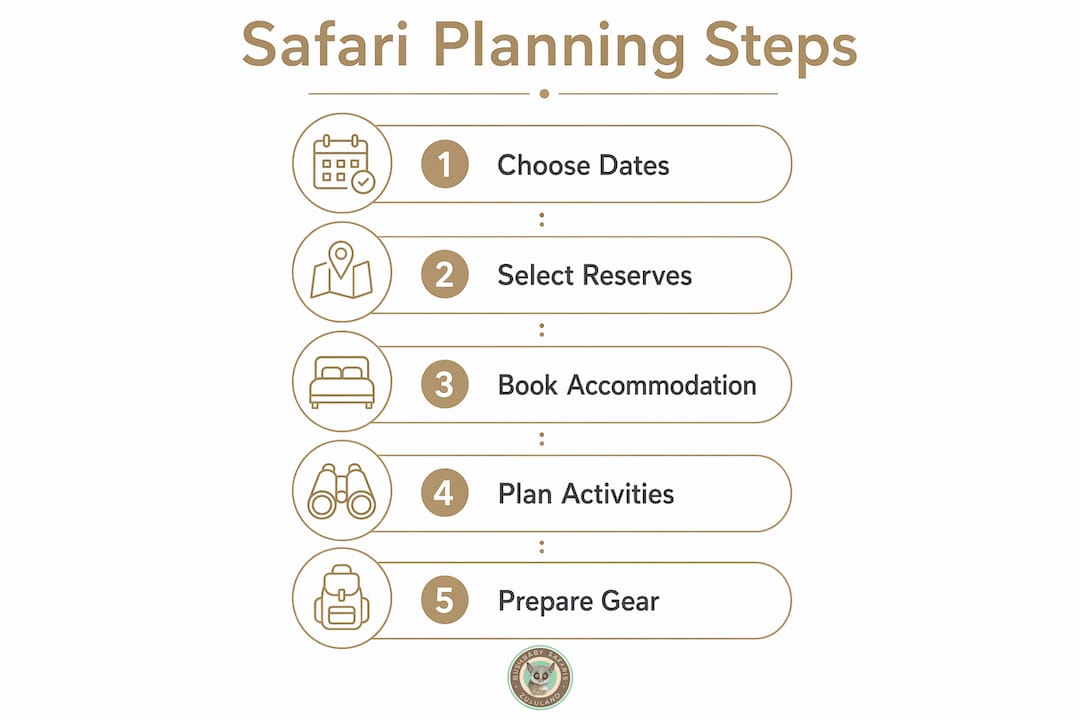
The expert planning sequence looks like this:
- Lock your travel dates and total budget
- Choose your comfort tier (camping, mid-range lodge, or luxury)
- Research operators who specialize in your chosen tier and region
- Request detailed quotes with full itinerary breakdowns
- Compare, confirm inclusions, and book
Skipping steps or changing the order causes confusion and often leads to overspending. Travelers who choose their lodge first and then try to fit a budget around it consistently overpay.
The table below shows how tier affects the key elements of your itinerary design:
| Tier | Accommodation style | Typical inclusions | Best for |
|---|---|---|---|
| Budget/camping | Tented camps, shared facilities | Self-drive or group game drives | Flexible, adventurous travelers |
| Mid-range lodge | En-suite chalets or rondavels | Guided drives, breakfast included | First-timers, couples, families |
| Luxury | Private lodges, plunge pools | All-inclusive, private game drives | Honeymoons, special occasions |
Accommodation choices directly affect your daily schedule. Luxury lodges typically offer private game drives at flexible hours, while mid-range options follow set group drive times. Knowing your tier before you plan your safari lodge options prevents mismatched expectations later.
What are common pitfalls in planning a safari itinerary?
The single biggest mistake travelers make is cramming too many destinations into one trip. Each reserve change costs roughly half a day in logistics, including packing, transfers, check-in, and orientation. That is time you could spend on a game drive.
The most common pitfalls, and how to avoid them:
- Too many reserves: Limit your trip to 2–3 key reserves over 7–10 days. More parks means more transit and fewer quality wildlife hours.
- Ignoring booking lead times: Peak season (july through september) requires 8–12 months of advance booking. Shoulder seasons need 4–6 months. Green season can be arranged 2–3 months out. Missing these windows means inferior lodge options.
- Locking details before locking core decisions: Choose your travel timing, wildlife priorities, comfort tier, and trip duration before you start comparing lodges or pricing specific parks.
- Under-staying at each reserve: One or two nights is rarely enough. Three to four nights per reserve gives guides time to learn your interests and track specific animals across multiple drives.
- Skipping specialist advice: A specialist operator who knows a region like the back of their hands saves you from costly mismatches between your expectations and what a destination actually delivers.
Pro Tip: Book your peak-season safari dates before you book flights. Lodge availability fills faster than airline seats, and locking accommodation first gives you a fixed anchor for all other planning.
Seasonal timing also shapes what you see. The dry winter months (june through september) concentrate wildlife around water sources, making sightings more predictable. The green season (november through february) brings lush landscapes, newborn animals, and far fewer crowds.
How to create a customized safari itinerary for South Africa's wildlife regions?
South Africa offers one of the most accessible and wildlife-rich safari destinations on the continent. A well-balanced South African safari itinerary combines different ecosystems to keep the experience fresh and varied. Combining savanna parks with river or wetland ecosystems adds both visual contrast and different wildlife viewing opportunities.
Key principles for building your personalized South Africa safari trip guide:
- Choose reserves that complement each other: Pair a Big 5 game reserve like Hluhluwe-iMfolozi Park with a wetland ecosystem like iSimangaliso Wetland Park for maximum wildlife variety within a short driving distance
- Align your timing with wildlife behavior: Dry season concentrates Big 5 animals near water; green season rewards birders and photographers with dramatic skies and lush vegetation
- Prioritize your wildlife interests: If rhino conservation is your focus, Hluhluwe-iMfolozi Park is the world's oldest proclaimed nature reserve and a global leader in white rhino protection
- Keep transfers manageable: St Lucia and Hluhluwe in KwaZulu-Natal place you within easy reach of both major parks, reducing transit time and maximizing game drive hours
- Use local expertise: Operators like Bushbaby Safaris Zululand run open vehicle safaris directly from accommodations in St Lucia and Hluhluwe, removing the complexity of self-drive logistics
South Africa's Greater Kruger region is the most recognized first safari destination nationally, but KwaZulu-Natal offers a compelling alternative. You get Big 5 sightings, South Africa's first UNESCO World Heritage Site, RAMSAR-listed wetlands, and a coastline, all within one compact region. Bushbaby Safaris Zululand's explorer safari packages are built around exactly this kind of thoughtful, multi-ecosystem design.
Key Takeaways
A well-planned safari itinerary is the single most important factor in determining whether your wildlife experience feels rushed and forgettable or unhurried and genuinely extraordinary.
| Point | Details |
|---|---|
| Define your itinerary early | Lock travel dates, budget, and comfort tier before comparing lodges or parks. |
| Stay longer per reserve | Allocate 3–4 nights per reserve to build wildlife sightings and reduce transit fatigue. |
| Limit your destinations | Two to three key reserves over 7–10 days maximizes game drive time over travel time. |
| Book well in advance | Peak season requires 8–12 months lead time; missing this window limits your lodge options. |
| Use local expertise | Specialist operators familiar with a region design itineraries that match your wildlife priorities. |
What I've learned from watching travelers plan their safaris
Over time, I've noticed that the travelers who enjoy their safaris most are rarely the ones with the longest itineraries. They are the ones who stayed put long enough to let the bush come to them. There is a real temptation to maximize every day, to tick off as many parks as possible, and to fill every hour with activity. Nature does what nature does, and the animals are not on your schedule.
The most rewarding safaris I've seen are built around patience. A family that spends four mornings in Hluhluwe-iMfolozi Park will almost always have richer stories than one that raced through three reserves in the same time. The guides get to know your interests. The animals become familiar. You stop scanning the horizon anxiously and start actually watching.
I also think travelers underestimate how much the planning sequence matters. Choosing a lodge before you know your budget, or picking dates before you understand seasonal wildlife behavior, creates a cascade of compromises. The decisions that feel minor early on, like whether to add a third reserve or book a luxury upgrade, have real consequences for the quality of every game drive that follows.
My honest advice: resist the urge to over-plan. Build in breathing room. Let your guide lead. And if you are visiting KwaZulu-Natal, trust that two parks done properly will outperform five parks done in a hurry every single time.
— Larni
Safari experiences worth planning for in KwaZulu-Natal
Bushbaby Safaris Zululand operates open vehicle safaris from all accommodations in St Lucia and Hluhluwe, giving you direct access to both Hluhluwe-iMfolozi Park and iSimangaliso Wetland Park without the stress of self-drive logistics.
Whether you are after a full-day Big 5 safari in Hluhluwe-iMfolozi or a morning on the water in iSimangaliso, every drive is expertly guided by people who know these parks like the back of their hands. Browse the standard safari packages to find the right fit for your travel dates, group size, and wildlife priorities. Bushbaby Safaris Zululand takes the complexity out of itinerary planning so you can focus on what matters: the wildlife, the landscapes, and the experience.
FAQ
What is a safari itinerary?
A safari itinerary is a structured travel plan that outlines your daily activities, accommodations, transfers, park fees, and game drive schedule for every day of your trip. It gives you a clear, step-by-step framework so your wildlife experience stays unhurried and organized.
How many days should a first-time safari itinerary include?
A first-time safari itinerary runs best at 7–10 days, with a 7-day trip considered the minimum for visiting more than one reserve without feeling rushed. Shorter trips of 3–5 days work well when focused on a single region like KwaZulu-Natal.
How many nights per reserve should I plan for?
Plan for at least 3–4 nights per reserve to give wildlife sightings time to build and to reduce the fatigue of constant transfers. Staying fewer than two nights rarely allows enough time to experience a reserve's full wildlife potential.
When should I book a safari itinerary?
Book 8–12 months ahead for peak season travel (july through september), 4–6 months ahead for shoulder seasons, and 2–3 months ahead for green season. Early booking secures better lodge options and preferred game drive times.
What should a safari itinerary include for South Africa?
A South Africa safari trip guide should include your reserve selection, daily game drive schedule, accommodation and meal plan, transfer logistics, park entry fees, and any additional activities like boat safaris or guided bush walks. Pairing Hluhluwe-iMfolozi Park with iSimangaliso Wetland Park covers Big 5 wildlife and UNESCO World Heritage wetlands in one compact KwaZulu-Natal circuit.