
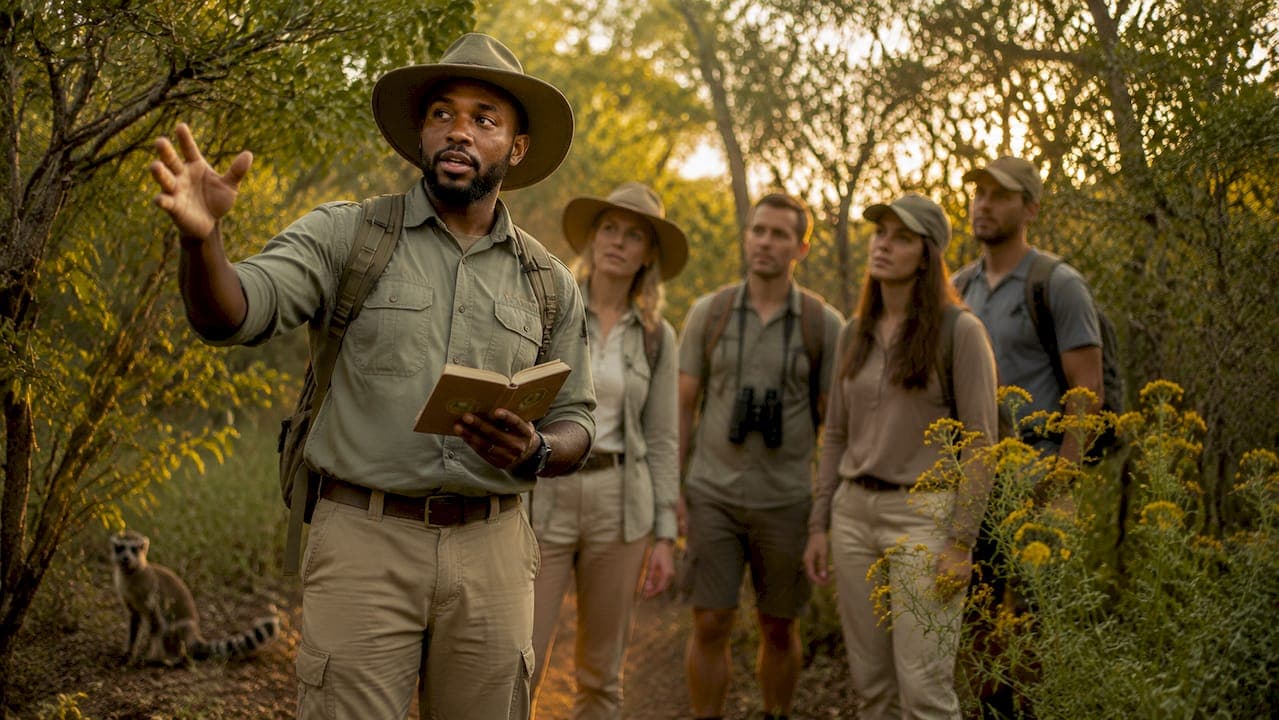
A walking safari is defined as a guided wildlife experience on foot through unfenced wilderness, led by a professional trails guide and armed ranger. Unlike a vehicle-based game drive, you move through the bush at animal ground level, reading tracks, smelling the air, and listening to sounds that a vehicle engine would drown out entirely. Groups are capped at 4–8 guests to keep the experience intimate and safe. Zambia pioneered the modern walking safari tradition, and its standards remain the global benchmark today. If you want to understand Africa's wild places at their most honest, a walking safari is the most direct path there.
What does a walking safari experience entail?
A walking safari typically runs for 3 to 5 hours, starting before sunrise when animals are most active and temperatures are cool. Your guide sets the pace, which is slow and deliberate. The walk covers 2 to 8 kilometers over that time, with frequent stops to examine what the environment is telling you at that exact moment.
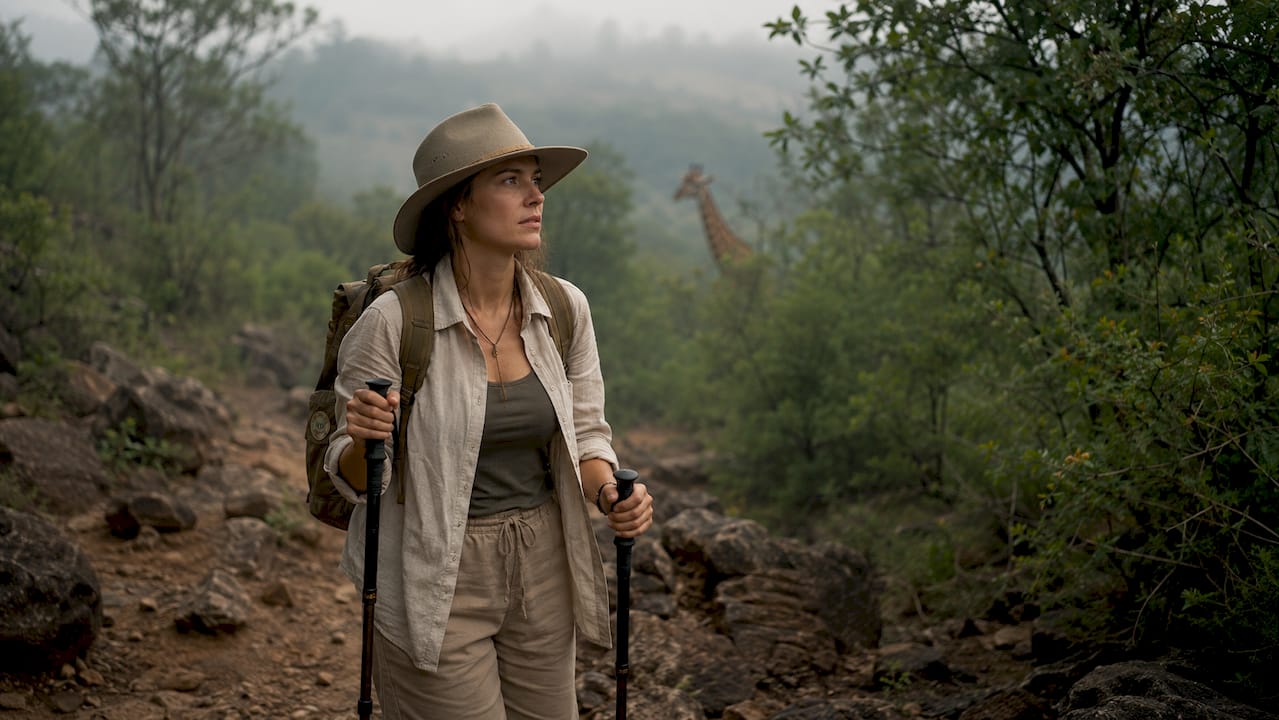
The focus shifts completely from what you see in a vehicle. On foot, you read the details: a lion's paw print pressed into soft sand, a dung beetle rolling its prize across a dirt path, the medicinal smell of a crushed wild herb. Walking safaris focus on fine ecological details like animal tracks, droppings, plants, and insect behavior rather than large animal sightings alone. That shift in attention is what makes the experience genuinely different.
What you can expect during a typical morning walk:
- Pre-walk briefing: Your guide explains safety protocols, hand signals, and what to do if you encounter dangerous animals.
- Single-file walking: You move quietly in a line behind the lead guide, with the armed ranger at the rear.
- Interpretive stops: The guide pauses regularly to explain tracks, plants, insects, and ecological relationships.
- Wildlife encounters: Encounters with elephants, buffalo, or big cats are possible and handled calmly by your guide.
- Return to camp: Most walks end with breakfast back at the lodge or mobile camp, giving you time to process the experience.
Pro Tip: Wear neutral-colored, muted clothing in natural fabrics. Bright colors and synthetic fabrics that rustle can alert animals and reduce your chances of close, undisturbed wildlife encounters.
How is safety ensured during walking safaris?
Safety on a walking safari is managed through professional expertise, strict protocols, and constant situational awareness. Walking safari guides undergo rigorous training in tracking, animal behavior, safety, and risk assessment, often with decades of experience in the same terrain. Their knowledge of how animals behave in specific conditions is your primary layer of protection.
The protocols guests follow are equally important. Walking safaris require strict safety measures including armed guides, single-file walking, quietness, and constant animal behavior monitoring. These are not suggestions. They are the system that keeps everyone safe in unfenced wild terrain.
Key safety practices on every walking safari:
- Armed ranger: A qualified ranger carries a firearm as a last-resort safety measure, not a first response.
- Pre-walk briefing: Guides explain hand signals for stop, crouch, and retreat before every walk.
- Single-file movement: Walking in line reduces your group's visual profile and keeps everyone within the guide's control.
- Quiet discipline: Silence allows the guide to hear and detect animals before they become a concern.
- Muted clothing: Neutral-colored clothing and quiet fabrics minimize disturbance to wildlife and reduce the chance of startling animals at close range.
Pro Tip: Trust your guide completely. If they signal you to stop or crouch, do it immediately and without question. Hesitation is the only real risk factor guests introduce.
Walking safaris are not reckless adventures. They are calm, educational experiences governed by professional safety judgment. The armed ranger is there as a precaution, and in the hands of an experienced guide, the risk profile is well-managed.
What makes walking safaris special compared to game drives?
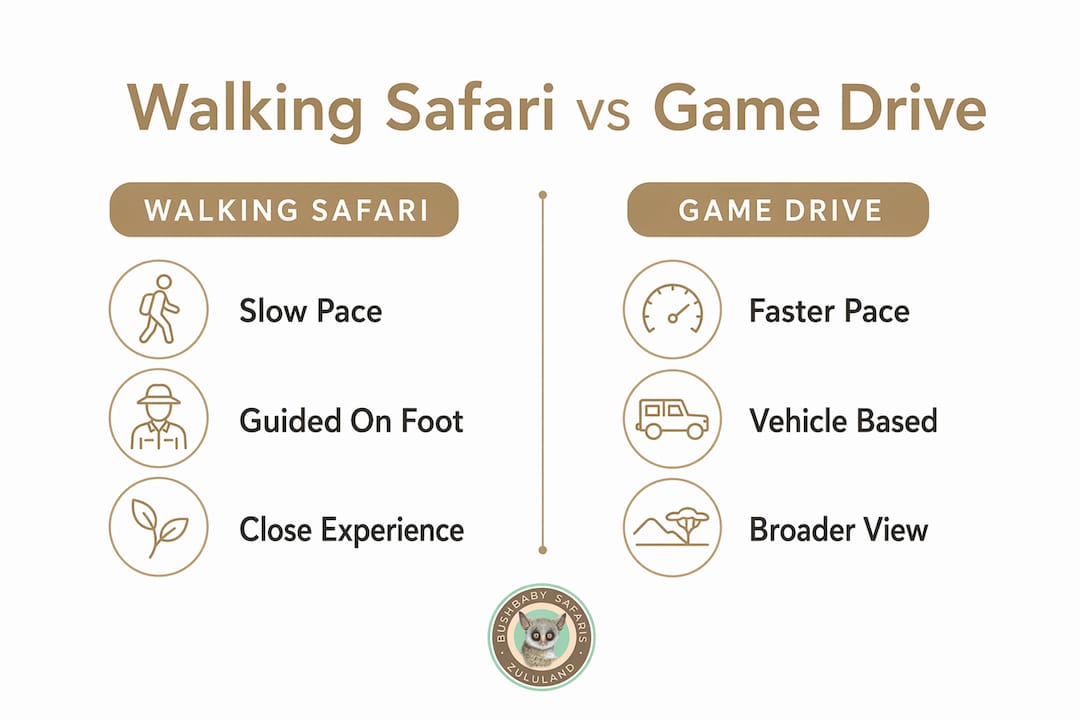
The core difference between a walking safari and a traditional game drive is your relationship to the environment. In a vehicle, you are an observer behind glass and metal. On foot, you are a participant in the ecosystem, subject to the same wind direction, sounds, and smells as every other animal present.
The sensory shift from vehicle to ground level forces you to engage with the wilderness in a way that is impossible from a vehicle. You notice termite mounds the size of furniture, the architecture of a weaver bird's nest, and the way an impala's ears rotate independently to track sound. These details are invisible at vehicle speed.
| Feature | Walking safari | Traditional game drive |
|---|---|---|
| Pace | Slow, 2–8 km over 3–5 hours | Fast, covering large distances |
| Focus | Tracks, plants, insects, fine detail | Large animal sightings |
| Group size | 4–8 guests maximum | Typically 6–10 guests per vehicle |
| Sensory engagement | Full: sound, smell, touch, sight | Primarily visual |
| Wildlife relationship | Participant in the ecosystem | Observer from a vehicle |
| Conservation impact | Low-impact, minimal footprint | Moderate fuel and road impact |
Walking safaris also shift your mindset from collecting sightings to building understanding. You stop counting animals and start reading a landscape. A guide who has walked the same valley for 20 years knows which termite mound a leopard uses as a lookout, which fig tree draws elephants in october, and which soil type tells you a waterhole is nearby. That knowledge transfers to you through conversation and observation during the walk.
Walking safaris support a low-impact tourism model that prioritizes sustainability and wildlife protection. Fewer vehicles, smaller groups, and no roads required means the wilderness stays wilder. That is a direct benefit to the animals and ecosystems you are there to experience.
Where are the best walking safari destinations?
Zambia is recognized as the walking safari pioneer with some of Africa's highest guiding standards, vast undisturbed wilderness, and deep conservation commitment. South Luangwa National Park is the global benchmark. Guides there have walked the same terrain for generations, and the park's remote valleys and floodplains offer encounters that feel genuinely wild.
Beyond South Luangwa, Zambia's Lower Zambezi and Kafue National Park each offer distinct walking safari styles. The Lower Zambezi combines riverine forest walks with canoe safaris, while Kafue's vast miombo woodland provides a different ecosystem entirely. Multi-day mobile fly-camping walking safaris allow guests to trek between remote areas inaccessible by vehicle, intensifying the wilderness immersion significantly.
| Destination | Key feature | Best for |
|---|---|---|
| South Luangwa, Zambia | Global benchmark for guiding standards | First-time walking safari guests |
| Lower Zambezi, Zambia | Riverine forest and river access | Combined walking and canoe experiences |
| Kafue National Park, Zambia | Vast miombo woodland, remote terrain | Experienced walkers seeking solitude |
| Tanzania (Selous/Ruaha) | Diverse ecosystems, varied wildlife | Travelers combining walking with vehicle drives |
| KwaZulu-Natal, South Africa | Big 5 access, iSimangaliso Wetland Park | Travelers based in St Lucia or Hluhluwe |
Zambia's walking safaris generate funds for anti-poaching patrols and community programs, making your visit a direct contribution to conservation. Zambia's low-volume, high-quality model keeps the wilderness experience away from mass tourism, which protects both the landscape and the quality of your experience.
For travelers based in KwaZulu-Natal, South Africa, the region around St Lucia and Hluhluwe offers guided wildlife experiences through Hluhluwe-iMfolozi Park and the iSimangaliso Wetland Park. Bushbaby Safaris Zululand operates open vehicle safaris from accommodations across both areas, giving you expert-guided access to Big 5 territory and one of Africa's most biodiverse wetland systems.
Key Takeaways
A walking safari is the most immersive way to experience African wildlife, defined by expert guidance, small groups, and a sensory engagement that vehicle-based game drives cannot replicate.
| Point | Details |
|---|---|
| Core definition | A walking safari is a guided 3–5 hour trek on foot through unfenced wilderness with a professional guide and armed ranger. |
| Group size matters | Groups capped at 4–8 guests keep the experience intimate, safe, and ecologically low-impact. |
| Safety is structured | Armed rangers, single-file walking, silence, and muted clothing form the safety system on every walk. |
| Zambia leads the world | South Luangwa National Park sets the global standard for guiding expertise and wilderness quality. |
| Sensory shift is the point | Walking forces you to notice ecological details invisible from a vehicle, deepening your connection to the wild. |
Why walking safaris changed how I see the bush
The first time I stood still in the African bush on foot, with no vehicle engine running and no metal frame between me and the landscape, I realized how much I had been missing. A vehicle is comfortable and efficient. It is also a filter. You see what moves and what is large. You miss almost everything else.
What a walking safari gives you is proportion. You are not the dominant presence in that ecosystem. You are a guest moving carefully through someone else's home. That shift in perspective is not something you can manufacture in a game drive, no matter how skilled the driver. It comes from the physical experience of being at ground level, breathing the same air, and leaving footprints next to the ones you are trying to read.
My honest advice: go in without expectations about big animal sightings. The guests who get the most from a walking safari are the ones who let the guide set the agenda. Some mornings you track a pride of lions for two hours and never see them. Other mornings you spend 20 minutes watching a dung beetle and learn more about African ecology than you would from a week of game drives. Both are exactly right.
Prepare physically by walking regularly in the weeks before your trip. Comfortable, broken-in boots matter more than any other piece of gear. And prepare mentally to slow down. The pace of a walking safari is the pace of the bush itself, and that is the whole point.
— Larni
Safari experiences with Bushbaby Safaris Zululand
Bushbaby Safaris Zululand operates guided open vehicle safaris through two of South Africa's most extraordinary wildlife destinations: the Big 5 Hluhluwe-iMfolozi Park and the iSimangaliso Wetland Park, South Africa's first UNESCO World Heritage Site. Both parks offer the kind of immersive wildlife access that walking safari enthusiasts appreciate.
Whether you are looking for a standard safari package or a more in-depth explorer safari experience, Bushbaby Safaris Zululand provides expert-guided access from accommodations across St Lucia and Hluhluwe. Every safari departs with knowledgeable guides who know these parks like the back of their hands, giving you the same depth of interpretation and personal attention that defines the best guided wildlife experiences anywhere in Africa.
FAQ
What is a walking safari in simple terms?
A walking safari is a guided wildlife experience on foot through unfenced wilderness, led by a professional guide and armed ranger. Groups are small, typically 4–8 guests, and walks last 3–5 hours.
Is a walking safari safe?
Walking safaris are safe when conducted by trained, experienced guides following strict protocols. Armed rangers, single-file movement, silence, and constant animal behavior monitoring form the safety system on every walk.
How far do you walk on a walking safari?
A typical walking safari covers 2–8 kilometers over 3–5 hours. The pace is slow and dictated by what the environment presents, with frequent stops for observation and interpretation.
What should I wear on a walking safari?
Wear neutral-colored, muted clothing in natural fabrics that do not rustle. Avoid bright colors and synthetic materials, as these can alert wildlife and reduce the quality of close encounters.
Where is the best place to do a walking safari?
Zambia is the global benchmark, with South Luangwa National Park offering the highest guiding standards and most remote wilderness access. KwaZulu-Natal in South Africa also provides excellent guided wildlife experiences through Hluhluwe-iMfolozi Park and iSimangaliso Wetland Park.