
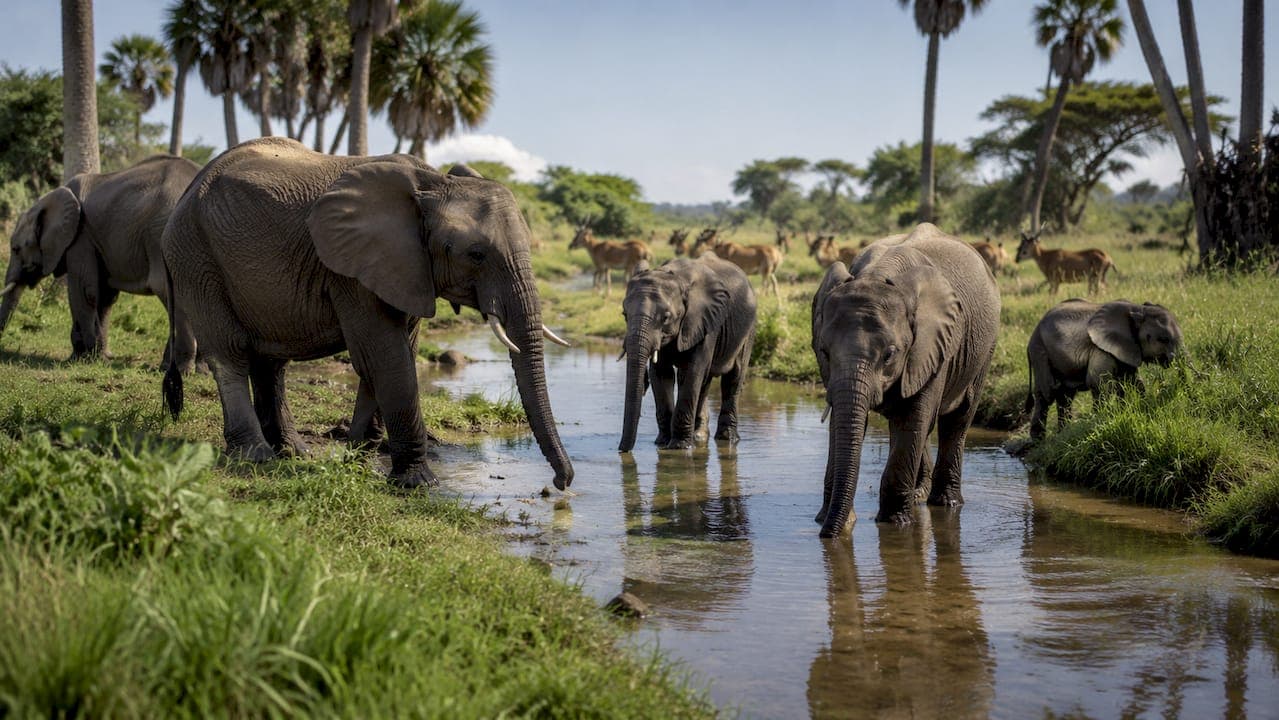
Water is the single most powerful force shaping life in a safari ecosystem. Every animal movement, plant growth cycle, and predator-prey interaction traces back to where water flows, pools, or disappears. Permanent rivers like the Mara and Ewaso Ng'iro anchor entire wildlife communities, while seasonal waterholes create some of the most dramatic ecological events on Earth. Understanding the role of water in safari ecosystem dynamics gives you a far richer lens through which to read the savanna. Whether you are a seasoned ecologist or a passionate nature enthusiast, water is the story beneath every sighting.
How does water availability shape wildlife behavior in safari ecosystems?
Water availability is the primary driver of animal distribution across safari landscapes. During the dry season, animals aggregate near permanent water, compressing populations that would otherwise spread across hundreds of square miles. This concentration creates the predictable, high-density wildlife sightings that define the classic safari experience.
The behavioral ecology at waterholes and river crossings is equally compelling. Predators ambush prey at river crossings, exploiting the moment when herbivores are most exposed and escape routes are fewest. Crocodiles, lions, and leopards all time their hunts around water access, making these sites the most intense predator-prey theaters in the savanna.
The Mara River illustrates this perfectly. Herd movements and dramatic crossings during the Great Migration are shaped entirely by river flow fluctuations, with wildebeest crossing at traditional points that shift annually based on water levels. The Ewaso Ng'iro River in Samburu National Reserve performs the same function in northern Kenya, where dry season concentrations near the river support some of the continent's most abundant biodiversity.
- Animals travel longer distances to reach permanent water as dry seasons intensify.
- Waterholes become social hubs where species that rarely interact are forced into close proximity.
- Predator success rates rise sharply near water because prey animals must drink regardless of risk.
Pro Tip: Plan your game drives around water sources in the late dry season, between july and october. Wildlife concentration near rivers and waterholes peaks during this window, giving you the best chance of witnessing predator-prey interactions firsthand.
What ecological processes in savanna ecosystems depend on water?
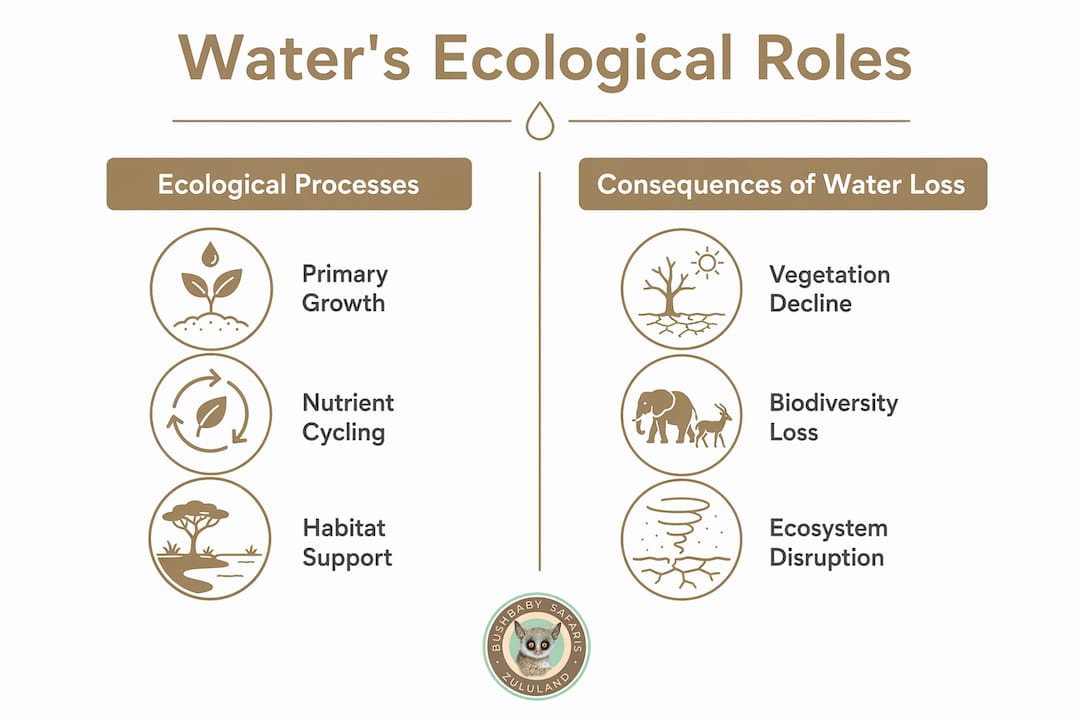
Water controls the timing and duration of primary production in savanna ecosystems. Without sufficient water, vegetation growth stalls, limiting nutrient mineralization and cutting off the herbivore food supply that sustains the entire food web. Grasses flush green within days of the first rains, triggering a cascade of feeding, breeding, and movement across the landscape.
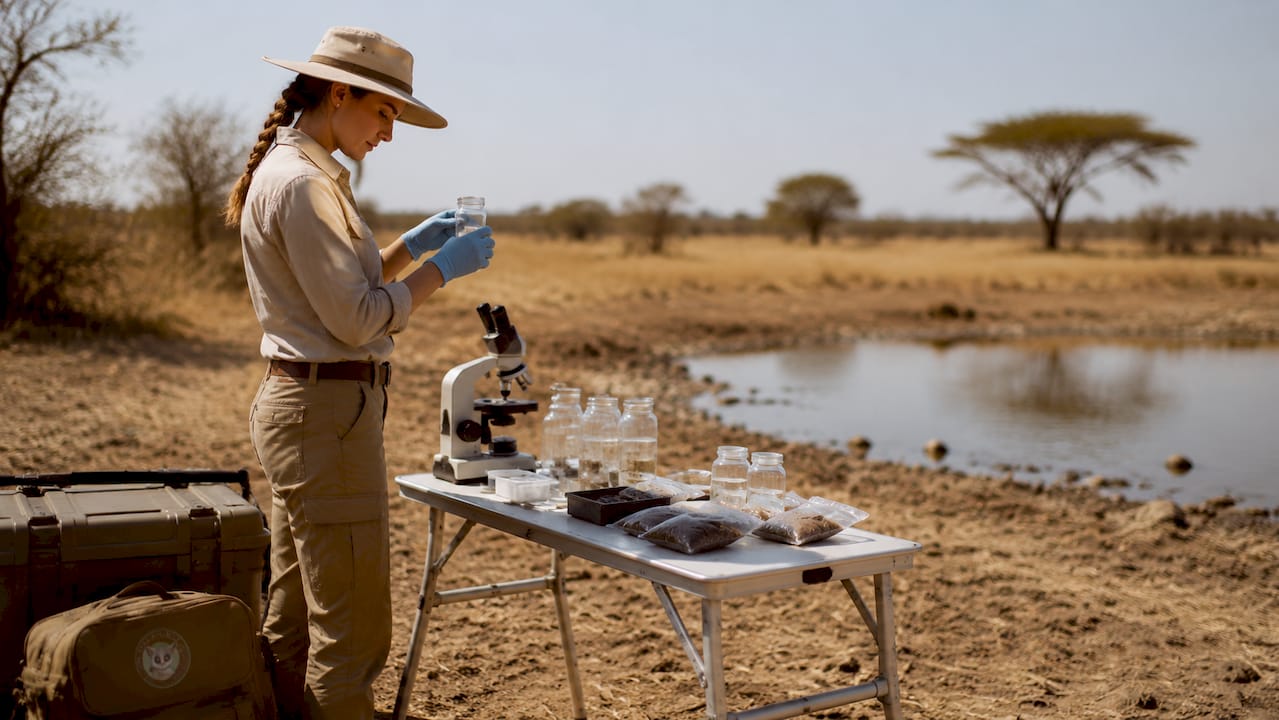
Nutrient cycling is equally water-dependent. Moisture activates soil microbes that break down organic matter, releasing nitrogen and phosphorus back into the system. When water is scarce, this process slows, and forage quality drops. Herbivores respond by moving toward areas with better-quality vegetation, often following the rains themselves.
Riverine forests and wetlands represent a distinct ecological zone within the broader savanna. These habitats harbor plant species that cannot survive in open grassland, and they support fauna that depend on dense cover and permanent moisture. The iSimangaliso Wetland Park in KwaZulu-Natal, South Africa's first UNESCO World Heritage Site, is a prime example. Its wetland systems sustain extraordinary plant diversity that in turn supports hippos, crocodiles, fish eagles, and hundreds of other species.
| Ecological process | Water's role | Consequence of water loss |
|---|---|---|
| Primary production | Triggers grass and tree growth cycles | Vegetation stalls; herbivores lose food supply |
| Nutrient cycling | Activates soil microbes that mineralize nutrients | Forage quality drops; animals disperse |
| Riverine habitat function | Sustains dense flora and permanent moisture zones | Unique plant communities collapse |
| Animal migration timing | Drives seasonal movement toward green pasture | Migration routes shift or shorten |
How do temporary and permanent water sources differ in their ecological roles?
Permanent rivers and temporary waterholes serve fundamentally different functions within safari landscapes. Permanent rivers provide reliable refuge year-round, sustaining resident populations of hippos, crocodiles, and riverine bird species even when the surrounding savanna is bone dry. They also act as corridors connecting isolated habitat patches, allowing gene flow between animal populations.
Temporary waterholes operate as ecological bottlenecks, concentrating animals in confined spaces where escape routes are limited. As these pools shrink to muddy depressions, the tension between species escalates. Elephants, zebras, and impalas drink side by side while lions wait in the surrounding scrub. These sites produce some of the most memorable wildlife encounters precisely because the stakes are so high for every animal present.
Man-made water points add a third dynamic. Artificial boreholes and dams alter traditional movement patterns, sometimes reducing migration distances and drawing animals away from their historical ranges. This shift can increase human-wildlife conflict risk as animals congregate near settlements and agricultural land.
Pro Tip: When visiting a waterhole, arrive early and stay quiet. Animals approach water cautiously and will abort a drinking attempt if they detect human noise. Patience at a waterhole often rewards you with sightings that a moving vehicle never would.
- Permanent rivers: year-round biodiversity support, habitat corridors, and stable predator territories.
- Temporary waterholes: seasonal intensity, concentrated interactions, and high predation pressure.
- Man-made water points: altered movement patterns and increased conflict risk near human settlements.
What threats do changes in water availability pose to safari biodiversity?
Human disruption of water cycles is the most direct threat to safari ecosystem health. Overuse and land management changes reduce river flow and degrade wetland function, stripping away the habitat that anchors entire wildlife communities. Agricultural irrigation upstream of major safari rivers draws down water volumes that downstream ecosystems depend on.
Riverbank degradation compounds the problem. When vegetation is cleared from riverbanks for farming or settlement, soil erodes into the channel. Siltation raises the riverbed, reduces water depth, and smothers the aquatic habitats that fish, amphibians, and waterbirds rely on. The ripple effect moves up the food chain quickly.
Altered water availability also reshapes animal migration. When dry-season refuges shrink or disappear, animals that once survived by concentrating near permanent water face increased mortality. The Tarangire River in northern Tanzania shows what is at stake. From june to october, animals rely heavily on this river as other water points dry up, making it a critical lifeline. Any reduction in its flow during this period would directly threaten the dense elephant herds and predator populations that depend on it.
- Over-extraction from rivers reduces dry-season flow, shrinking critical refuges.
- Siltation from eroded riverbanks destroys aquatic habitats and reduces water quality.
- Wetland drainage eliminates the unique plant communities that support specialized fauna.
- Altered migration routes increase mortality and reduce genetic connectivity between populations.
- Climate variability intensifies drought periods, compressing the window when water is available.
How can understanding water dynamics improve your safari experience?
Knowing seasonal water patterns transforms how you read the landscape. Wildlife concentration near water peaks in the late dry season, so timing your visit between july and october in most southern and East African reserves gives you the highest density of sightings per hour in the field. You are not just getting lucky. You are applying ecological logic.
Recognizing waterholes as biodiversity hotspots also deepens what you notice. A waterhole is not just a drinking spot. It is a social arena, a hunting ground, a nursery for young animals learning to navigate risk, and a gathering point for species that rarely overlap in open habitat. Watching a herd of elephants interact with a family of warthogs at the same muddy pool tells you more about savanna social structure than any textbook.
Visitors also carry real conservation weight. Respecting buffer zones around water-sensitive areas, staying on designated tracks near riverbanks, and minimizing your ecological footprint near wetlands all contribute to preserving the habitats that make extraordinary sightings possible. The most engaged safari visitors leave ecosystems better than they found them.
Key Takeaways
Water is the defining ecological force in safari ecosystems, controlling wildlife distribution, primary production, nutrient cycling, and biodiversity from permanent rivers to seasonal waterholes.
| Point | Details |
|---|---|
| Water drives wildlife concentration | Dry-season aggregation near permanent rivers creates predictable, high-density sightings. |
| Predator-prey dynamics center on water | Ambush hunting at river crossings and waterholes is the savanna's most intense ecological interaction. |
| Nutrient cycling depends on moisture | Water activates soil microbes that mineralize nutrients, sustaining forage quality for herbivores. |
| Temporary waterholes act as bottlenecks | Shrinking seasonal pools concentrate animals and intensify wildlife interactions. |
| Human disruption threatens water systems | Over-extraction, siltation, and land-use change degrade the rivers and wetlands that anchor biodiversity. |
Water, wildlife, and what the savanna keeps teaching me
I have spent a lot of time watching animals at water, and the thing that never gets old is how the same waterhole can look completely different at 6:00 AM versus 4:00 PM. In the early morning, everything is cautious. Animals approach in stages, ears forward, scanning. By late afternoon, the urgency of thirst overrides caution, and you see behavior that feels almost reckless.
What strikes me most is how water creates both life and drama simultaneously. The same river that sustains a herd of elephants for six months is also the place where a crocodile pulls a wildebeest under in seconds. That tension is not incidental. It is the mechanism by which the ecosystem regulates itself. Predation at water keeps prey populations healthy and mobile, which in turn keeps vegetation from being overgrazed.
The conservation challenge that worries me most is not the dramatic threats. It is the slow, invisible ones. Siltation. Upstream extraction. Gradual wetland drainage. These changes do not produce headlines, but they hollow out the ecological foundation that makes a safari landscape function. Visitors who understand this tend to become advocates. They ask better questions, support better policies, and return with a sense of purpose beyond the sighting list.
If you take one thing from understanding water's role in these ecosystems, let it be this: every animal you see on safari is there because water made it possible. That awareness changes how you look at everything.
— Larni
See water's influence come alive on a Bushbaby Safaris Zululand drive
The ecological story of water plays out vividly in KwaZulu-Natal's two great reserves. iSimangaliso Wetland Park, meaning "Place of Miracle or Wonder," is a UNESCO World Heritage Site and RAMSAR-listed wetland system where hippos, crocodiles, and hundreds of bird species gather around permanent water year-round. Hluhluwe-iMfolozi Park, home to the Big 5, concentrates its wildlife around rivers and waterholes in ways that make every drive a lesson in water-driven ecology.
Bushbaby Safaris Zululand runs open vehicle safaris from all accommodations in St Lucia and Hluhluwe, guided by experts who know these parks like the back of their hands. Their explorer safari packages are built around the ecological rhythms of these landscapes, giving you the best chance of witnessing water-driven wildlife behavior up close. Book your safari today and see the savanna's most powerful force at work.
FAQ
Why do animals gather near water during the dry season?
Permanent water sources become the only reliable resource when rainfall stops and seasonal pools dry up. Animals concentrate near rivers and waterholes because their survival depends on access to water, regardless of predation risk.
What is the role of water in savanna nutrient cycling?
Water activates soil microbes that break down organic matter and release nutrients back into the soil. Without adequate moisture, this process stalls and forage quality drops, forcing herbivores to move or face nutritional stress.
How does the Mara River influence the Great Migration?
The Mara River shapes herd movements by forming a natural barrier that wildebeest must cross at traditional points. River flow levels vary annually, altering crossing timing and the intensity of predation events at each crossing site.
How do man-made water points affect wildlife behavior?
Artificial boreholes and dams alter traditional migration routes by providing water in areas that were historically dry. This can reduce migration distances and increase human-wildlife conflict as animals congregate near settlements.
When is the best time to observe water-driven wildlife activity on safari?
The late dry season, generally between july and october across southern and East African reserves, produces the highest wildlife concentration near permanent water. This window offers the most reliable and dramatic game viewing of the year.