
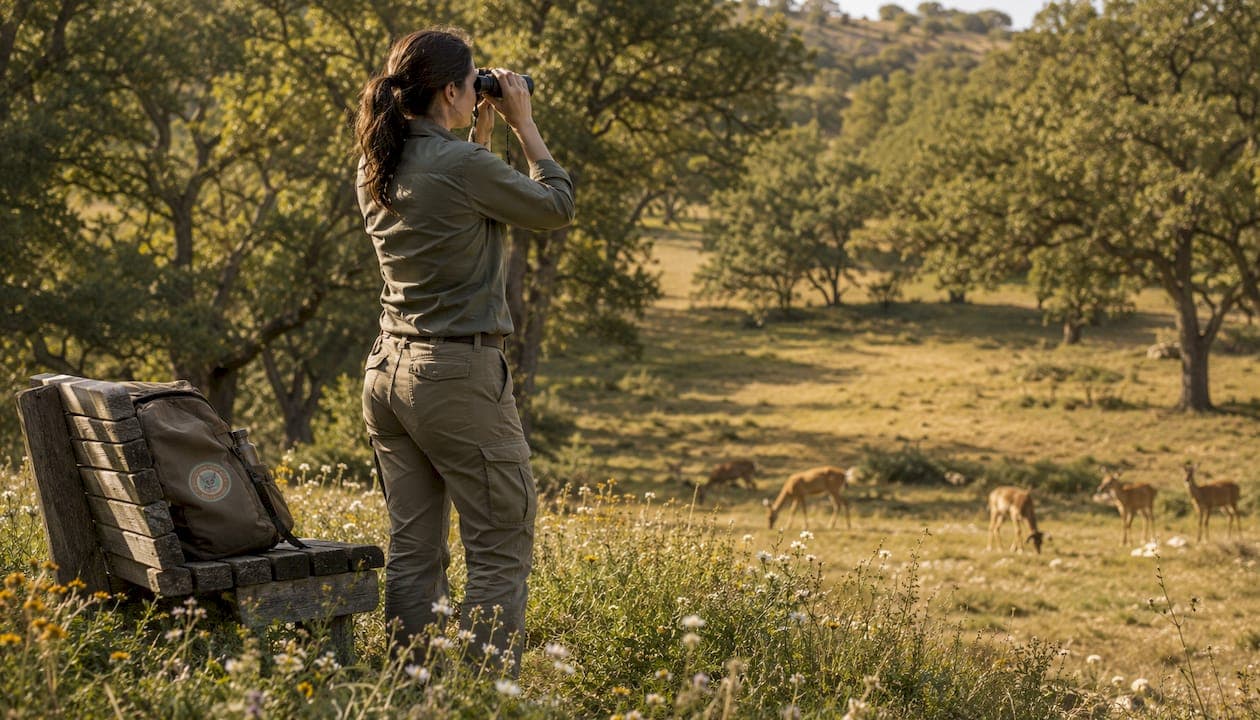
A wildlife sanctuary is defined as a government-designated protected area where wild animals and plants are conserved within their natural habitat, with regulated human activity permitted to balance conservation with community needs. Unlike a national park, a sanctuary allows limited human use, including grazing, tourism, and scientific research, under legal oversight. India manages over 567 wildlife sanctuaries under the Wildlife Protection Act of 1972, making it one of the most extensive sanctuary networks in the world. That scale reflects just how seriously governments treat in-situ conservation, the practice of protecting species within their native ecosystems. If you care about biodiversity, understanding how sanctuaries work is the first step toward supporting them meaningfully.
What is a wildlife sanctuary, legally speaking?
A wildlife sanctuary is a legally established protected area created by government authority to preserve wildlife and their habitats from destruction, poaching, and encroachment. The legal definition varies by country, but the core purpose stays consistent: protect species, preserve habitat, and allow regulated human presence. India's Wildlife Protection Act of 1972 is one of the most cited frameworks globally, granting authority to a Chief Wildlife Warden to manage sanctuaries and regulate all activities within their boundaries.

Sanctuaries allow regulated human activities such as grazing, collection of forest produce, and even private land ownership within their borders, subject to government supervision. This is a critical legal distinction. A sanctuary is not a locked-off wilderness. It is a managed landscape where human use is permitted, provided it does not threaten wildlife or habitat integrity.
The Chief Wildlife Warden holds authority to grant or deny permits for activities inside a sanctuary. Boundaries can also be adjusted by government entities when needed, which gives sanctuaries a degree of administrative flexibility that national parks typically do not have. This flexibility is both a strength and a vulnerability: it allows communities to coexist with wildlife, but it also requires strong enforcement to prevent misuse.
- Protection of species: Sanctuaries are established specifically to protect endangered, vulnerable, or ecologically significant species.
- Habitat preservation: The surrounding ecosystem, including forests, wetlands, and grasslands, receives legal protection alongside the animals.
- Regulated human use: Activities like tourism, grazing, and scientific research are permitted under permit and oversight.
- Boundary management: Government authorities can adjust sanctuary boundaries, unlike the fixed borders of most national parks.
Pro Tip: If you plan to visit a wildlife sanctuary, check whether the specific activities you want, such as camping or guided walks, require advance permits. Many sanctuaries require applications filed well before your visit.
How do wildlife sanctuaries differ from national parks and zoos?
The distinction between a sanctuary, a national park, and a zoo is sharper than most people realize. Sanctuaries balance animal welfare with permitted activities like tourism, while national parks impose stricter restrictions on human access and use. Zoos operate on an entirely different model: they practice ex-situ conservation, meaning animals are kept outside their natural habitat, often for public display and captive breeding programs.
Sanctuaries prioritize animal welfare in natural or restored environments, not exhibition. Animals rescued due to injury or human imprinting find refuge in sanctuaries rather than being placed on display. That welfare focus is the defining philosophical difference between a sanctuary and a zoo.
| Feature | Wildlife sanctuary | National park | Zoo |
|---|---|---|---|
| Conservation type | In-situ (natural habitat) | In-situ (natural habitat) | Ex-situ (captive environment) |
| Human access | Regulated and permitted | Strictly controlled | Open to general public |
| Human activities allowed | Grazing, tourism, research | Very limited | Visitor programs, breeding |
| Land ownership | Can include private land | Typically government-owned | Privately or publicly owned |
| Primary focus | Species and habitat protection | Ecosystem preservation | Public education and display |
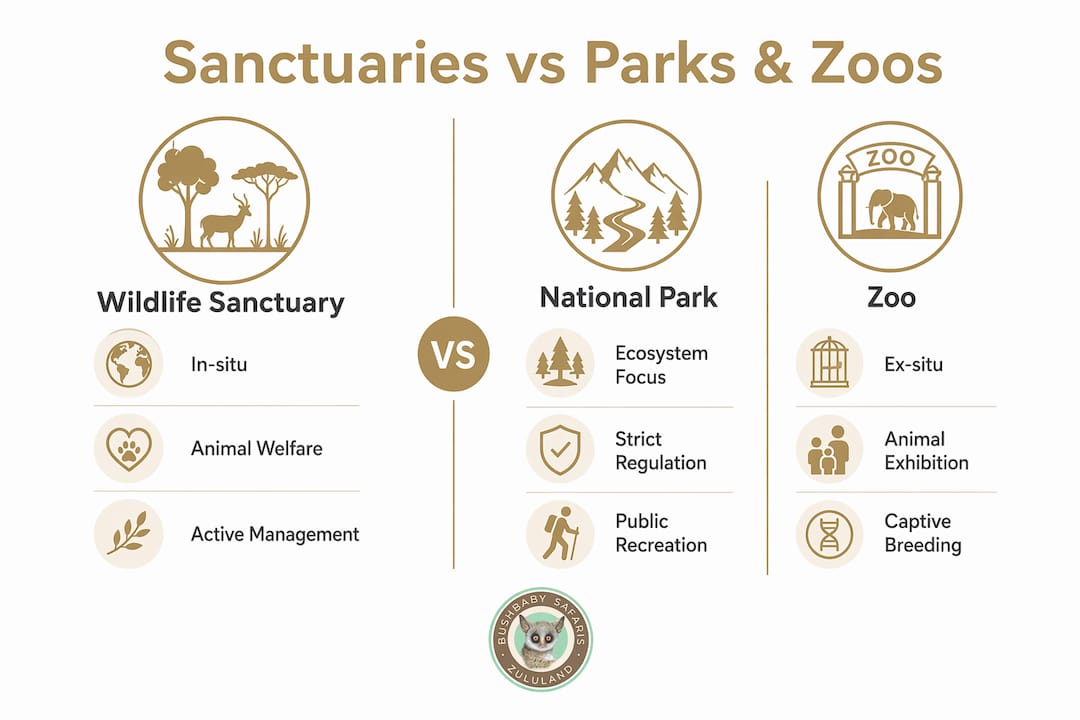
National parks tend to prioritize the entire ecosystem, including geology, plant life, and water systems, as a unified protected unit. Sanctuaries focus more specifically on species-level protection and allow a wider range of human interaction within that framework. Neither is superior. They serve complementary roles in a broader conservation strategy.
What are the ecological benefits of wildlife sanctuaries?
Wildlife sanctuaries deliver conservation outcomes that extend far beyond protecting individual animals. Sanctuaries act as ecological services providers, contributing to carbon sequestration, water purification, and pollination. These are not abstract benefits. They directly support the agricultural systems, clean water supplies, and climate stability that human communities depend on.
Sanctuaries serve as vital ecological "living laboratories" that contribute to climate regulation and biodiversity research. Scientists study animal behavior, population dynamics, and ecosystem health inside sanctuaries in ways that would be impossible in fragmented or degraded landscapes. That research feeds directly into global conservation policy.
Endangered species gain the most immediate protection inside sanctuaries. Habitat loss is the leading driver of species decline worldwide, and sanctuaries counter that by legally securing the land those species need to survive and reproduce. The Big 5 animals of southern Africa, including lion, leopard, elephant, rhino, and buffalo, depend on protected areas like Hluhluwe-iMfolozi Park in KwaZulu-Natal for their continued survival.
Active management techniques inside sanctuaries include controlled burns and habitat restoration to create suitable conditions for target species. This reveals sanctuaries as dynamic, working landscapes rather than simply untouched wilderness. Rangers, ecologists, and wildlife managers actively shape the habitat to support biodiversity goals.
Pro Tip: When visiting a sanctuary, ask your guide about the active management practices in use. Understanding why a section of bush was recently burned, or why certain water points are maintained artificially, transforms a game drive into a genuine conservation education.
Effective sanctuaries depend on active management, community participation, and enforcement to succeed beyond what legal protection alone can achieve. A sanctuary boundary on a map means little without the people and resources to defend it on the ground.
How can visitors and advocates support wildlife sanctuaries?
Visiting a wildlife sanctuary is one of the most direct ways to support conservation. Entry fees, permit costs, and licensed tourism activities generate revenue that funds ranger salaries, habitat restoration, and anti-poaching operations. Many wildlife management areas are funded by hunting, fishing, and trapping licenses, linking recreational use with conservation funding streams. The same principle applies globally: when visitors pay to enter, they invest in the sanctuary's future.
Ethical visitation follows a clear set of principles. Here is how to make your visit count:
- Obtain required permits in advance. Many sanctuaries require permits for camping, photography, or off-road access. Visitor activities like camping often require applications filed before arrival.
- Stay on designated routes. Straying off approved paths disturbs wildlife and damages sensitive habitat.
- Follow your guide's instructions. Experienced guides read animal behavior and keep you safe while minimizing stress to the animals.
- Avoid single-use plastics. Litter inside sanctuaries harms wildlife directly through ingestion and entanglement.
- Support local communities. Buy from local vendors, stay in community-run accommodations, and choose operators who employ local guides.
Environmental advocates can go further by supporting sanctuary funding campaigns, participating in citizen science programs, and lobbying for stronger enforcement of wildlife protection laws. Regulated human activity supports balanced conservation rather than undermining it, so the goal is not to keep people out. The goal is to bring the right people in, with the right intentions and the right knowledge.
For families, a guided safari through a protected area is one of the most powerful conservation education tools available. You can read more about making that experience meaningful in this kids' safari guide for families. Birdwatchers will find detailed visitor guidance in this step-by-step birdwatching guide for iSimangaliso Wetland Park.
Key Takeaways
Wildlife sanctuaries are legally protected, actively managed landscapes that conserve species and habitats while allowing regulated human use to fund and sustain conservation outcomes.
| Point | Details |
|---|---|
| Legal definition matters | Sanctuaries are government-designated areas with regulated human access, not completely off-limits zones. |
| Distinct from parks and zoos | Sanctuaries allow more human activity than national parks and focus on welfare, not display, unlike zoos. |
| Ecological services are real | Sanctuaries provide carbon sequestration, water purification, and pollination that benefit surrounding communities. |
| Active management is required | Controlled burns, habitat restoration, and community participation are what make sanctuaries effective. |
| Visitor spending supports conservation | Entry fees and permits directly fund ranger operations, anti-poaching, and habitat restoration. |
Why sanctuaries need more than just a fence
I have spent years watching people arrive at protected areas with one of two misconceptions. Either they think a sanctuary is a pristine, untouched wilderness where nature runs entirely free, or they assume it is a glorified zoo with bigger cages. Both views miss the reality entirely.
The sanctuaries that work are the ones where rangers are on the ground every day, where local communities have a genuine stake in the outcome, and where the management team treats the landscape as a living system that needs constant attention. I have seen what happens when that active stewardship breaks down. Poaching fills the vacuum. Invasive species take hold. The legal boundary on the map becomes meaningless.
What strikes me most is how often public education changes outcomes. When visitors understand why a controlled burn happened, or why a particular water point is maintained, they leave as advocates rather than just tourists. That shift in understanding is worth more to long-term conservation than almost any fence or patrol. The ecological role of water inside these systems is a perfect example: most visitors never think about it until a guide explains it, and then they never forget it.
Sanctuaries are not perfect. They face funding shortfalls, political pressure, and the constant challenge of balancing human needs with wildlife welfare. But they remain the most effective tool we have for protecting species in their natural environment at scale. The answer is not to keep people away. The answer is to bring people in with knowledge, respect, and a genuine connection to what they are seeing.
— Larni
Experience wildlife sanctuaries firsthand with Bushbaby Safaris Zululand
Knowing what a wildlife sanctuary is changes how you experience one. Bushbaby Safaris Zululand takes guests into two of southern Africa's most extraordinary protected areas: Hluhluwe-iMfolozi Park, home to the Big 5, and iSimangaliso Wetland Park, South Africa's first UNESCO World Heritage Site. Both are living examples of everything this article covers, from active habitat management to regulated visitor access that funds real conservation work.
Every safari runs in an open vehicle with an expert guide who knows these parks like the back of their hands. Whether you choose a standard safari package or a full-day explorer safari experience, you leave with a deeper understanding of why these sanctuaries matter and what it takes to protect them. Browse the full range of safari tours and find the experience that fits your interests.
FAQ
What is a wildlife sanctuary in simple terms?
A wildlife sanctuary is a legally protected area where wild animals and plants are conserved in their natural habitat, with regulated human activities like tourism and research permitted under government oversight.
How do wildlife sanctuaries differ from national parks?
Sanctuaries allow more human activity, including grazing and private land ownership, while national parks impose stricter restrictions on human access and focus on preserving entire ecosystems rather than specific species.
What animals live in sanctuaries?
Sanctuaries protect a wide range of species depending on their location, including endangered mammals like rhino, elephant, and lion, as well as birds, reptiles, and plant species that depend on protected habitat to survive.
How are wildlife sanctuaries funded?
Sanctuaries are typically funded through government budgets, visitor entry fees, permit revenue, and in many regions, hunting and fishing licenses that link recreational use directly to habitat conservation funding.
Can you visit a wildlife sanctuary?
Yes. Most sanctuaries welcome visitors under regulated conditions. Activities like guided safaris, birdwatching, and educational programs are common, though some activities require advance permits depending on the sanctuary's rules.