
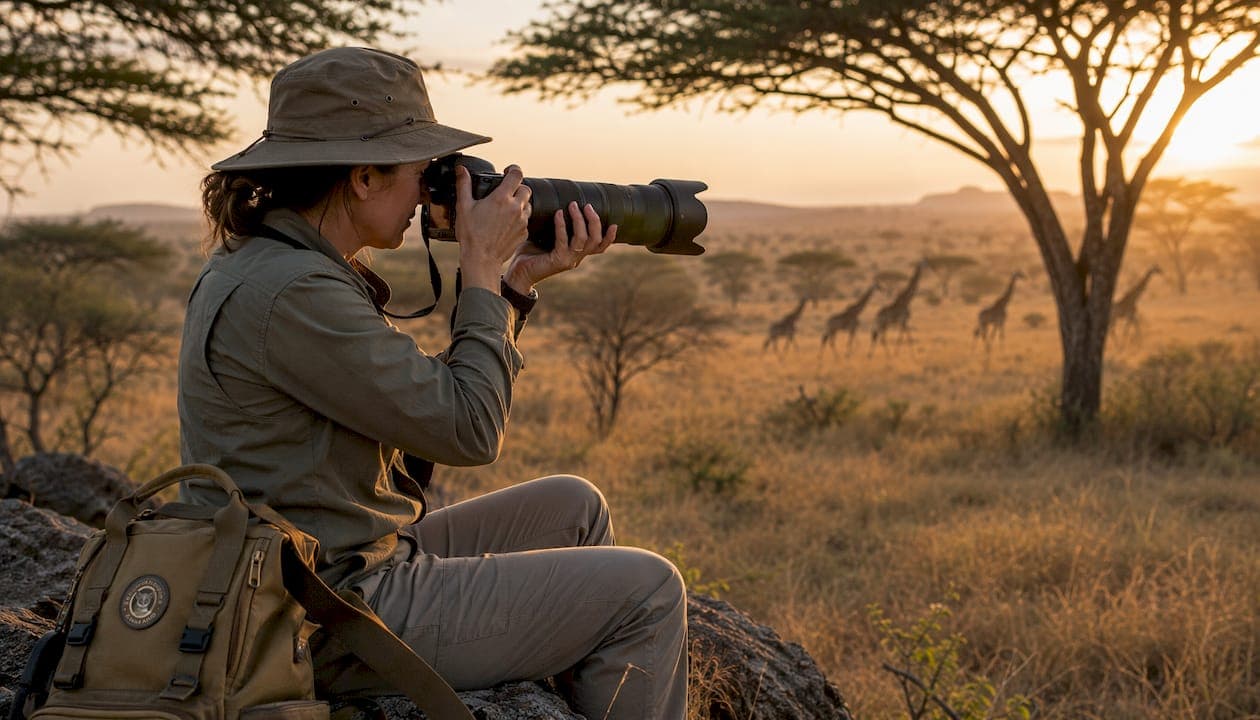
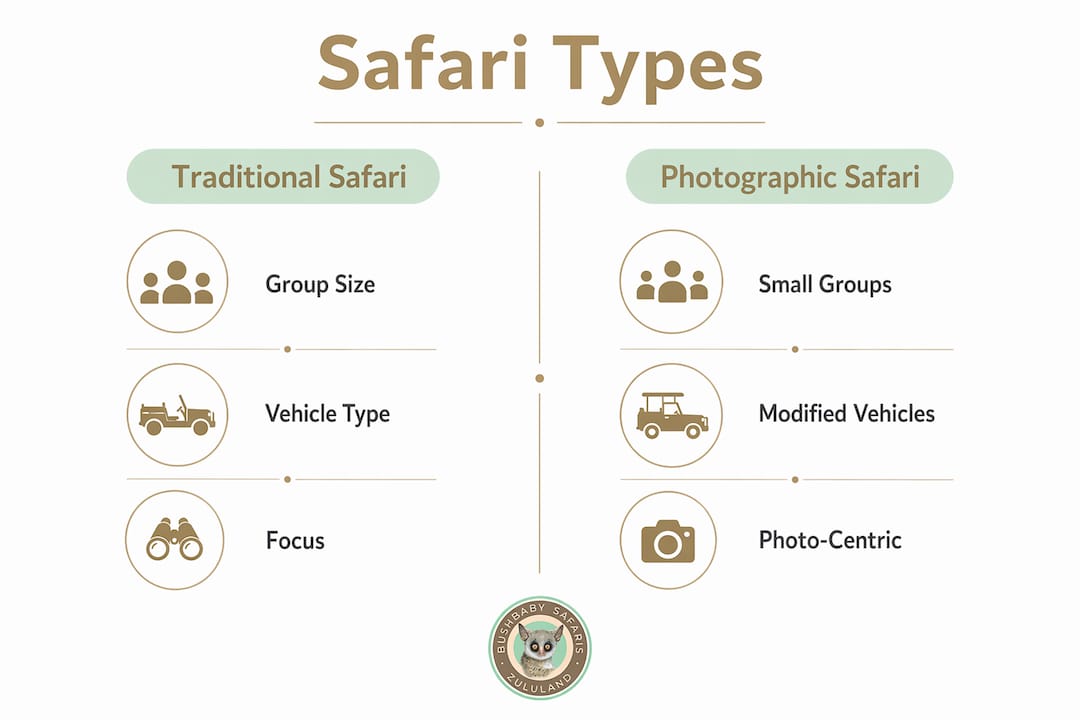
A photographic safari is a specialized wildlife trip designed from the ground up around image-making. Where a traditional safari puts wildlife viewing first, a photo safari structures every decision around the photographer: the timing of drives, the configuration of the vehicle, the size of the group, and the pace of each stop. The result is an experience that feels entirely different from a standard game drive, even when both visit the same park.
Here is what sets a photographic safari apart at a glance:
- Vehicle design: Doors removed or side panels lowered to allow eye-level photography with wildlife, eliminating the visual obstruction of a standard enclosed vehicle.
- Group size: Fewer participants per vehicle than traditional safaris, reducing noise, disturbance, and competition for the best shooting position.
- Timing: Drives scheduled around golden hour, the soft light of early morning and late afternoon that transforms a good wildlife image into a great one.
- Pace: Extended stops at sightings rather than a quick look and move on, giving you time to capture behavior, not just presence.
- Guidance: A guide who reads both the animals and the light, advising on framing and camera settings in real time.
Whether you are picking up a camera seriously for the first time or building out a professional portfolio, a photographic safari gives you the conditions that general wildlife tours simply cannot replicate.
How photographic safaris differ from traditional wildlife safaris
The gap between a standard safari and a photographic one goes deeper than just having a camera along for the ride. Traditional safaris are built around maximizing the number of species seen. Photographic safaris are built around maximizing the quality of images captured. That single shift in priority changes almost everything about how the trip runs.
Vehicle configuration is the most visible difference. Standard game drive vehicles are enclosed or semi-open, with raised seating that puts guests well above the animals. Photographic safari vehicles have doors removed or panels dropped low so your lens sits at or near the animal's eye level. That angle is what separates a compelling wildlife portrait from a snapshot of an animal's back.
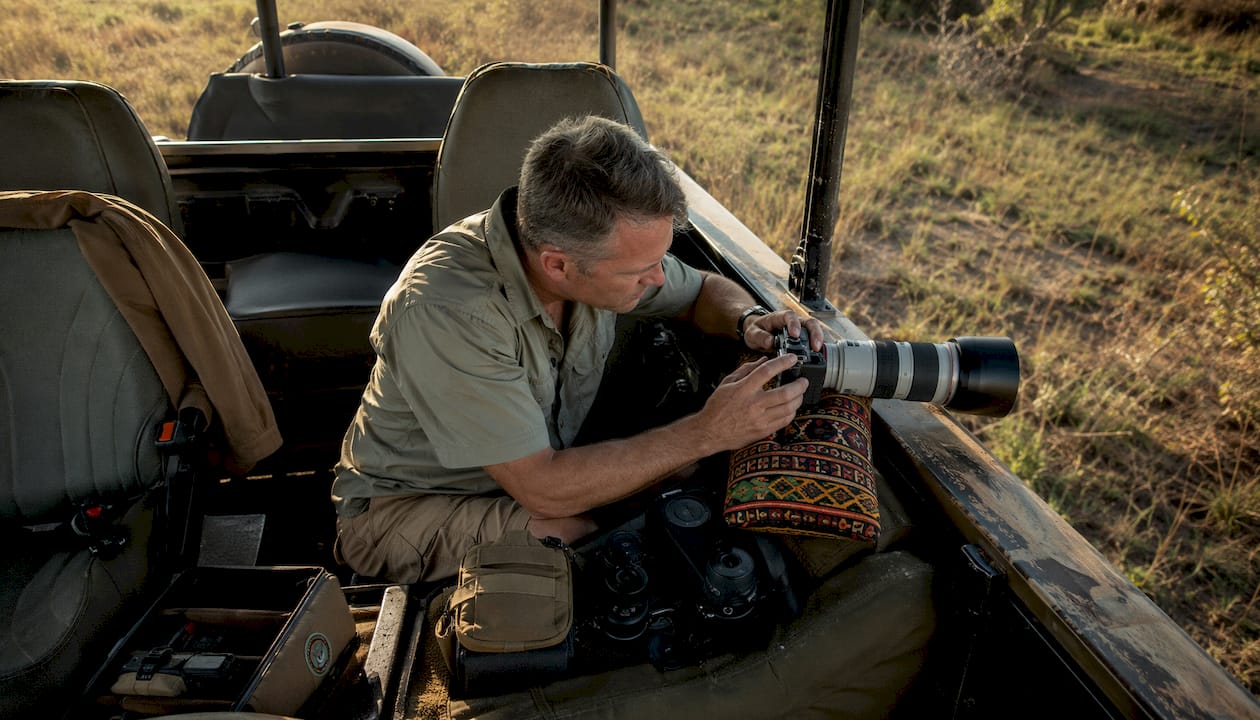
Group composition also shifts dramatically. On a traditional safari, you may share a vehicle with six to eight strangers who have different priorities, different schedules, and different ideas about when to move on. Photographic safaris keep groups tight, often four to six guests, all of whom are there for the same reason. Less jostling for position, more time at each sighting.
The guide's role changes too. A standard guide focuses on finding animals and sharing natural history. A photographic guide does all of that and then reads the light, anticipates behavior, and positions the vehicle so the sun is behind you and the background is clean.
Key distinctions at a glance:
- Standard safaris prioritize species count; photographic safaris prioritize image quality.
- Traditional vehicles are enclosed or semi-open; photographic vehicles have open sides or lowered panels.
- Standard groups can be large and mixed; photographic groups are small and photography-focused.
- Traditional itineraries move quickly between sightings; photographic itineraries linger.
- Standard guides narrate wildlife; photographic guides also advise on settings, framing, and timing.
Pro Tip: Before booking, ask the operator how many guests share a vehicle and whether the vehicle has been modified for photography. Those two questions will tell you more about the quality of the experience than any brochure.
What you can expect on a photographic safari
Arrive expecting early starts. Most photographic safaris begin before sunrise, putting you in the field as the sky shifts from deep blue to gold. That first hour of light is often the most productive of the entire day, and experienced guides know exactly where to position the vehicle to make the most of it.
A typical day looks roughly like this:
| Time | Activity |
|---|---|
| early morning | Pre-dawn departure, hot drinks provided |
| morning hours | Morning drive during golden hour, extended stops at sightings |
| mid-morning | Breakfast in the bush or at camp |
| midday hours | Rest period, image review, guide consultation |
| late afternoon | Afternoon drive through sunset golden hour |
| evening | Dinner, debrief, and preparation for the next day |
Wildlife subjects vary by destination, but the most commonly photographed species on photographic wildlife tours include the Big 5 (lion, leopard, elephant, rhino, and buffalo), as well as cheetah, wild dog, giraffe, zebra, and a remarkable range of bird species. Behavior shots, a lion cub nursing, an elephant dusting itself, a kingfisher diving, are what photographic guides actively seek out rather than simple static portraits.
Ethical and conservation standards are woven into every reputable photographic safari. Responsible operators follow strict guidelines: no off-road driving beyond designated areas, no crowding of sightings with multiple vehicles, and no baiting or calling animals. The goal is always to photograph wildlife on its own terms.
Physical requirements are modest. You need to manage early mornings, sit comfortably for several hours in a moving vehicle, and handle the patience that wildlife photography demands. Beginners are fully supported by expert guides, so prior photography experience is helpful but not a prerequisite.
What to bring and expect as a participant:
- Comfortable, neutral-colored clothing (avoid bright colors and white)
- Layers for cold pre-dawn temperatures
- Sun protection for midday rest periods
- A charged camera with spare batteries and memory cards
- An open mind: nature does what nature does, and the best moments are rarely the ones you planned for
Essential photography equipment and techniques for photographic safaris
Your gear choices will shape what you can capture. The single most important piece of equipment on any photo safari is a telephoto lens, typically in the 400–600mm range, which lets you fill the frame with a subject that may be 50 meters away. A fast autofocus camera body matters almost as much, since wildlife rarely holds still and a missed focus on a charging elephant or a leaping impala means a missed shot.
A well-prepared safari photography checklist typically includes:
- A primary camera body with fast continuous autofocus
- A telephoto lens (400mm or longer for large mammals, 100–400mm for versatility)
- A wide-angle lens for landscapes and environmental portraits
- A bean bag or window mount (tripods are rarely practical in a moving vehicle)
- At least two spare batteries per body, fully charged each evening
- Multiple memory cards with more capacity than you think you need
- A dust-proof bag or cover, because bush roads are dusty
Technique matters as much as gear. The most common mistake on a first photo safari is shooting at the wrong shutter speed. Wildlife moves unpredictably, so a minimum shutter speed of 1/1000 second is a good baseline for large mammals in motion. For best photography settings in low golden-hour light, bump your ISO before dropping your shutter speed below that threshold.
Vehicle modifications do real work here. With the side panels lowered, you can rest a bean bag on the door frame and shoot from a stable, eye-level position. That stability, combined with the vehicle acting as a natural hide, often allows you to get closer to animals than you ever could on foot.
Pro Tip: Shoot in RAW format rather than JPEG. The dynamic range of golden-hour light is extreme, and RAW files give you the latitude to recover highlights and shadows in post-processing that JPEG simply cannot match.
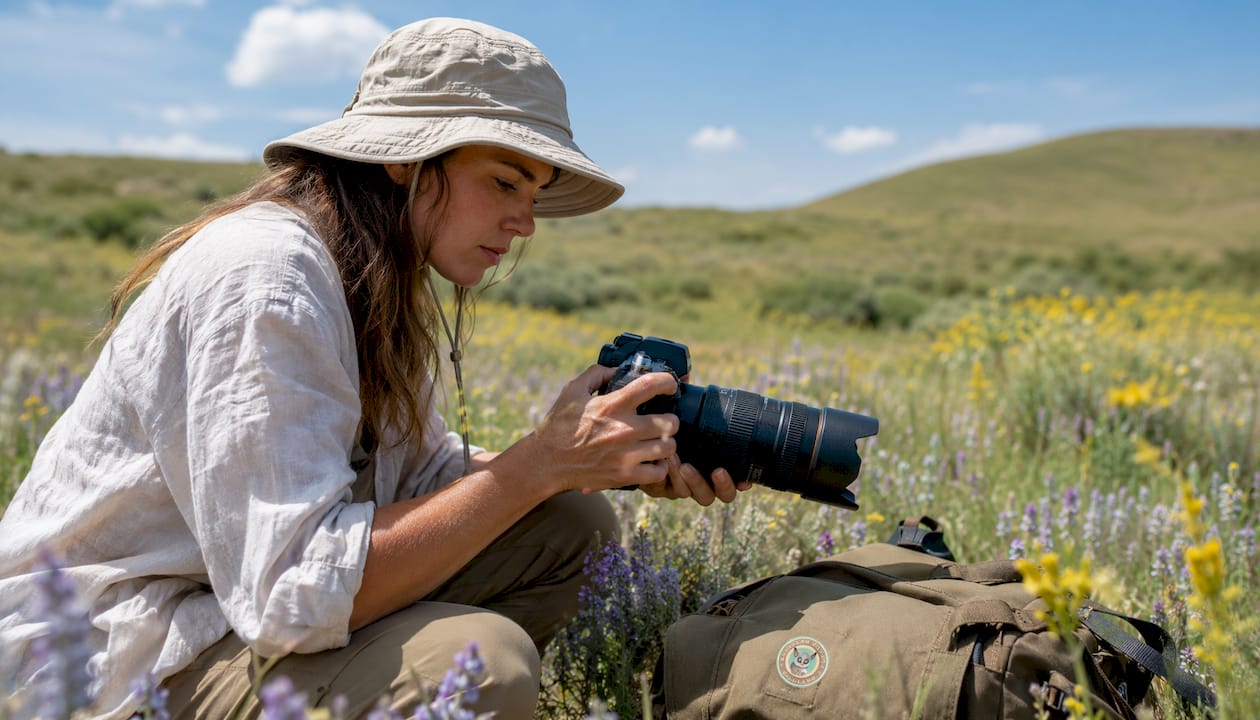
Photographic guides actively assist with framing decisions, advising on background clutter, light direction, and when an animal's behavior suggests a key moment is coming. Their knowledge of individual animals and their patterns is what turns a good sighting into a great image.
How to plan and book a photographic safari
Planning a photo safari well in advance pays off. The best vehicles, the most experienced guides, and the most sought-after destinations fill up months ahead, particularly for peak season travel.
Destination and timing are your first decisions. South Africa, Kenya, and Botswana are among the most popular destinations for photographic wildlife tours, each offering distinct ecosystems and species. In South Africa, KwaZulu-Natal's Hluhluwe-iMfolozi Park and the iSimangaliso Wetland Park (whose name translates as "Place of Miracle or Wonder") offer Big 5 game alongside extraordinary birdlife and wetland landscapes. Dry season generally delivers the best wildlife visibility, as animals concentrate around water sources and vegetation thins out.
Cost is a genuine consideration. Photographic safaris cost more than traditional safaris across the board, reflecting the smaller group sizes, modified vehicles, and the expertise of specialist photographic guides. Think of it as paying for access and conditions rather than simply transportation and accommodation.
When evaluating operators, ask these questions before booking:
- How many guests share a vehicle, and has it been modified for photography?
- What is the guide's photographic background and experience?
- Does the itinerary prioritize golden-hour drives, or does it follow a standard schedule?
- What is the operator's policy on vehicle positioning and wildlife disturbance?
- Are image review sessions or in-field coaching included?
Bushbaby Safaris Zululand runs open vehicle safaris from accommodations in St Lucia and Hluhluwe into both Hluhluwe-iMfolozi Park and the iSimangaliso Wetland Park, giving you access to two of KwaZulu-Natal's most rewarding wildlife areas in a single trip. The Explorer Safari packages are built for guests who want more time in the field and a deeper engagement with the landscape and its wildlife.
Ready to experience KwaZulu-Natal's unspoilt wilderness through your lens? Browse the full range of Explorer Safaris and find the experience that fits your schedule and ambitions.
Key Takeaways
A photographic safari delivers fundamentally different conditions from a traditional safari, with every element from vehicle design to guide expertise oriented around capturing the best possible images.
| Point | Details |
|---|---|
| Photography-first design | Vehicles, timing, and group size are all configured to maximize image quality, not species count. |
| Vehicle modifications matter | Lowered panels or removed doors enable eye-level shots that standard enclosed vehicles cannot provide. |
| Small groups improve results | Fewer guests per vehicle means less disturbance, better positioning, and more time at each sighting. |
| Golden-hour timing is non-negotiable | Drives are scheduled around early morning and late afternoon light for the most compelling wildlife images. |
| Cost reflects specialization | Photographic safaris carry a higher price than traditional options due to specialist guides, modified vehicles, and smaller groups. |