

To photograph leopards on an open vehicle safari is to practice one of the most technically demanding and emotionally rewarding pursuits in wildlife photography. The open vehicle format, known in the industry as a game drive vehicle or game viewer, strips away the barriers between you and the animal, placing your lens at near eye level with one of Africa's most elusive cats. Success depends on three things working together: the right gear, the right timing, and the patience to wait for the moment that matters. South Africa's KwaZulu-Natal reserves, including the Big 5 terrain of Hluhluwe-iMfolozi Park, offer some of the continent's most compelling conditions for this kind of work.
What are the best times and locations to photograph leopards on an open vehicle safari?
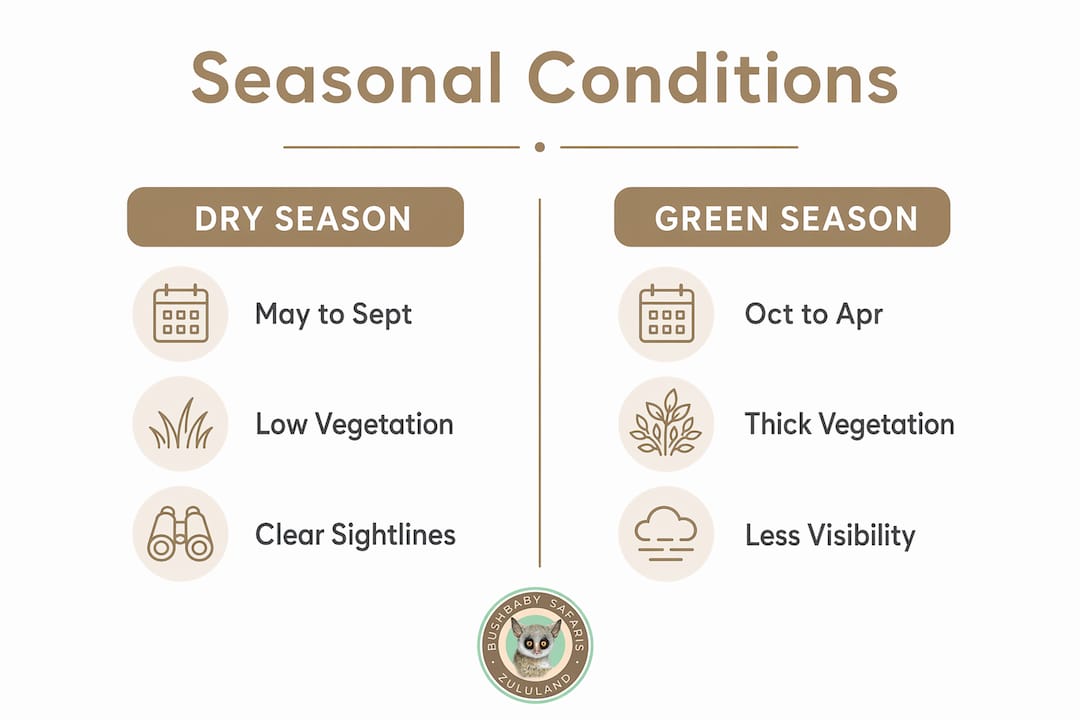
Dry winter months from may through september give you the clearest advantage for leopard photography. Vegetation thins out, water sources concentrate wildlife, and leopards become far easier to locate and track. The green season brings lush scenery but dense foliage that hides animals and blocks clean sightlines for your lens.
Location matters as much as season. Private reserves with habituated leopard populations allow vehicles to approach closely without disturbing the animals. Decades of consistent, respectful vehicle presence have produced leopards that go about their lives, eating, resting, and interacting, without treating your game viewer as a threat. That level of comfort is what separates a distant silhouette from an intimate portrait.
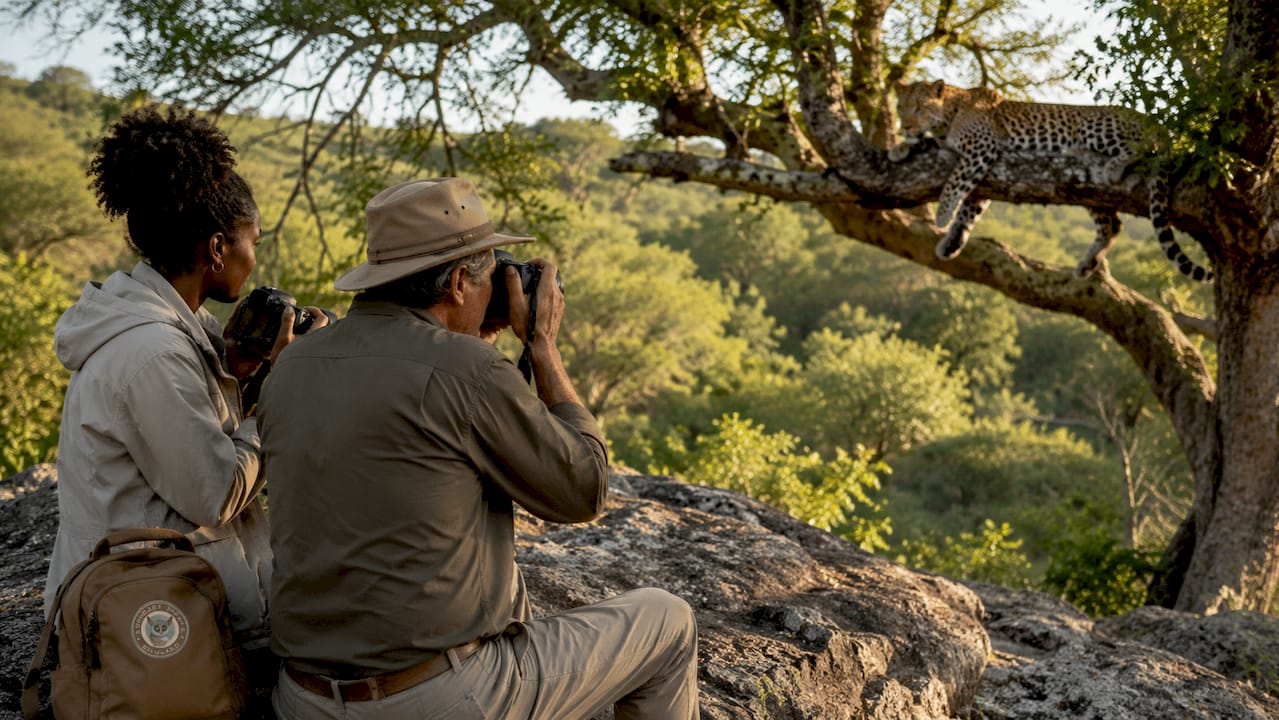
National parks restrict vehicles to established roads. Private reserves grant off-road driving rights, letting your guide reposition the vehicle for better light, cleaner backgrounds, and ideal composition angles. That flexibility is a genuine photographic advantage you simply cannot replicate in a public park.
Seasonal and lighting conditions at a glance
| Condition | Dry Season (May–Sept) | Green Season (Oct–Apr) |
|---|---|---|
| Vegetation density | Low, open sightlines | High, obstructed views |
| Leopard visibility | High | Low to moderate |
| Morning light quality | Clear, golden | Often overcast |
| Animal concentration | Near water sources | Dispersed |
The golden hour, the first 60–90 minutes after sunrise and before sunset, produces the warmest light and the most flattering images. Early morning safaris also catch leopards at their most active, before the midday heat drives them into shade.
What camera gear do you need for leopard photography from a safari vehicle?
A minimum focal length of 300mm is non-negotiable for leopard photography. A 100–400mm or 150–600mm zoom gives you the versatility to frame a full body shot when the animal is close and pull in tight for a face portrait when it moves further away. Fixed prime lenses deliver sharper results in ideal conditions, but zooms win on a moving vehicle where distance changes constantly.
Camera settings define whether you come home with sharp images or blurry disappointments. Use these as your starting baseline:
- Shutter speed: 1/1000s minimum for a moving leopard; 1/250s works for a resting subject
- Aperture: f/2.8 to f/5.6 to isolate the animal from the background
- ISO: 1600–6400 depending on available light; modern mirrorless bodies handle this range cleanly
- Autofocus: Animal eye AF or single-point AF for consistent sharpness on the face
- Drive mode: Burst mode for action sequences, single shot for composed portraits
Pro Tip: A beanbag draped over the vehicle door rail is the most effective stabilizer for telephoto lenses on a game drive. It absorbs engine vibration and lets you track a moving leopard smoothly without a tripod.
Essential accessories to pack
Bring at least two fully charged batteries and four or more high-speed memory cards. Cold mornings drain batteries faster than you expect, and a leopard kill or tree sighting can generate hundreds of frames in minutes. A lens cloth and a small blower brush protect your glass from the fine red dust that coats everything on a dirt track.
| Accessory | Why it matters |
|---|---|
| Beanbag | Stabilizes telephoto lenses on vehicle doors |
| Extra batteries (x2+) | Cold and long drives drain power fast |
| High-speed memory cards (x4+) | Burst mode fills cards quickly |
| Lens cloth and blower | Dust protection on unpaved tracks |
| Rain cover | Protects gear during unexpected showers |
For a deeper breakdown of optimal safari camera settings, the Bushbaby Safaris Zululand blog covers the full technical picture.
How do you capture compelling leopard images through technique and behavior?
Patience produces better leopard images than rapid, continuous firing. Photographers who hold back, watch the animal, and anticipate the next behavior consistently outperform those who machine-gun frames from the moment the leopard appears. The difference shows up in the final edit: one approach yields a few exceptional images, the other yields hundreds of near-identical shots.
Leopard behavior follows predictable patterns that reward observation. Watch for these moments:
- Yawning reveals the full dentition and creates a dramatic, powerful portrait.
- Stretching after rest produces elegant, full-body compositions.
- Scanning the horizon gives you alert, focused eye contact with the environment.
- Descending from a tree offers dynamic action frames as the animal moves through branches.
- Grooming creates intimate, relaxed portraits that show the animal's texture and markings.
Catchlights transform a leopard portrait. A tiny reflection of light in the eye brings life and presence to an image in a way that no post-processing can replicate. Position the vehicle so the light source, whether the sun or open sky, falls in front of the animal rather than behind it.
Pro Tip: For a leopard in a tree, switch to a vertical frame orientation. It captures the full height of the animal against the branches and sky, and it fills a portrait-format print or screen beautifully.
Exposure compensation is the most overlooked technical skill in the field. Apply +1 to +3 stops when the leopard is backlit or sitting in dappled shade. Use spot metering on the animal's face rather than evaluative metering, which reads the whole scene and consistently underexposes a dark-coated subject against a bright background.
Composition choices shape the story your image tells. A tight face portrait emphasizes personality. An environmental shot, pulling back to show the leopard within its habitat, communicates scale and wildness. The best photographers alternate between both approaches during a single sighting, building a complete visual story rather than repeating the same frame.
How do you ethically and safely photograph leopards on an open vehicle safari?
Ethical wildlife photography starts with letting the animal set the terms of the encounter. Your guide reads the leopard's body language and positions the vehicle at a distance the animal accepts. You follow that lead without pushing for a closer angle.
Signs of leopard distress are clear and consistent: pinned back ears, rapid tail flicking, and direct staring at the vehicle. When you see any of these, back off immediately. A stressed leopard produces poor images anyway. The animal's posture tightens, its expression becomes defensive, and the natural ease that makes great portraits disappears.
Follow these non-negotiable field rules:
- Keep voices low and movements slow at all times
- Never stand up in the vehicle during a sighting
- Switch off the engine if the guide allows and the leopard is settled
- Do not use flash photography under any circumstances
- Never block an animal's path or cut off its escape route
Habituated leopards in private reserves offer the closest thing to a controlled photographic environment that wild Africa provides. The animal is relaxed, the guide knows its habits, and the vehicle can be positioned for ideal light. That combination is rare. Treat it with the respect it deserves, and the images will reflect that care.
The Big 5 encounters that stay with photographers longest are almost always the quiet ones, where the animal was undisturbed and the photographer was patient enough to wait for the right moment.
Key Takeaways
Photographing leopards on an open vehicle safari requires the right gear, the right season, and the discipline to observe before you shoot.
| Point | Details |
|---|---|
| Shoot in the dry season | May through september delivers open vegetation, concentrated wildlife, and clear golden light. |
| Use a 300mm+ zoom lens | A 100–400mm or 150–600mm zoom handles the variable distances of a live leopard sighting. |
| Set shutter speed at 1/1000s | This minimum speed freezes a moving leopard and eliminates motion blur. |
| Wait for behavior, not just presence | Yawning, stretching, and scanning produce far more compelling images than static resting shots. |
| Read distress signals | Pinned ears and tail flicking mean back off. A relaxed leopard always photographs better. |
What I've learned from years of watching photographers in the field
Most photographers arrive on their first leopard sighting with their finger already on the shutter button. I understand the impulse completely. A leopard appearing from the bush triggers an immediate, almost involuntary response to start shooting. But the photographers who come away with the strongest images are the ones who pause, assess the light, check their settings, and then wait.
The single biggest shift I've seen in photographers who improve rapidly is moving from reactive shooting to anticipatory shooting. You watch the animal, you read what it's about to do, and you're ready before it happens. That yawn builds for a few seconds before it opens fully. That stretch starts with a small shift in posture. If you're watching instead of firing, you catch the peak of the moment rather than the frame after it.
Habituated reserves genuinely change what's possible. I've seen photographers get images in a single morning that they couldn't have achieved in a week in a wilder environment. The animal's comfort with the vehicle is the foundation everything else is built on. Respect that foundation, and it rewards you.
The other lesson that took me time to internalize: exposure compensation is not optional. Leopard coats are complex. The rosette pattern creates areas of deep shadow and bright highlight on the same animal. Spot metering on the face and dialing in compensation for the ambient light conditions is the difference between a technically correct image and a muddy, underexposed disappointment.
— Larni
Leopard photography safaris with Bushbaby Safaris Zululand
Bushbaby Safaris Zululand runs open vehicle safaris from accommodations across St Lucia and Hluhluwe into the Big 5 terrain of Hluhluwe-iMfolozi Park and iSimangaliso Wetland Park, South Africa's first UNESCO World Heritage Site. Every drive goes out in a purpose-built game viewer with an expert guide who knows these parks like the back of their hand.
For photographers focused on leopards and the full Big 5 experience, the standard safari packages give you structured access to prime wildlife areas with the flexibility to position for great shots. If you want more time in the field and deeper coverage of the parks, the explorer safari options extend your time on the ground and increase your chances of those rare, intimate sightings. Nature does what nature does, but having an expert guide and the right vehicle puts you in the best possible position every single time.
FAQ
What is the best month to photograph leopards in South Africa?
june and july sit at the peak of the dry season, offering the clearest sightlines, the most concentrated wildlife near water, and the best golden-hour light for photography.
What lens focal length do I need for leopard photography on a safari?
A minimum of 300mm is required. A 100–400mm or 150–600mm zoom lens gives you the range to handle both close encounters and distant sightings from a moving vehicle.
How do I keep my camera steady on an open vehicle?
A beanbag rested on the vehicle door rail is the most effective stabilizer for telephoto lenses on a game drive. It absorbs vibration and allows smooth tracking of a moving animal.
What camera settings work best for a moving leopard?
Set your shutter speed to at least 1/1000s, aperture between f/2.8 and f/5.6, and ISO between 1600 and 6400. Use animal eye autofocus and burst mode for action sequences.
How do I know if a leopard is stressed by the vehicle?
Pinned back ears, rapid tail flicking, and direct staring at the vehicle are the primary distress signals. Back the vehicle off immediately when you see any of these signs.