
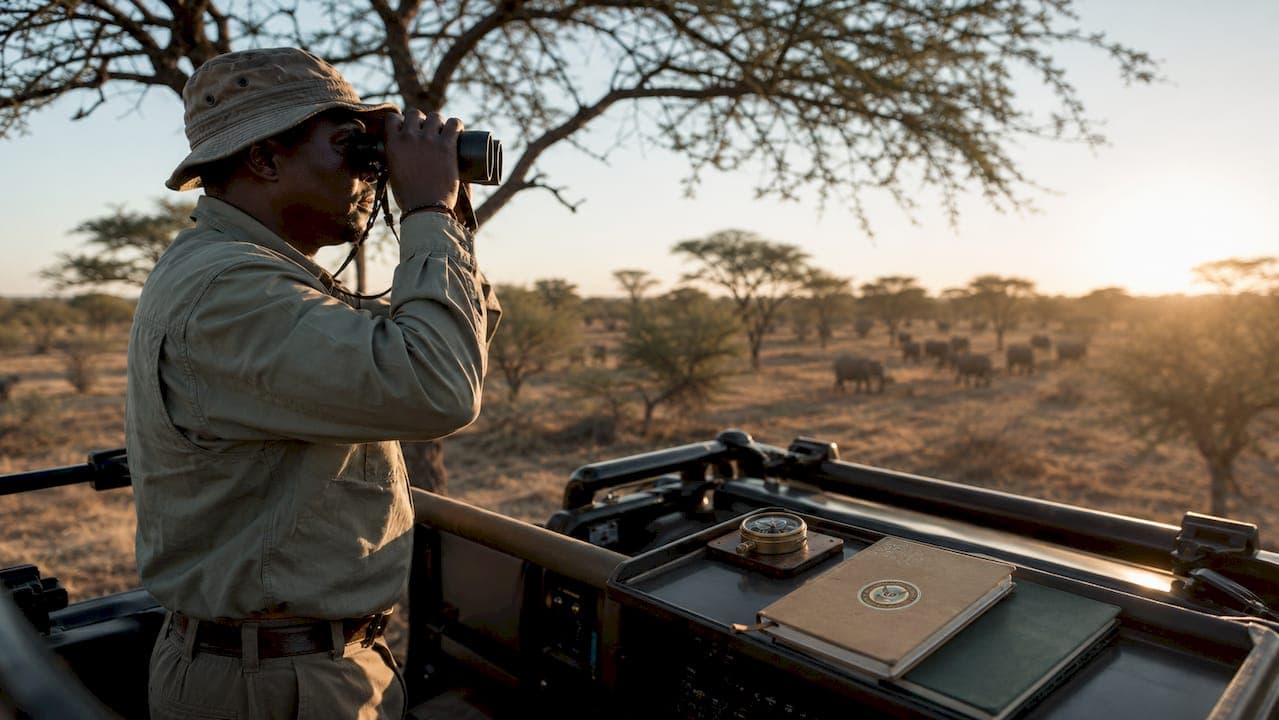
A local guide is defined as a trained specialist who combines wildlife tracking, cultural knowledge, and on-the-ground logistics to transform a safari from a passive game drive into a genuinely immersive experience. The role of local guides in the safari experience goes far beyond pointing out animals. They read footprints, interpret animal behavior, coordinate with other guides via radio, and share the stories behind the landscapes you cross. At Bushbaby Safaris Zululand, expert local guides lead every open vehicle safari into Hluhluwe-iMfolozi Park and iSimangaliso Wetland Park, South Africa's first UNESCO World Heritage Site. Without that local expertise, you miss most of what makes a safari truly unforgettable.
How do local guides improve wildlife spotting and safety on safari?
Professional local guides significantly increase Big Five sightings through expert tracking and real-time communication. That means the difference between driving past a thicket where lions are resting and stopping to watch them for twenty minutes. Guides read the environment constantly, noticing bent grass, fresh dung, and the alarm calls of oxpeckers or francolins that signal a predator nearby.
Reading the bush like a map
Tracking is a skill built over years of daily observation. A guide who has spent a decade in Hluhluwe-iMfolozi Park knows which drainage lines white rhinos favor at dawn, and which ridgelines leopards use as travel corridors after dark. They interpret paw prints, broken branches, and mud wallows the way a city driver reads road signs. That depth of local knowledge in safari tours simply cannot be replicated by a GPS app or a printed field guide.
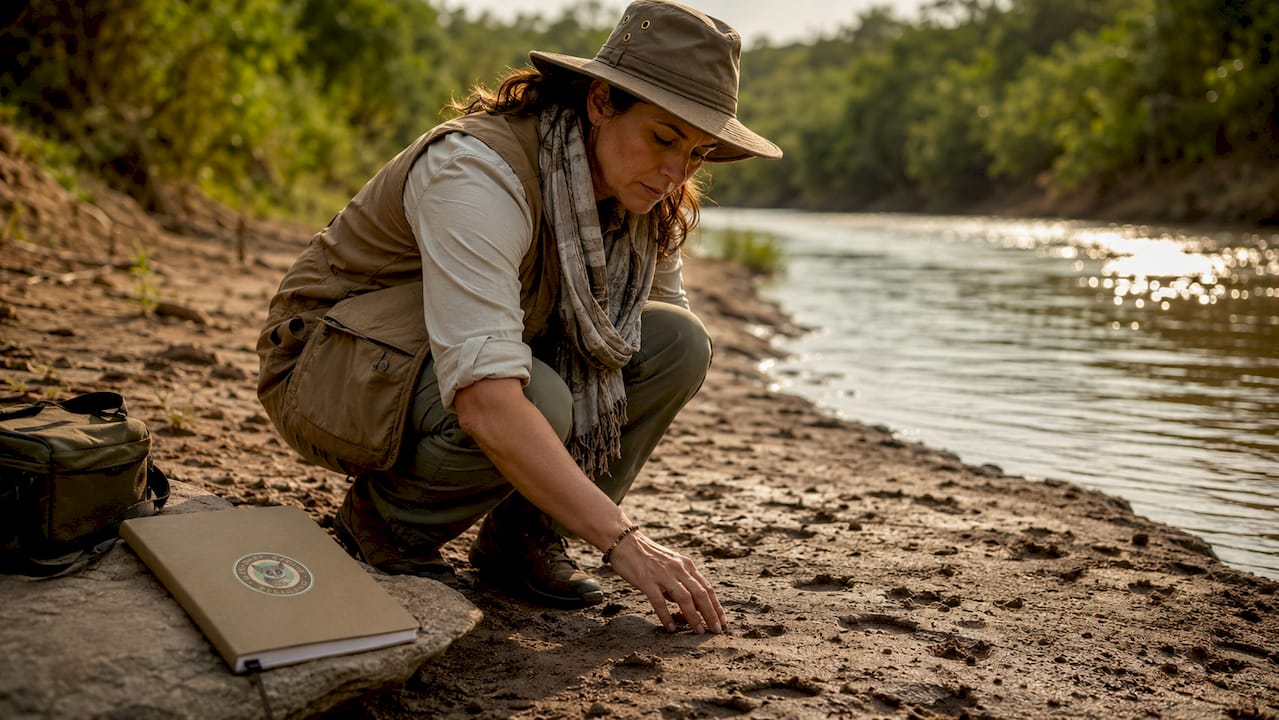
Radio networks add another layer of precision. Guides share real-time sightings across the park, so when a cheetah is spotted on the eastern plains, your vehicle can reposition before the animal moves on. Local guides handle complex logistics including vehicle positioning, wind direction, and engine noise management to keep animals calm and guests safe. Their preparation means you can focus entirely on the experience rather than worrying about what to do next.
Safety is equally central to a guide's role. Guides carry emergency protocols, know the fastest evacuation routes, and understand how to read animal body language before a charge occurs. They brief guests on behavior around wildlife and enforce the rules that keep everyone protected.
Pro Tip: Ask your guide to position the vehicle so the sun is behind you during morning drives. That single adjustment dramatically improves your wildlife photography and keeps animals from being disturbed by glare off the windshield. Pair this with the safari photography checklist from Bushbaby Safaris Zululand for the best results.
Key skills local guides bring to wildlife spotting and safety:
- Tracking footprints, scent marks, and behavioral signals across varied terrain
- Coordinating via radio networks for real-time sighting updates
- Positioning vehicles for optimal viewing angles and minimal animal disturbance
- Briefing guests on safety protocols before and during game drives
- Managing emergency situations with practiced, calm decision-making
In what ways do local guides deepen cultural understanding?
Local guides act as cultural ambassadors who grant access to traditions, stories, and sites that solo travelers routinely miss. They translate not just language but social cues, helping you understand what a gesture means, why a ceremony is held, or what a particular beadwork pattern communicates within a Zulu community. That context turns observation into genuine connection.
Stories that bring a place alive
A guide who grew up near iSimangaliso Wetland Park, which translates as "Place of Miracle or Wonder," carries personal stories about the lake, the hippos, and the fishing communities that have lived alongside them for generations. Those stories are not in any guidebook. They come from lived experience, and they give you a relationship with the land rather than just a memory of it.
Guides personalize itineraries and deepen emotional travel impact beyond what sightseeing alone can deliver. A guide might take you to a viewpoint that does not appear on any map, explain the medicinal use of a plant you just walked past, or introduce you to a community elder whose family has tracked game in the same valley for four generations. Those moments are the ones travelers describe years later.
Contrast this with the limitations of large group tours or fully self-guided drives. Without a local expert, cultural nuance disappears entirely. You see the landscape but not the layers of meaning beneath it.
Pro Tip: Before your safari, ask your guide one open question: "What is something about this place that most visitors never ask about?" The answers are almost always the most memorable part of the day.
What local guides offer beyond wildlife viewing:
- Interpretation of cultural customs, ceremonies, and community traditions
- Access to off-the-beaten-path locations unavailable to self-guided travelers
- Translation of social cues and local etiquette for respectful engagement
- Personal stories connecting the landscape to its human history
- Introductions to community members and artisans when appropriate
What are the differences between community guides and professional safari guides?
Co-guide models combining local community guides and professionally trained guides deliver the richest safari experiences. Each type brings a distinct and complementary skill set. Understanding the difference helps you ask better questions and choose the right safari format for your goals.
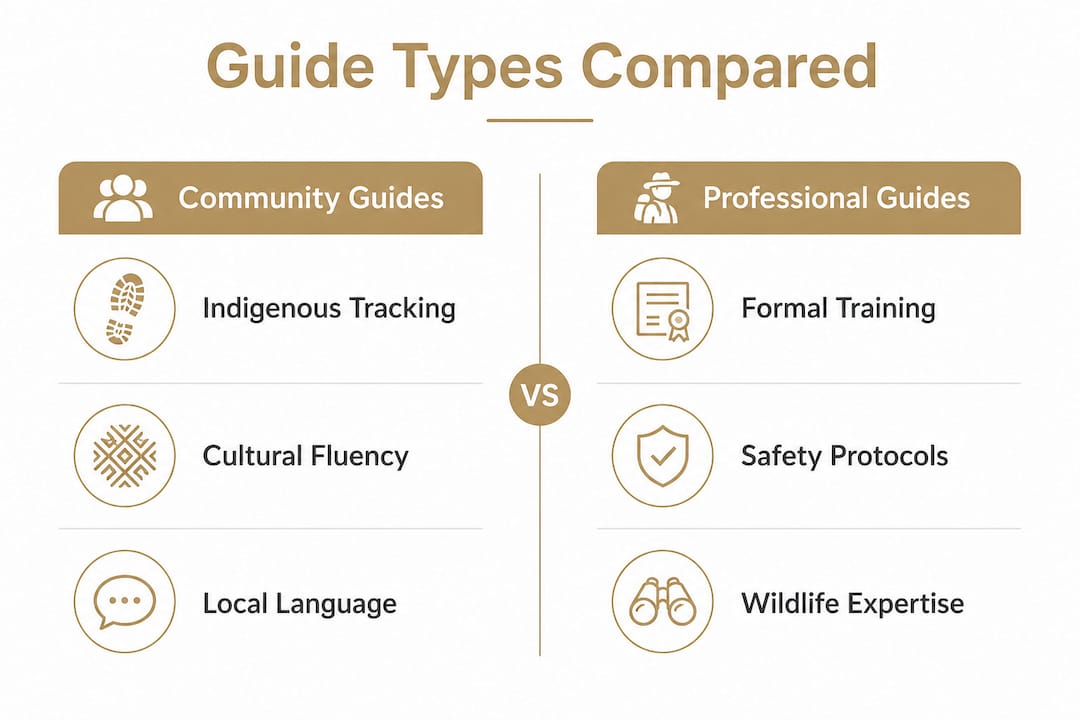
A local community guide carries lifelong indigenous tracking knowledge. They know the land intimately, speak the local language fluently, and understand the cultural context of everything you encounter. Their authority comes from lived experience rather than a classroom. A professionally trained safari guide, by contrast, holds certified ecological and taxonomic expertise. They can identify 300 bird species by call, explain the role of the oxpecker in tick management, and interpret animal behavior through a scientific lens.
Conservancy camps increasingly use co-guide models that pair professional guides with local community ranger-guides. This combination delivers scientific interpretation alongside indigenous tracking and cultural depth. The result is a safari that is both accurate and alive with meaning.
| Feature | Community guide | Professional trained guide |
|---|---|---|
| Wildlife tracking | Lifelong indigenous knowledge | Certified ecological training |
| Cultural knowledge | Deep, firsthand, and personal | General, learned from study |
| Language skills | Native fluency in local languages | Often multilingual, formal training |
| Scientific ID | Practical and experiential | Taxonomic and systematic |
| Best use case | Cultural immersion and local access | Ecological interpretation and broad networks |
The co-guide model is the gold standard for travelers who want both depth and accuracy. Bushbaby Safaris Zululand guides bring exactly this kind of layered expertise to every drive through Hluhluwe-iMfolozi Park and iSimangaliso Wetland Park. You can read more about how guide partnerships shape wildlife experiences on the Bushbaby Safaris Zululand blog.
How can travelers find trustworthy local guides for their safari?
Trustworthy local guides are best found through personal referrals from tourism boards, hotel staff, or travel advisors with firsthand experience. A recommendation from someone who has actually traveled with a guide carries far more weight than an anonymous online review. Start there before looking anywhere else.
Once you have a name, vet the guide directly. Effective safari guides demonstrate strong communication, empathy, and genuine passion for local culture and wildlife. A short conversation before booking reveals whether a guide listens well, answers questions clearly, and treats the subject with real enthusiasm. Those qualities predict the quality of your experience more reliably than any certificate alone.
Practical steps for finding a reliable local guide:
- Ask your accommodation's front desk or concierge for a personal recommendation
- Check whether the guide holds certification from a recognized national or regional guiding association
- Confirm the guide's specialty: wildlife tracking, cultural tours, birding, or photography
- Assess language fluency and communication style during an initial call or message exchange
- Set clear expectations about group size, pace, and areas of interest before the day begins
- Use reputable booking platforms or established safari operators with verified guide rosters
Prioritizing guides who communicate clearly and prioritize safety ensures stress-free, culturally sensitive interactions. A guide who rushes past your questions or dismisses your comfort is a warning sign regardless of their credentials.
Key Takeaways
Local guides are the single most important factor in determining the quality, safety, and cultural depth of any safari experience.
| Point | Details |
|---|---|
| Wildlife spotting expertise | Guides use tracking, radio networks, and vehicle positioning to maximize Big Five sightings. |
| Cultural access | Local guides unlock traditions, stories, and community connections unavailable to solo travelers. |
| Co-guide model advantage | Pairing community and professional guides delivers both indigenous knowledge and scientific accuracy. |
| Guide vetting matters | Personal referrals and direct communication checks are the most reliable way to find a trustworthy guide. |
| Safety and logistics | Guides manage emergency protocols, animal behavior reading, and on-ground decisions so you can relax. |
Why local guides are the heart of every great safari
I have been on drives where the bush felt silent and empty, and drives where the same stretch of road felt electric with life. The difference was never the park. It was always the guide.
A great local guide does not just find animals. They make you feel the weight of a place. When a guide explains that the fever trees lining a particular floodplain were used by a Zulu healer three generations back, or points out that the elephant herd moving toward the waterhole is led by a matriarch they have known for twelve years, something shifts. You stop being a tourist and start being a witness.
Travelers value local guides who transform tours into personal growth experiences through storytelling and cultural connection. I believe that completely. The guides I remember most were not the ones with the longest species lists. They were the ones who made me feel that the land had something to say, and trusted me enough to listen.
My honest advice: do not treat a local guide as a convenience. Treat the relationship as an investment. Ask questions. Show curiosity. The more you engage, the more they give. The unforgettable safari moments that stay with you for life almost always trace back to a guide who cared deeply about what they were sharing.
— Larni
Safari experiences led by expert local guides at Bushbaby Safaris Zululand
Bushbaby Safaris Zululand builds every safari around guides who know KwaZulu-Natal's wildlife and culture like the back of their hands. From open vehicle drives into the Big 5 terrain of Hluhluwe-iMfolozi Park to full-day explorations of iSimangaliso Wetland Park, each experience is led by a local expert who brings both tracking skill and genuine storytelling to the drive.
Whether you are traveling from St Lucia, Hluhluwe, or arriving by cruise ship, Bushbaby Safaris Zululand offers standard safari packages and shore excursions tailored to your schedule and interests. Small group sizes mean your guide gives you undivided attention, not a rehearsed script. Nature does what nature does, and our guides are ready for all of it.
FAQ
What does a local safari guide actually do?
A local safari guide tracks wildlife, interprets animal behavior, manages vehicle positioning, and shares cultural and ecological knowledge throughout the drive. They also handle safety protocols and coordinate with other guides via radio to maximize sightings.
Why are local guides better than self-guided safari drives?
Local guides bring lifelong knowledge of specific terrain, animal patterns, and cultural context that no map or app can replicate. Local guides provide access to hidden wildlife spots and conservation insights that self-guided travelers consistently miss.
What is the difference between a community guide and a professional safari guide?
A community guide offers indigenous tracking knowledge and deep cultural fluency, while a professional trained guide provides certified ecological and taxonomic expertise. The co-guide model combines both for the most complete safari interpretation.
How do I know if a safari guide is trustworthy?
Start with a personal referral from hotel staff, a tourism board, or a verified travel advisor. Then assess the guide's communication style, passion for local culture, and safety awareness directly before booking.
What qualities should I look for in a safari guide?
Strong communication, empathy, and passion for wildlife and local culture are the most reliable indicators of a great safari guide. Certification from a recognized guiding association adds an additional layer of confidence.